Best Ways to Prove Negligence After an Injury
The best ways to prove negligence often begin before a lawsuit is ever filed. A damaged vehicle gets repaired, a wet floor is cleaned, security footage is recorded over, or a witness forgets what they saw. When someone else’s careless conduct has left you injured or grieving, preserving the truth quickly can make the difference between an insurer’s denial and meaningful accountability.
Negligence is the legal term for a failure to use reasonable care that causes harm. It can arise after a Chicago car crash, a truck collision, a preventable nursing home injury, a dangerous property condition, medical errors, or misconduct by an institution. The details differ, but the central question remains the same: What should the responsible person or organization have done, and how did their failure hurt you?
The Four Elements You Must Prove
A successful negligence claim generally requires evidence of four connected elements: duty, breach, causation, and damages. Missing evidence on any one of them can give an insurer or defense lawyer room to dispute the claim.
Duty of care means the defendant had a legal obligation to act reasonably under the circumstances. Drivers must follow traffic laws and pay attention to the road. Property owners must take reasonable steps to address known hazards. Medical professionals must provide care that meets the accepted standard for their field. Nursing homes must protect residents from foreseeable harm.
Breach of duty is the unsafe act or failure to act. A driver who texts behind the wheel, a store that ignores a spill, or a facility that fails to supervise a vulnerable resident may have breached a duty of care. A bad outcome alone does not always prove a breach. The evidence must show that the conduct fell below what reasonable care required.
Causation connects the breach to the injury. This is often where cases become difficult. The other side may argue that your condition existed before the incident, that another event caused it, or that the injury was unavoidable. Medical records, expert analysis, photographs, and a clear timeline can establish that connection.
Finally, damages show the real losses caused by the harm. They may include medical expenses, lost income, reduced ability to work, rehabilitation needs, pain, emotional distress, disability, disfigurement, and the loss a family suffers after a wrongful death.
Best Ways to Prove Negligence With Strong Evidence
The strongest cases are built from evidence that is timely, specific, and difficult to dismiss. Your own account matters, but independent proof often carries special weight with insurance companies, judges, and juries.
Preserve the scene before it changes
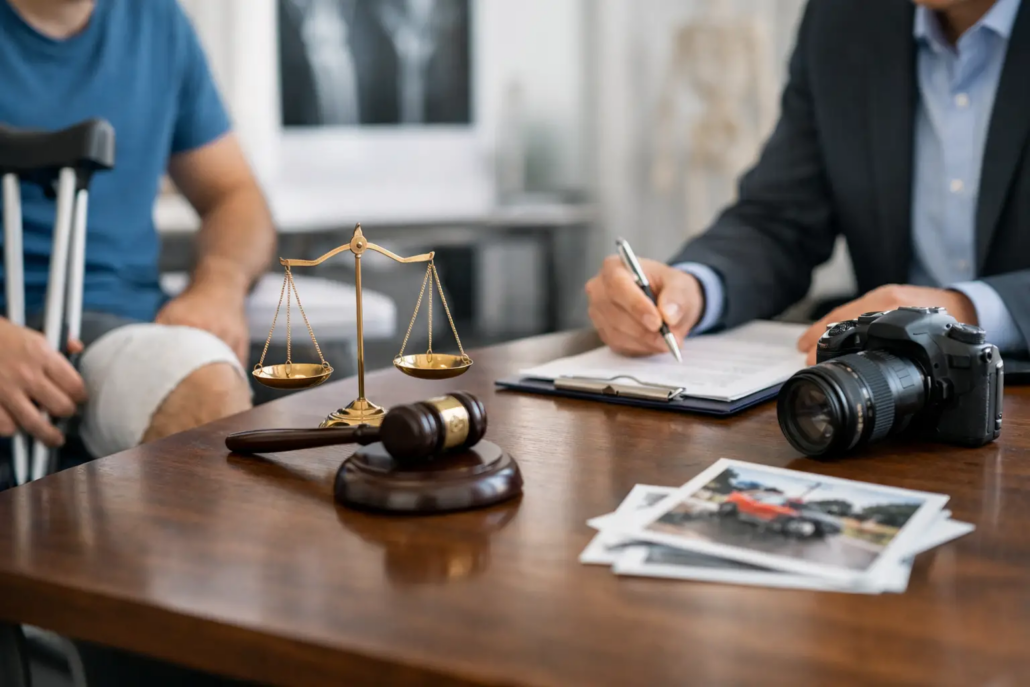
Photographs and videos can document conditions that may disappear within hours. After a crash, capture the vehicles, road layout, skid marks, traffic signals, weather, debris, and visible injuries if you can do so safely. After a fall, photograph the hazard, lighting, warning signs, footwear, and the surrounding area. In an abuse or institutional neglect case, preserve relevant messages, records, dates, names, and photographs of injuries or unsafe conditions.
Do not assume another party will save evidence voluntarily. A business may have surveillance video, a trucking company may have driver logs and electronic data, and a facility may hold incident reports or staffing records. Those materials can be lost or destroyed under routine retention practices. Prompt legal action can help demand that critical evidence be preserved.
Get medical care and follow the treatment plan
Seeking medical attention protects your health first. It also creates a contemporaneous record of what happened, what symptoms you reported, and how the injury has affected your daily life. Tell your providers accurately how the incident occurred and identify every area of pain or limitation, even if some symptoms seem minor at first.
Gaps in treatment can be used against an injured person. Insurers may claim you were not seriously hurt or that something else caused your condition. There are real reasons people delay care, including cost, work obligations, trauma, and lack of transportation. Those realities matter. Still, obtaining appropriate care and keeping appointments when possible makes the medical story clearer and more credible.
Identify witnesses and record what they know
Independent witnesses can be powerful because they have no financial stake in the outcome. Get names, phone numbers, email addresses, and, when possible, a brief statement about what the person observed. A witness may remember a speeding driver, an employee’s warning about a hazard, a resident calling for help, or a police officer’s conduct before an arrest.
Memories change quickly. Written or recorded accounts made soon after an incident are usually more useful than trying to locate someone months later. Do not pressure a witness or put words in their mouth. Simply preserve their contact information and their honest observations.
Build a complete timeline
Negligence cases are rarely decided by one dramatic fact. They are often won through a reliable sequence of smaller facts: when a complaint was made, when a hazard was reported, when an employee inspected an area, when symptoms began, and when treatment occurred.
Keep a simple journal after an injury. Note pain levels, missed work, activities you cannot do, sleep disruption, medication effects, and appointments. Save receipts, bills, work absence records, repair estimates, correspondence, and photographs. This documentation helps show the full human cost of the injury, not merely the first emergency room bill.
Use records that reveal prior knowledge
A responsible party may deny knowing about a danger. Records can tell a different story. Depending on the case, useful evidence may include maintenance logs, prior incident reports, complaints, inspection reports, staffing schedules, training records, vehicle maintenance files, cell phone data, and internal communications.
In a premises liability claim, the key issue may be whether a property owner knew or reasonably should have known about a dangerous condition. In a nursing home case, staffing patterns and care notes may reveal whether a resident’s needs were neglected. In a truck crash, hours-of-service records, black box data, and company safety practices can expose preventable violations.
Obtain the right expert support
Some claims need experts because the issue is beyond ordinary experience. A medical expert may explain how a provider departed from the standard of care. An accident reconstructionist may analyze speed, braking, visibility, and vehicle damage. An economist may calculate future wage loss, while a life-care planner can address long-term medical needs.
Expert testimony is not required in every case, and it can add cost and complexity. But in catastrophic injury, medical malpractice, product liability, and wrongful death claims, qualified experts may be essential to proving both liability and the scope of damages.
Avoid Mistakes That Can Undercut a Valid Claim
The period after an injury is stressful, and insurance adjusters know it. They may seek a recorded statement before you understand your diagnosis, ask you to sign broad medical authorizations, or offer a fast settlement before future needs are known. A quick offer can feel like relief, but it may not account for surgery, permanent limitations, lost earning capacity, or ongoing care.
Be careful with social media as well. A single photo or post can be taken out of context and used to challenge your injuries. This does not mean you must disappear from your community. It means you should avoid posting details about the incident, your health, or activities that could be misunderstood while a claim is pending.
Illinois also recognizes comparative fault. If a defendant can show that you contributed to an accident, they may try to reduce what they owe. That argument does not automatically end your case. The facts matter, and an injured person should not accept blame simply because an insurer says they share responsibility.
Negligence Claims Need a Clear, Human Story
Evidence proves the legal elements, but a strong case also explains what the evidence means in a person’s life. A broken bone is not only an X-ray. It may mean a parent who cannot lift a child, a worker who cannot return to a job, or an older adult who loses independence after a preventable fall. Accountability requires presenting both the legal proof and the full measure of the harm.
Dinizulu Law Group approaches serious injury and civil rights cases with that principle in mind: clients deserve honest answers, careful attention, and determined advocacy against those who caused preventable harm. If evidence may disappear or an insurer is minimizing what happened, speaking with an experienced attorney early can protect your ability to pursue justice with dignity.


Leave a Reply
Want to join the discussion?Feel free to contribute!