What a Chicago Truck Rollover Accident Lawyer Investigates
A truck rollover can happen in seconds, but determining why it happened may require a detailed reconstruction. Was the tractor traveling too fast for a curve? Did a high center of gravity or shifting cargo reduce stability? Did steering input, braking, weather, or roadway design play a role? For someone injured in Chicago, understanding how a Chicago truck rollover accident lawyer investigates these questions can make the claims process easier to understand.
Rollover crashes may create an unusual evidence problem. Emergency crews may need to move the truck, remove cargo, close lanes, and treat injured people before photographs or measurements are complete. Those actions are often necessary for safety, but they can also change the scene. Dinizulu Law Group helps injured people understand the evidence that may matter and the legal issues that can arise under Illinois law.
This article explains how investigators analyze rollover dynamics, what records and physical evidence may show, why secondary impacts matter, and how a legal team may evaluate potentially responsible parties. It is general information, not a case assessment.
How a Chicago Truck Rollover Accident Lawyer Reconstructs the Crash
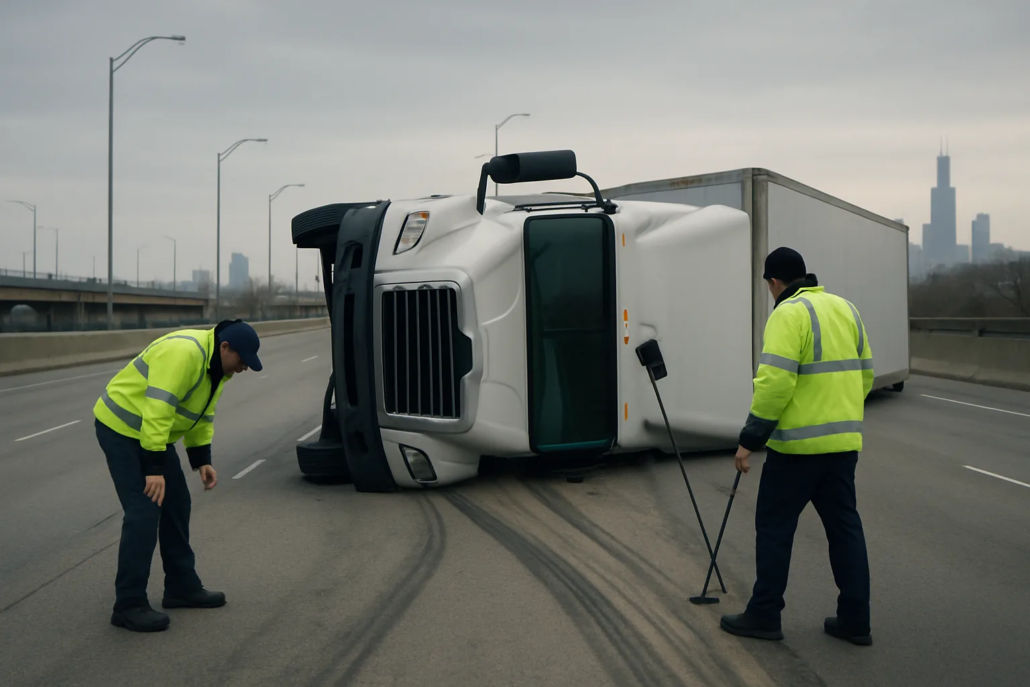
A rollover investigation usually begins with the physical event rather than an assumption about fault. Investigators may examine the truck’s final position, tire marks, roadway measurements, photographs, electronic data, and statements from witnesses or drivers. The goal is to understand the sequence of forces that caused the vehicle to leave an upright position.
Speed, curves, and steering inputs
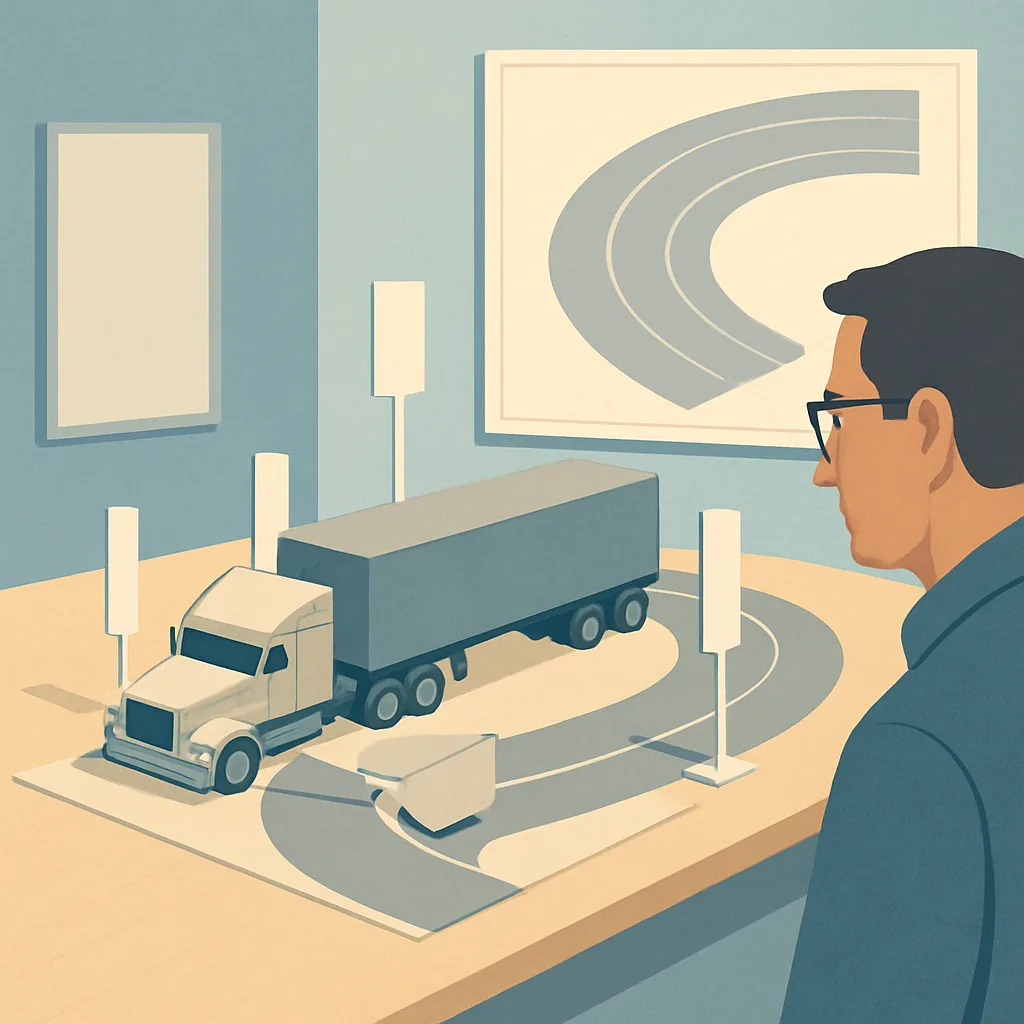
A commercial truck can become unstable when lateral forces from a turn exceed the vehicle’s ability to remain upright. Speed is important, but it is not the only question. A reconstruction may consider the curve’s radius, banking, surface condition, lane width, braking, steering angle, and whether the driver made an abrupt correction.
Truck dimensions also matter. A trailer with a high center of gravity may be more sensitive to lateral movement than a lower, evenly loaded trailer. A Chicago, Illinois investigation may compare the physical scene with available roadway plans, traffic-control information, weather conditions, and photographs taken before the truck was moved.
Cargo height and movement
Cargo can affect stability even when the truck is within its weight limit. If freight is stacked high, inadequately secured, unevenly distributed, or able to shift, the center of gravity may move during a turn or sudden maneuver. Investigators may review loading records, bills of lading, photographs, warehouse information, and the condition of tie-downs or other securement equipment.
Evidence Challenges After a Chicago Truck Rollover
Rollover scenes often change quickly. Police, fire departments, emergency medical personnel, tow operators, and trucking or cargo personnel may each handle different parts of the response. Their actions can create records that help establish timing and sequence, even when the original scene is no longer intact.
Relevant evidence may include:
- Crash reports, dispatch records, 911 recordings, and emergency response logs.
- Photographs or video from police, firefighters, bystanders, nearby businesses, and traffic cameras.
- The truck’s event data, engine information, GPS history, electronic logging data, and inspection records, when available.
- Cargo manifests, loading instructions, weight information, securement records, and unloading documentation.
- Tow invoices, impound records, repair estimates, and photographs showing how the truck and trailer were positioned or altered.
Road closures and cargo removal can be especially important. A blocked lane may require responders to move equipment or freight before a complete inspection. Cargo may be transferred to another vehicle, discarded, or separated from the trailer. These facts do not automatically establish liability, but they may affect what can later be tested or documented.
Illinois law governs many questions involving negligence, evidence, and compensation, but the correct analysis depends on the facts and may involve state and federal commercial-vehicle requirements. Procedures and legal rules can vary by location and may change over time. A lawyer evaluating a crash in Cook County may coordinate with reconstruction professionals and pursue records from several sources.
Fault, Injuries, and Secondary Impacts in Rollover Claims
A rollover may injure people in more than one way. The truck can strike another vehicle before tipping, slide into traffic after the initial loss of control, spill cargo, or create a hazard that causes additional collisions. A person may also be injured by a vehicle or object that is hit after the truck begins to roll. Investigators therefore examine the entire sequence, not only the moment the truck first became unstable.
Potential fault theories can involve different participants, depending on the evidence:
- Driver conduct: Excessive speed for conditions, abrupt steering, distraction, impairment, or another unsafe maneuver may be considered.
- Trucking company practices: Dispatch pressure, supervision, maintenance, training, or inspection practices may be relevant when supported by evidence.
- Cargo loading or securement: A shipper, loader, or other party may be examined if freight was improperly distributed or secured.
- Vehicle or component issues: Tire, suspension, brake, or other mechanical conditions may require technical inspection.
- Roadway conditions: Construction, standing water, debris, pavement defects, or confusing traffic control may be considered where relevant.
Fault is not determined simply because a truck rolled over. A Chicago truck rollover accident lawyer may compare driver testimony with event data, physical marks, cargo evidence, medical records, and witness accounts. Illinois generally permits fault to be allocated among responsible parties in appropriate cases, but the effect of comparative responsibility depends on the specific facts and applicable law.
Injuries from secondary impacts should also be documented through appropriate medical channels. Medical professionals—not legal articles—must evaluate symptoms and treatment. Records can help show when an injury was reported, what mechanism was described, and how the condition affected daily activities, without assuming a medical conclusion before evaluation.
Frequently Asked Questions
How soon should a truck rollover claim be investigated in Chicago?
Early investigation can matter because trucks may be repaired, cargo may be moved, and video or electronic records may not remain available indefinitely. The appropriate timing depends on the circumstances, the parties involved, and the type of evidence sought. In general, an attorney may assess preservation needs promptly and explain which records could be relevant to a claim under Illinois law.
Can more than one party share responsibility for a rollover crash?
Yes, multiple parties may potentially be involved, depending on the evidence. A driver, motor carrier, cargo handler, maintenance provider, manufacturer, or roadway-related entity could raise different factual questions. Responsibility is not assigned merely because a party is connected to the truck. Investigators and attorneys generally examine each participant’s conduct and the causal relationship to the injuries.
What if the truck was removed before I could photograph it?
That situation is common after a serious crash because emergency responders must clear hazards and restore traffic. Other sources may still exist, including police photographs, dispatch records, tow documentation, traffic-camera footage, witness images, inspection records, and cargo paperwork. A lawyer may investigate what was preserved and whether additional information can be obtained from agencies or involved businesses.
Do secondary collisions count in a truck rollover injury claim?
They may be relevant when the evidence connects the rollover sequence to the later impact and resulting injury. The analysis can involve timing, vehicle positions, debris, witness accounts, and medical documentation. Each claim turns on its facts. An attorney may review whether the initial rollover, a subsequent collision, or several events contributed to the harm alleged.
How Dinizulu Law Group Can Help
Dinizulu Law Group is dedicated to helping injured people understand the evidence and legal issues that may follow a commercial truck rollover in Chicago, Illinois. The firm is committed to fighting for clients’ rights while examining crash dynamics, emergency response records, cargo handling, vehicle damage, roadway conditions, and injuries connected to primary or secondary impacts.
Depending on the circumstances, the legal team may work to identify potentially responsible parties, organize available documentation, and communicate with insurers or other involved entities. Dinizulu Law Group is ready to evaluate your situation and explain possible next steps. Contact the firm for a free consultation or case evaluation.
The information in this article is for educational purposes only and does not constitute legal advice. Contact a qualified attorney licensed in Chicago, Illinois for advice specific to your situation.


Leave a Reply
Want to join the discussion?Feel free to contribute!