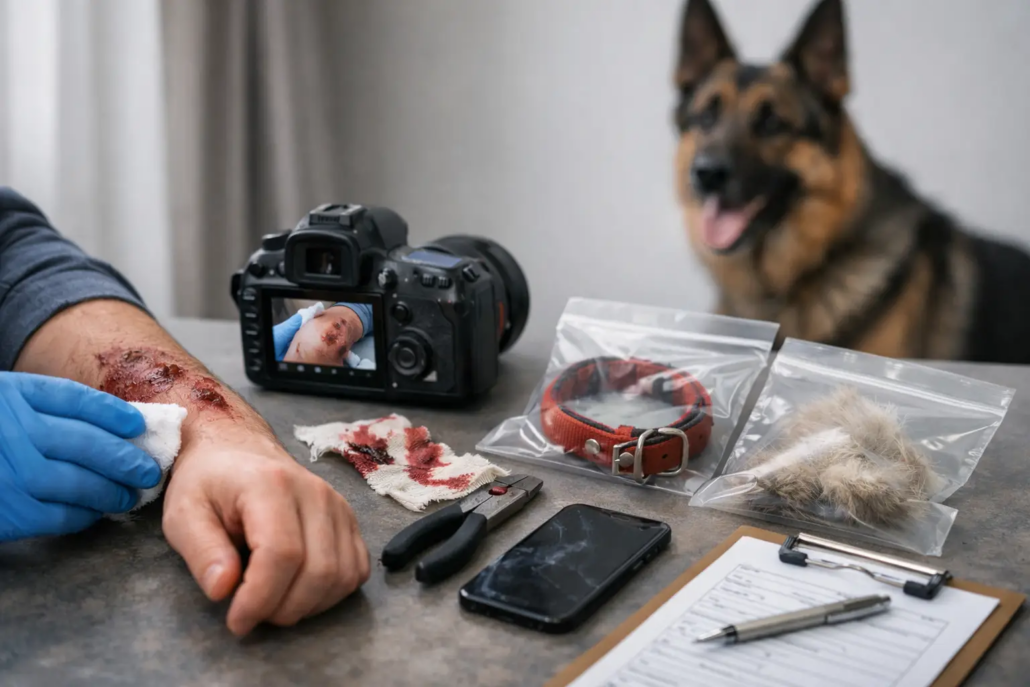
How to Protect Evidence After a Dog Bite
A dog bite can turn an ordinary walk, visit, or delivery into a frightening emergency within seconds. Once you are safe and receiving medical care, the steps you take to protect evidence after dog bite injuries can affect whether the full truth of what happened is ever documented. Evidence can disappear quickly: wounds begin healing, cameras overwrite footage, witnesses forget details, and an owner may deny that the dog was involved.
You should not have to argue with an insurer or a dog owner while you are in pain. Still, preserving clear information early can protect your ability to seek accountability later. In Illinois, the details surrounding the bite matter, including where it happened, whether the victim was lawfully present, and whether anyone claims the dog was provoked.
Start With Safety and Medical Care
Your health comes first. Move away from the animal, call 911 if the injury is severe, and seek prompt medical attention. Puncture wounds can cause infection, nerve damage, scarring, and lasting emotional trauma even when they initially look minor. A medical professional can clean and assess the wound, determine whether rabies precautions are necessary, and create records that connect your injuries to the attack.
Tell the medical provider exactly how the bite occurred. Identify the part of your body that was bitten, whether the dog knocked you down, and any pain, numbness, bleeding, fear, or loss of movement you experienced. Do not minimize your symptoms out of politeness or because you are still in shock. Accurate records are not exaggeration. They are part of receiving appropriate care.
If clothing was torn or bloodied, preserve it after treatment. Place each item in a clean paper bag if possible rather than washing it. The condition of a coat, pants, shoe, or backpack may help show the force and location of the attack.
How to Protect Evidence After a Dog Bite
If you can do so safely, take photographs and short videos before leaving the scene. Photograph the dog from a reasonable distance, the place where the bite happened, broken gates or loose leashes, warning signs, and any blood or damaged property. Capture the surrounding area as well. A wide photo can establish whether the attack happened on a sidewalk, in a common area, at a neighbor’s home, or on another person’s property.
Photograph injuries as soon as possible and continue taking photos as they change. Use good lighting, take pictures from several distances, and include a reference point for size when appropriate. Bruising, swelling, redness, stitches, scars, and limited movement often become more visible over days or weeks. Keep the original image files. Screenshots and edited photos can lose useful information about when an image was created.
Write down what you remember while the event is fresh. Note the date, time, address, weather, what you were doing immediately before the bite, what the dog did, what the owner said, and how the dog was restrained or controlled. Record descriptions rather than guesses. For example, write that a gate was open or a leash was absent if that is what you observed, rather than assuming why it happened.
A simple timeline can also document the days that follow: urgent care visits, antibiotics, missed work, nightmares, follow-up appointments, conversations with insurers, and changes in pain or mobility. This contemporaneous record can be more reliable than trying to reconstruct months of events later.
Identify the Dog and Its Owner
Get the owner’s name, address, phone number, and insurance information if they will provide it. Ask for the dog’s name, breed or appearance, and vaccination information. Remain calm and avoid a confrontation. The immediate goal is to identify the dog and confirm that public health authorities can determine its rabies status.
If the owner leaves or refuses to cooperate, write down a physical description of the person, the dog, any vehicle involved, and the direction they traveled. Look for nearby addresses, business names, security cameras, or doorbell cameras that may identify the property or capture the incident.
Do not accept cash, sign paperwork, or agree that you are not hurt before you understand the extent of your injuries. A dog owner may feel apologetic in the moment, but an insurance company may later challenge responsibility or argue that your medical treatment was unnecessary.
Make an Official Report
Report the bite to the appropriate local animal control agency or public health department. In Chicago and surrounding communities, this may trigger an investigation into vaccination status, quarantine requirements, and whether the animal has a known history of aggression. Ask for the report number and request a copy when it becomes available.
A police report may also be appropriate, particularly when the attack was serious, the owner was absent, the dog was running loose, or the owner acted recklessly after the bite. An official report does not decide a civil claim by itself, but it can preserve the date, location, identities, and early accounts of what occurred.
If the bite happened in an apartment building, condominium complex, store, workplace, or other managed property, notify the property manager or business in writing. State the facts, identify the exact location, and ask that all video footage and incident records be preserved. Many security systems automatically record over footage in a short period. Waiting can mean losing objective evidence that no witness can replace.
Speak With Witnesses Before Memories Fade
A neutral witness can be especially valuable when the owner claims the dog was friendly, restrained, or provoked. Ask anyone who saw the incident for their name, phone number, and email address. If they are willing, have them describe what they saw in their own words by text or email, or make a brief voice recording with their permission.
Neighbors, delivery drivers, other dog walkers, maintenance workers, and employees may also know whether the dog has previously escaped, lunged, bitten, or been kept behind an inadequate fence. Do not pressure anyone to take sides. Ask factual questions and preserve their contact information. A lawyer can later determine which information is relevant and how to obtain formal testimony.
Keep Records of the Financial and Personal Impact
Dog bite claims are not limited to the first emergency room bill. Save every document connected to the injury, including medical bills, discharge instructions, prescriptions, therapy records, receipts for wound-care supplies, transportation costs, and proof of missed income. If a child was bitten, keep records of school absences, counseling needs, and any activities they can no longer comfortably attend.
The personal impact deserves attention, too. Facial scars, hand injuries, fear of dogs, sleep problems, and anxiety in public spaces can change daily life long after a wound closes. A private journal can help show how the injury affected work, parenting, mobility, relationships, and peace of mind. Be honest and specific. A short entry describing a missed shift because your hand could not grip tools is often more meaningful than a vague statement that you were suffering.
Be Careful With Insurance Companies and Social Media
An insurer may contact you quickly, sometimes before you know whether surgery, plastic reconstruction, or infection treatment will be necessary. You can provide basic identifying information, but be cautious about recorded statements, broad medical authorizations, and early settlement offers. You do not need to accept a valuation of your injuries before you understand them.
Also avoid posting about the incident online. A photo of you smiling at a family gathering can be mischaracterized as proof that you were unaffected, even if you left early because of pain or anxiety. Keep details of the case and your recovery off social media while the claim is being evaluated.
Understand Why the Facts Matter in Illinois
Illinois law may allow a person injured by a dog to pursue compensation when the dog attacked or injured them without provocation while they were peaceably conducting themselves in a place they had a legal right to be. Those phrases carry real weight. The owner or insurer may try to argue that the victim provoked the dog, trespassed, ignored warnings, or caused the incident in some other way.
That does not mean every accusation is true. It means evidence matters. Photographs, witness statements, medical records, animal control reports, video footage, and a timely written account can help establish what actually occurred. The legal analysis can become more complicated if multiple parties controlled the property, a landlord knew of a dangerous condition, or a child was bitten while visiting a residence. A careful investigation should look beyond the first explanation offered by the dog owner.
Get Guidance Before Evidence Is Lost
A serious dog bite can leave a family managing medical appointments, missed paychecks, and fear about permanent scarring. You deserve clear answers, respectful treatment, and an advocate who will take the evidence seriously. Dinizulu Law Group can help injured people and families understand their options and take steps to preserve the records that may be critical to a claim.
The most useful next step is often simple: keep the records you have, write down what you remember tonight, and ask for help before a missing video, fading witness memory, or fast insurance offer makes an already difficult situation harder.


Leave a Reply
Want to join the discussion?Feel free to contribute!