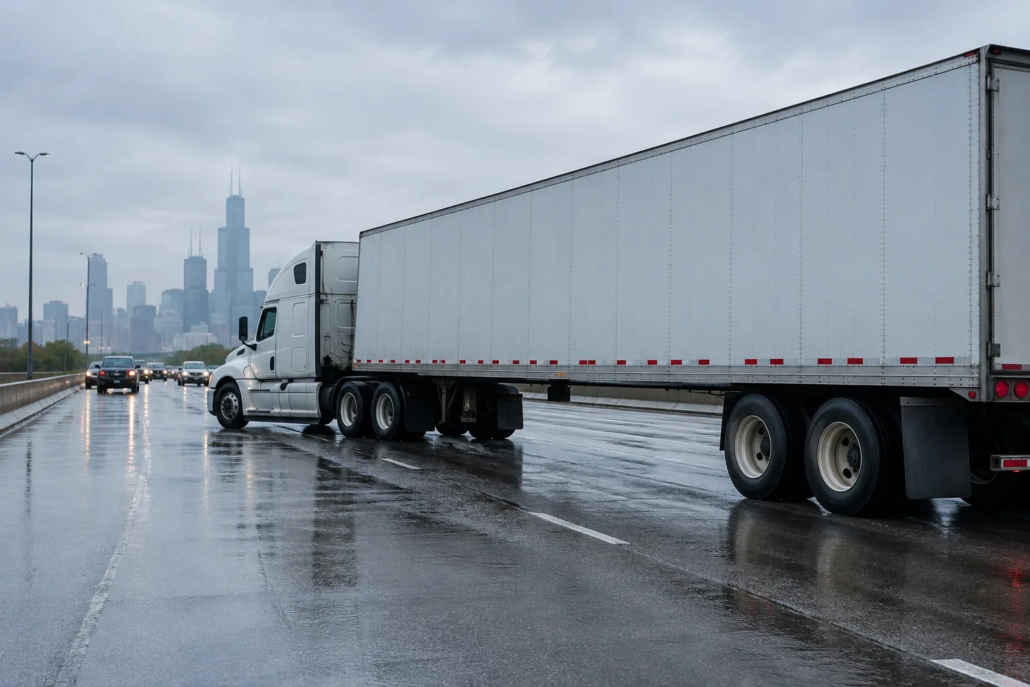
How Can a Tractor-Trailer Jackknife on Chicago Roads?
A tractor-trailer moving through Chicago traffic can become dangerous when its trailer stops tracking behind the cab and swings at an angle. A sudden loss of alignment may block several lanes, and vehicles nearby may have little room to avoid the trailer or one another. Understanding the mechanics can help explain why a jackknife happens, but the event alone does not establish who was legally responsible. Dinizulu Law Group helps Chicago readers understand the factors that may matter after a truck collision. This article explains how braking, traction, speed, cargo, and driver inputs can combine, why one jackknife can affect multiple vehicles, and what trailer position, road conditions, and vehicle damage may reveal. The causes of a truck cargo securement problem can also be relevant when freight shifts and changes trailer stability.
What Causes Chicago Truck Jackknife Accidents?
A jackknife occurs when a tractor and its attached trailer move out of line, forming an angle at the connection. The trailer may swing to one side while the tractor continues forward or changes direction. The movement can happen quickly, but it usually reflects interacting conditions rather than one isolated factor. The driver’s actions, tire grip, braking, speed, equipment condition, and freight distribution may all be relevant.
Braking, speed, and driver inputs
Hard or uneven braking can contribute to a loss of alignment, particularly if the trailer’s wheels lose grip or the tractor and trailer respond differently. A sudden steering correction, acceleration, or attempt to avoid an obstacle may also affect the combination’s movement. Speed matters because a heavy vehicle needs room to slow and because steering or braking forces can have greater consequences when the available traction is limited. These facts do not, by themselves, prove that a driver acted improperly.
Brake condition and maintenance history may help clarify whether a mechanical issue played a part. Depending on the circumstances, useful records may include inspection, repair, and service documents. For an overview of records that can help identify a truck brake failure, see our related discussion.
How cargo can destabilize a trailer
Freight that is overloaded, unsecured, or unevenly distributed may shift the trailer’s weight. That shift can affect balance, steering response, and braking, particularly during a turn or sudden maneuver. The presence of cargo does not automatically mean it caused the crash; the type of load, how it was secured, and what the scene shows all matter. Details about evidence of a truck load shift or cargo securement problem may help readers understand this factor.
How Traction and Chicago Road Conditions Can Affect a Jackknife
Tires need grip to transmit braking and steering forces to the roadway. When that grip is reduced, a tractor or trailer may slide rather than follow the intended path. Rain, standing water, snow, ice, loose material, or an abrupt change in pavement can affect traction. A truck jackknife on wet roads is possible, but wet pavement alone does not explain every crash. Tire condition, vehicle speed, braking, and the driver’s response may also matter. Learn more about how snow and ice can affect truck accident liability in Chicago.
Chicago routes include busy expressways, arterial streets, ramps, and construction areas. A pothole, debris, lane shift, or warning that is difficult to see may affect a truck’s path or the driver’s response. These conditions should be examined as part of the full sequence—not assumed to be the sole cause. Information about road hazards that can contribute to a Chicago truck crash offers additional context.
Why one jackknife can involve several vehicles
A trailer that swings across a lane may strike a nearby car, block a travel lane, or force other drivers to brake or swerve. Those reactions can create additional impacts even if a vehicle never touches the truck. The number of vehicles involved does not automatically determine fault. Each impact may have a different sequence and may involve different drivers, businesses, or insurance policies. Depending on the circumstances, how several insurance policies may apply to one Chicago truck crash can be a separate question from how the jackknife began.
What Can Trailer Position and Vehicle Damage Show?
A scene is a snapshot of a fast-moving event, not a complete explanation. Still, initial details can help investigators or attorneys assess the trailer’s path and the sequence of impacts. In Chicago, the Chicago Police Department or Illinois State Police may respond depending on where the crash occurred and the circumstances. Reports and scene observations can be useful, but they may not capture every relevant detail.
If it is safe and appropriate to do so, photographs or notes may preserve details such as:
- The tractor’s direction and the trailer’s angle or final position.
- Road surface conditions, standing water, snow, ice, debris, or visible pavement damage.
- The location and type of damage to each vehicle, including which sides or corners were struck.
- Skid marks, scattered cargo, lane closures, and the positions of nearby vehicles.
- Witness contact information and the approximate order of events, if known.
Final positions can change when vehicles are moved for safety or emergency response. Damage may help show where contact occurred, but it does not prove the order of impacts on its own. Considering how spacing, speed, road conditions, and vehicle damage can inform crash analysis may help explain why several kinds of evidence need to be considered together.
Safety comes first. If documenting a scene would put anyone near moving traffic or create another hazard, it should not be attempted. General initial steps to take after a truck accident include prioritizing immediate safety and noting available information when it is safe to do so.
In Illinois, responsibility for a collision depends on the facts and applicable law. A jackknife does not automatically make the truck driver, carrier, cargo handler, or another party liable. The truck’s condition, loading, road conditions, driver conduct, and the actions of other motorists may all need review. Claims arising from a Chicago crash may involve courts with jurisdiction in Cook County, depending on the circumstances. Laws and procedures vary by location and may change, so case-specific questions call for advice from an Illinois-licensed attorney.
Frequently Asked Questions
Can a jackknifing truck hit vehicles in more than one lane?
Yes. If the trailer swings across lanes, it may directly strike vehicles traveling beside or behind the truck. Other drivers may also brake or steer away, leading to secondary collisions. The number and sequence of impacts depend on traffic, speed, spacing, and the trailer’s path. Investigators may consider vehicle positions, damage, witness accounts, and other available evidence to understand how the event unfolded.
Does a jackknife automatically mean the truck driver was at fault?
No. A jackknife describes the truck’s movement, not a legal conclusion about responsibility. Driver decisions may be relevant, but so may braking or tire problems, cargo distribution, roadway conditions, or another vehicle’s actions. In Illinois, fault questions depend on the available evidence and applicable law. An attorney can review the circumstances and explain what legal options may be available.
Can a trailer jackknife even if the road is dry?
Yes. Reduced traction is one possible factor, but it is not required for a jackknife. Speed, abrupt braking or steering, load balance, mechanical condition, and the interaction between tractor and trailer can also matter. Dry pavement does not rule out a problem with equipment or cargo, and it does not establish what caused a particular crash. The full sequence and available evidence are important.
What details may help explain a Chicago jackknife crash?
Trailer angle and final position, road and weather conditions, vehicle damage, skid marks, cargo location, and witness observations may help clarify the event. These details are not conclusive on their own, and the scene may change as vehicles are moved. Safety should take priority over gathering information. Depending on the crash location, responding agencies and other investigators may also document conditions or collect evidence.
How Dinizulu Law Group Can Help
Dinizulu Law Group is dedicated to helping people understand the questions that may follow a Chicago truck collision. A review may consider how the tractor and trailer moved, whether braking or cargo issues deserve attention, the condition of the roadway, and how multiple impacts unfolded. The firm is committed to fighting for clients’ rights while explaining the process and available options without promising a particular result. If a jackknife collision affected you or your family, contact Dinizulu Law Group to request a free consultation or case evaluation.
The information in this article is for educational purposes only and does not constitute legal advice. Contact a qualified attorney licensed to practice in Illinois for advice specific to your situation.


Leave a Reply
Want to join the discussion?Feel free to contribute!