What Causes Truck Rollovers on Chicago-Area Ramps?
A truck rounding a curved ramp can suddenly tip, slide or overturn, leaving people nearby with serious questions about what happened. Speed may be an important factor, but it is not the only one: the curve’s design, a shifting load, worn equipment or steering and braking inputs can combine to affect stability. For readers considering how investigators examine a Chicago truck rollover, the key is often how these factors interacted—not simply whether the truck appeared to be moving fast.
In Chicago, Illinois, ramps connect busy expressways and surface streets, and their curves can demand careful handling from large vehicles. A rollover investigation may compare the truck’s movements with the road, cargo and vehicle condition. Dinizulu Law Group helps explain the kinds of questions that may arise after a crash. This article discusses potential rollover causes, evidence that may help evaluate them, and how responsibility may be assessed under the circumstances.
Chicago Truck Rollover Accident Causes: How a Ramp Can Change the Risk
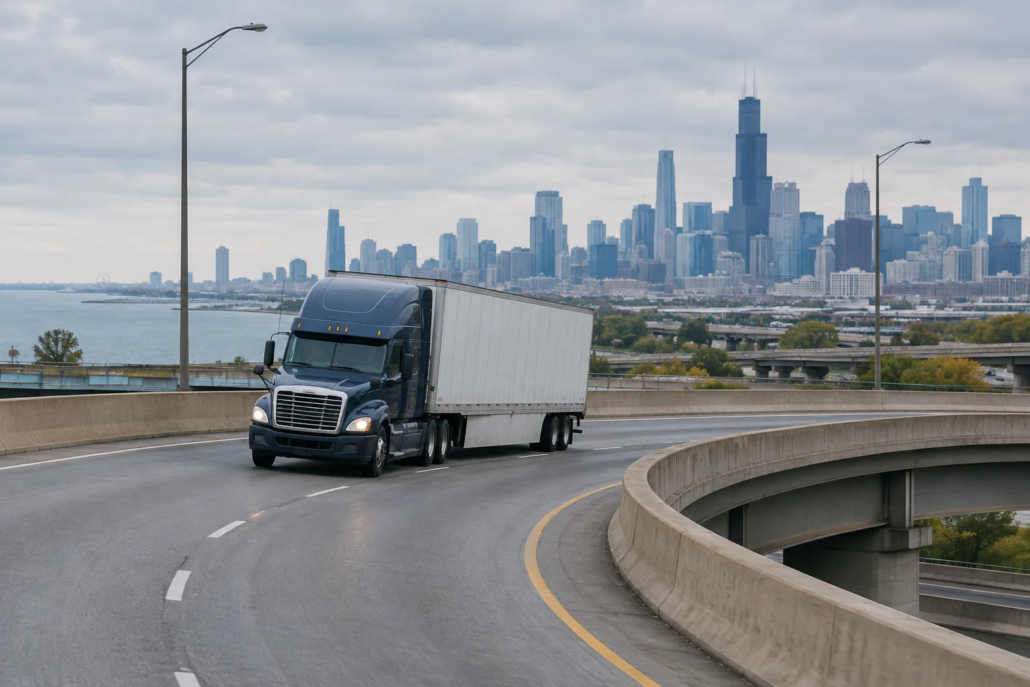
A ramp’s curve places forces on a truck and its load. A tall tractor-trailer has a higher center of gravity than a passenger car, so lateral force during a turn can increase the risk of leaning or losing stability. The curve’s radius, banking, lane width and surface condition may affect how much steering adjustment is needed. A transition from a straight roadway into a tight curve can also matter, especially if a driver has limited time to respond.
Speed can contribute, but it does not explain every rollover. A truck moving at a pace that seems manageable may still face added risk if a load is top-heavy, cargo shifts, tires lose traction or the vehicle responds poorly to steering. Conversely, evidence of a rapid turn or abrupt maneuver may be relevant even when the posted speed limit was not exceeded. The analysis depends on the particular vehicle, its load, the ramp and the sequence of actions.
What the ramp and driver inputs may show
Investigators may examine the truck’s path, braking and steering activity, tire marks, debris and damage patterns. Electronic data may preserve information about vehicle movement or driver inputs, depending on the equipment and what was retained. Roadway measurements, photographs and maintenance records may also help explain whether the curve or its surface played a role. A review of evidence of roadway hazards in Chicago truck crashes can help readers understand why ramp layout and condition may matter alongside driver conduct.
How Cargo and Vehicle Condition Can Affect Truck Stability
A truck’s stability depends partly on how weight is distributed and secured. Cargo placed high or unevenly can raise or shift the vehicle’s center of gravity. If a load moves during a turn, it may change the trailer’s balance and the forces acting on the tractor. The weight and type of cargo, loading method, securement, and the truck’s configuration are all potential pieces of the picture. These details may be especially important when the trailer tipped while the tractor remained upright, or when the vehicle’s movement changed abruptly.
Reviewers may look at bills of lading, loading instructions, dispatch records, inspection documents, photographs and physical evidence from the cargo area. Such records can help establish what was loaded, where it was placed and whether it may have shifted. Readers can find more about clues that cargo distribution affected truck stability when considering how load-related evidence fits into a broader investigation.
Mechanical condition can matter as well. Tire damage, uneven tire wear, suspension problems, steering issues or a defective component could affect a truck’s response on a curve. Relevant evidence may include maintenance and repair history, inspection records, post-crash examination findings and service information. An investigation may also consider whether the problem existed before the trip and whether it was reasonably detectable. How tire condition and maintenance may contribute to a truck crash provides related background on equipment evidence.
What Evidence Can Help Clarify Responsibility After a Rollover?
A rollover’s cause is not always apparent from a few photographs or a brief account of the crash. A careful investigation may bring together evidence from the roadway, vehicle, cargo and people who observed the events. In Chicago, Illinois, useful sources may include available traffic or nearby business camera footage, witness accounts, scene photographs, vehicle inspection records and data preserved by the truck or carrier. The availability and reliability of each source can vary.
Depending on the circumstances, evidence may help answer questions such as:
- Where did the truck begin to lean, slide or leave its lane?
- Did the ramp have a surface defect, drainage issue or unusual curve transition?
- Was the load secured and distributed in a way that affected stability?
- Did tire, steering or suspension condition contribute to loss of control?
- What do available electronic records show about vehicle movement or driver inputs?
Responsibility may involve more than one party, depending on the evidence and applicable law. A driver, trucking company, cargo loader, maintenance provider or entity responsible for a roadway condition could become relevant to an investigation; naming a possible source of evidence does not establish liability. In Illinois, the legal analysis depends on the facts and applicable rules, which may change over time. A claim involving a Chicago-area crash may also raise questions about where a case can be brought, including whether Cook County is an appropriate venue. An attorney can assess those issues in light of the particular circumstances.
Frequently Asked Questions
Does a truck have to exceed the speed limit to roll over?
No. Speed can increase rollover risk, but a truck may become unstable for other reasons or from a combination of factors. A tight curve, sudden steering input, shifting cargo, poor traction or a mechanical issue may be relevant. Whether speed contributed in a particular crash depends on the available evidence, including the truck’s path, road conditions, vehicle data and load characteristics.
Can a ramp’s design contribute to a truck rollover?
It may be relevant. Curve radius, banking, lane width, surface condition and the transition into a curve can affect how a large vehicle travels through a ramp. A roadway feature alone does not prove that it caused a crash. Investigators generally compare measurements and physical evidence with vehicle movement and other possible contributing factors.
What evidence can show whether cargo affected the rollover?
Evidence may include photographs of the cargo area, loading and securement records, bills of lading, inspection materials and physical signs that goods shifted. The trailer’s damage and the truck’s movement may also provide context. These records can help assess weight placement and stability, but their meaning depends on the full circumstances and how reliably they were preserved.
Could a maintenance problem be relevant even if the truck passed an inspection?
It could be worth examining. An inspection record is one piece of evidence, not necessarily a complete history of a vehicle’s condition. Investigators may also review repair records, tire condition, suspension and steering components, service timing and post-crash findings. Whether a mechanical issue contributed—and whether another party may bear responsibility—depends on evidence specific to the truck and trip.
How Dinizulu Law Group Can Help
A rollover can leave injured people facing complicated questions about the truck, its load, the ramp and the events leading up to the crash. Dinizulu Law Group is dedicated to helping people understand the factors that may matter and is committed to fighting for clients’ rights. The team can review available information, explain potential legal issues and evaluate whether further investigation may be appropriate. No two crashes are identical, and the options available depend on the facts and applicable law. If you were injured in a Chicago-area truck rollover, contact Dinizulu Law Group to request a free consultation or case evaluation.
The information in this article is for educational purposes only and does not constitute legal advice. Contact a qualified attorney authorized to practice in the jurisdiction that applies to your matter for advice specific to your situation.


Leave a Reply
Want to join the discussion?Feel free to contribute!