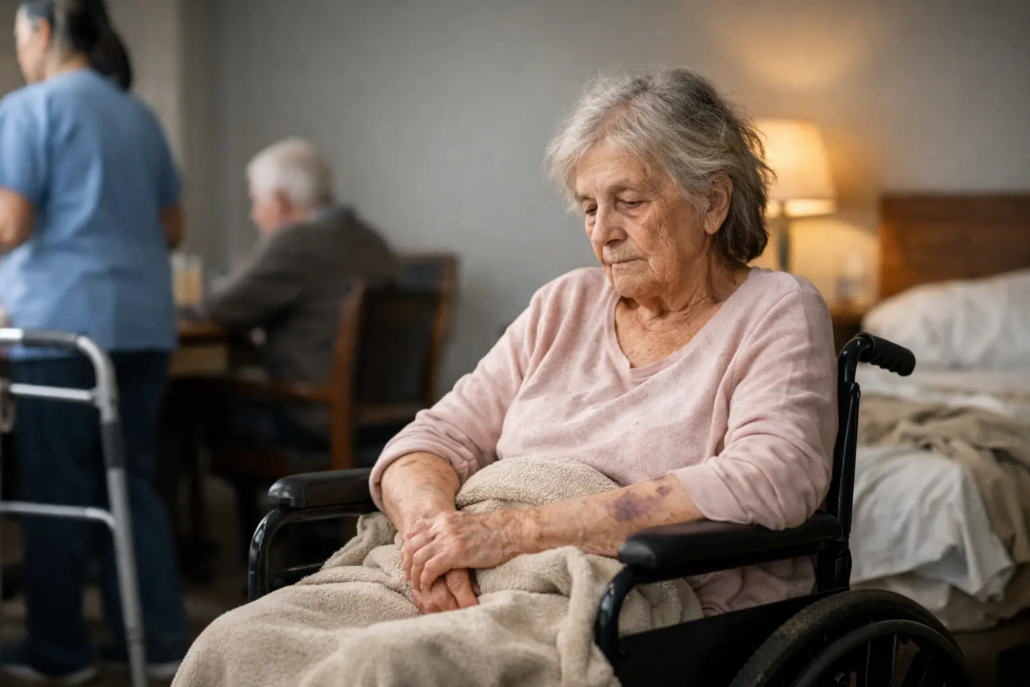
Common Signs of Elder Neglect in Nursing Homes
A parent who was once meticulous about their appearance suddenly has dirty hair, unwashed clothes, or a room that smells of urine. A loved one who used to enjoy conversation becomes withdrawn, anxious, or unusually quiet. These can be common signs of elder neglect, and families should not dismiss them as an unavoidable part of aging or life in a nursing home.
Neglect occurs when a nursing home, assisted living facility, caregiver, or other responsible party fails to provide the care an older adult needs. The harm may be physical, emotional, financial, or medical. Sometimes neglect is deliberate. In other cases, it grows out of understaffing, poor training, inadequate supervision, or a facility putting profits ahead of resident safety. The reason does not erase the harm or the duty to protect residents.
What Elder Neglect Can Look Like
Elder neglect is not always marked by a single dramatic event. More often, it appears through a pattern: missed care, unanswered calls for help, declining hygiene, untreated health concerns, and a resident whose basic needs are repeatedly overlooked.
A resident may be unable to explain what is happening because of dementia, illness, fear, communication challenges, or concern that staff will retaliate. That makes regular family visits, close observation, and direct questions especially valuable. Trust your instincts when something feels wrong, even if a staff member offers a quick explanation.
Changes in Hygiene and Daily Care
Poor hygiene is among the clearest warning signs. A resident may have soiled clothing or bedding, strong body odor, dirty fingernails, unbrushed teeth, or hair that has not been washed. These conditions are not simply embarrassing. They can contribute to infections, skin breakdown, loss of dignity, and emotional distress.
Also pay attention to whether your loved one has clean, weather-appropriate clothing, access to glasses, hearing aids, dentures, mobility aids, and personal items. When these essentials are missing or neglected, a resident may struggle to eat, communicate, move safely, or participate in daily life.
Dehydration, Malnutrition, and Unexplained Weight Loss
Older adults often need help eating and drinking, particularly when they have swallowing difficulties, weakness, medication side effects, or cognitive impairments. A resident who appears thin, weak, dehydrated, dizzy, or confused may not be receiving adequate nutrition or fluids.
Rapid weight loss should always prompt questions. It can result from illness, but it can also signal that meals are being missed, assistance is not provided, dietary restrictions are ignored, or food is inaccessible. Look for dry lips, dark urine, fatigue, repeated complaints of thirst, or untouched meal trays during visits.
Bedsores and Declining Mobility
Pressure ulcers, commonly called bedsores, can develop when a person is left in one position too long without appropriate repositioning, skin checks, hygiene, or medical care. They are especially concerning because they may be preventable with attentive care.
Not every bedsore proves neglect. Some residents have serious medical conditions that make skin injury difficult to avoid. But a facility should assess risk, follow a care plan, document treatment, and respond quickly when a wound appears. Deep wounds, infected sores, or a caregiver who cannot clearly explain how an injury is being treated deserve immediate attention.
A decline in mobility can raise similar concerns. If a resident who once used a walker is now confined to bed or a wheelchair, ask whether they are receiving help with transfers, physical therapy, and safe movement. Prolonged immobility can lead to falls, infections, blood clots, depression, and further loss of independence.
Behavioral Changes Can Be Signs of Elder Neglect
Physical evidence matters, but a resident’s emotional state can reveal just as much. Withdrawal, depression, sudden fearfulness, agitation, or reluctance to speak around staff may indicate that a loved one does not feel safe or heard.
Some older adults become quiet after repeated calls for assistance go unanswered. Others may say they do not want to “cause trouble,” particularly if they depend on staff for toileting, bathing, medication, or meals. Ask open-ended questions in a private setting when possible: “Are you getting help when you need it?” and “Is there anything you are afraid to tell me?” can open a more honest conversation than asking whether everything is fine.
Behavioral changes also have medical causes. Dementia, medication changes, infection, grief, and pain can affect mood and communication. Families do not need to diagnose the cause. They do need to take a noticeable change seriously and insist that it be evaluated.
Missed Medication and Untreated Medical Needs
Medication errors, missed doses, delayed medical attention, and failure to follow a physician’s orders can cause severe harm. Warning signs include unexplained pain, worsening chronic conditions, frequent infections, repeated hospital visits, or staff members who cannot explain a resident’s medications and care plan.
Watch for untreated injuries as well. Bruises, cuts, burns, falls, or fractures should be documented and investigated. An accident can happen even in a well-run facility. The question is whether staff responded appropriately, sought medical attention, notified the family, recorded the incident honestly, and took steps to prevent another injury.
When Facility Conditions Point to a Larger Problem
A resident’s condition may reflect a broader failure within the facility. During visits, notice whether call lights are unanswered, residents are left unattended in hallways, meals are rushed, rooms are unsanitary, or staff members appear overwhelmed and unavailable.
Chronic understaffing is not an excuse for neglect. Nursing homes and assisted living facilities have a responsibility to provide adequate care and supervision. When too few trained workers are expected to meet too many residents’ needs, predictable harm can follow.
Family members may also encounter evasive answers, missing records, unexplained changes to a care plan, or pressure not to complain. Those responses do not prove wrongdoing on their own, but they can be warning signs that warrant closer scrutiny.
What Families Can Do When They Suspect Neglect
Start by protecting your loved one’s immediate health. If they are in danger or need urgent medical care, seek emergency assistance. If possible, take photographs of visible injuries, unsanitary conditions, soiled bedding, and other concerns. Record dates, times, names of staff members, and exactly what you observed or were told.
Request a meeting with the facility administrator or director of nursing and ask for clear answers about the resident’s care plan, medical condition, recent incidents, medications, nutrition, and staffing. Keep your communication in writing when you can. A paper trail may become important if the facility later disputes what happened.
It may also help to speak with your loved one’s physician and review available medical records. Do not feel pressured to accept vague assurances if the resident’s condition continues to worsen. You can report suspected neglect to appropriate Illinois authorities, and you may have the right to move your loved one if a safer placement is available.
A Legal Review Can Bring Answers and Accountability
Nursing home neglect cases can be difficult because facilities and insurers may characterize preventable injuries as ordinary consequences of age or illness. Medical records, staffing information, incident reports, witness statements, photographs, and expert review can help show whether a facility failed its duty of care.
A lawyer experienced in nursing home abuse and neglect can assess the facts, preserve evidence, and identify the parties responsible. Depending on the circumstances, a claim may seek compensation for medical expenses, pain and suffering, disability, and other losses. When neglect contributes to a death, surviving family members may have additional legal options.
At Dinizulu Law Group, Ltd, families are treated with the respect and urgency these situations demand. No loved one should be reduced to a room number, a chart entry, or an inconvenience to an overburdened facility.
If you are seeing changes that do not add up, keep asking questions. Your attention may be the protection your loved one needs when they cannot fully speak for themselves.


Leave a Reply
Want to join the discussion?Feel free to contribute!