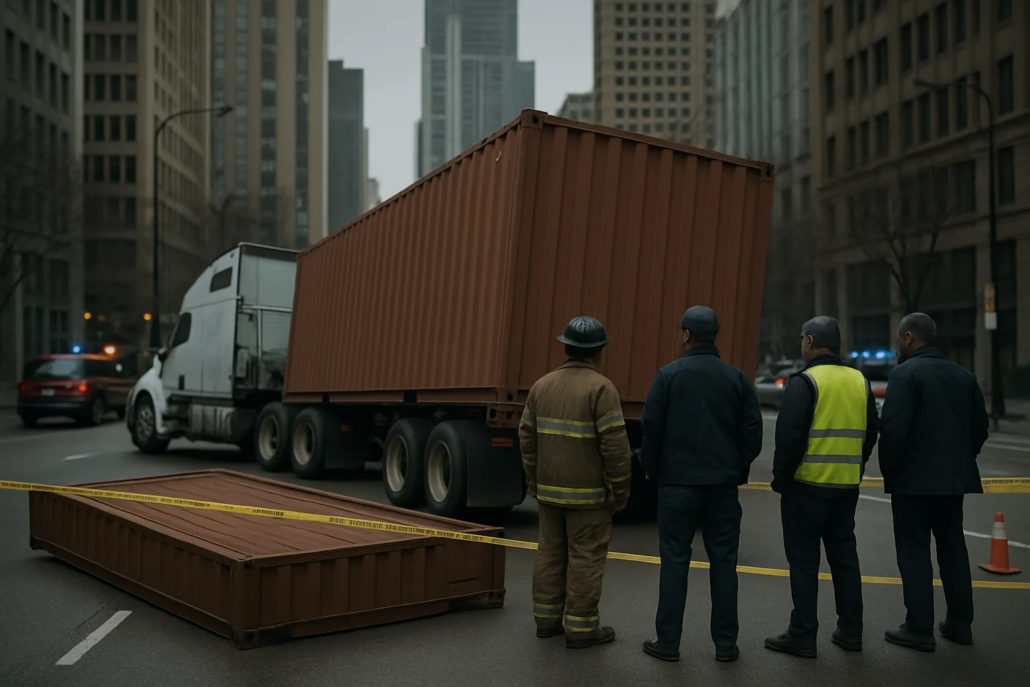
Can a Chicago Attorney Link Harm to Truck Freight Spills?
A truck that drops cargo, leaks a container, or overturns on a Chicago roadway can create several hazards at once. A motorist may collide with the spilled material, swerve into another lane, encounter smoke or flames, or come into contact with a substance whose effects are not immediately obvious. If you are searching for a Chicago truck cargo spill accident lawyer, understanding the possible injury mechanisms and the evidence behind a claim can help you discuss the situation more clearly with counsel. Dinizulu Law Group provides guidance on the issues that may arise. For background on loading practices, inspection duties, and trucking cargo-securement rules and responsibilities, consider how a spill may begin. This article explains common ways cargo spills cause harm, what to do near a hazardous release, who may be involved in the legal analysis, and why medical and scene documentation can matter.
How Can a Chicago Truck Cargo Spill Cause Injuries?
Cargo does not need to strike someone directly to create a serious crash risk. A loose pallet, metal component, liquid container, or unsecured equipment can fall into a travel lane and leave following drivers little time to react. In Chicago, crowded expressways, arterial streets, construction zones, and frequent lane changes can increase the chance that one obstruction leads to several collisions.
Direct impact and evasive crashes
A vehicle may hit the cargo itself, suffer a tire or steering problem, or collide with the truck after the load shifts. Other drivers may brake hard, move into adjacent lanes, or leave the roadway to avoid debris. Those maneuvers can cause rear-end, side-impact, pedestrian, or multi-vehicle crashes even when the injured person never touched the truck.
A spill may also contribute to a rollover. Speed, a curve, uneven weight distribution, container failure, steering, or roadway conditions can interact in complicated ways. A rollover can release additional materials and create a chain reaction. A review of cargo-shift and rollover crash investigations in Chicago may help explain why the original spill and later impacts should be analyzed together.
Fire, fumes, and contamination
Flammable materials can ignite after a collision or contact with a hot vehicle component. A fire may cause burns, smoke exposure, or additional evasive crashes. Other substances may irritate the eyes, skin, or airways, while contaminated clothing, vehicles, or roadway surfaces can create follow-up concerns. People nearby should rely on emergency responders for instructions and avoid touching unknown substances.
Symptoms may not appear at the scene. Irritation, breathing difficulty, headaches, nausea, or other health complaints can develop after exposure or after the stress of a collision. These symptoms have many possible causes, so a healthcare professional—not an online article—must evaluate them.
What Should You Do After a Chicago Truck Hazardous-Material Spill?
Safety comes before evidence collection. If a truck releases chemicals, fuel, dust, or another unknown substance, moving away from the area when safe, avoiding fumes, and following directions from police, fire personnel, or other emergency responders may reduce additional exposure. Do not return to collect belongings or photograph the spill if doing so creates a risk.
In general, people involved in a Chicago, Illinois crash may consider these practical steps, depending on the circumstances:
- Call emergency services or alert authorities if the hazard has not already been reported.
- Tell responders about any contact with liquid, powder, vapor, smoke, or fire.
- Obtain medical evaluation for collision injuries or possible exposure, even if symptoms seem minor or delayed.
- Photograph vehicle damage and the surrounding scene only from a safe location, if permitted.
- Preserve damaged clothing, personal property, and relevant receipts without handling contaminated items unnecessarily.
- Collect witness contact information and note the truck’s position, cargo appearance, weather, traffic conditions, and approximate time.
- Keep records of symptoms, appointments, testing, prescriptions, work limitations, and follow-up care.
The firm’s guide to what to do after a truck accident in Illinois offers related general information. A person should also follow medical and public-safety instructions. Depending on the substance, responders may establish a perimeter, arrange decontamination, or document the release through official reports. Those reports may later help clarify what happened, but they do not by themselves resolve legal responsibility.
Evidence that may identify the cause
Useful information can disappear quickly when vehicles are towed, cargo is removed, or a roadway is cleaned. Potential evidence may include photographs, video from nearby vehicles or businesses, witness accounts, police and fire reports, hazardous-material response records, shipping documents, inspection records, loading instructions, and maintenance files. Electronic information may also matter. Electronic truck data that can preserve crash evidence may include event data, speed or braking information, electronic logs, dispatch communications, and vehicle movement records, depending on what exists and is retained.
Who May Be Responsible for a Truck Cargo Spill Injury Claim in Illinois?
A cargo-spill case is not automatically limited to the truck driver. Liability depends on the facts, including who controlled the vehicle, selected or packaged the cargo, loaded and secured it, inspected the equipment, and had notice of a defect or unsafe condition. In Illinois, legal theories and filing deadlines can vary by claim type and circumstances, so a fact-specific review is important.
Potentially relevant parties may include:
- The driver, if unsafe driving, inadequate inspection, or a failure to respond reasonably contributed to the event.
- The motor carrier or trucking company, depending on employment, supervision, maintenance, safety, and operational issues.
- A shipper, loader, warehouse, or contractor if cargo was improperly packaged, balanced, secured, or identified.
- A manufacturer or maintenance provider if a container, trailer component, tie-down, valve, or other part failed.
- Another motorist or entity whose conduct contributed to the rollover, collision, or release.
These possibilities do not mean every listed party is legally responsible. Evidence must connect a particular act or omission to the spill and the claimed injury. Dinizulu Law Group’s discussion of the parties that may be responsible for a truck crash provides additional context about investigating multiple sources of responsibility.
Medical documentation is especially important when an event involves both trauma and possible exposure. Records may describe the timing of symptoms, examination findings, diagnostic testing, treatment, referrals, and whether follow-up was recommended. Keeping a timeline can help distinguish what happened immediately from symptoms that developed later. Records concerning missed work, modified duties, property damage, and ongoing limitations may also be relevant to evaluating a claim. General information about how truck-accident injuries may affect financial recovery can help explain why complete documentation matters, without predicting any particular result.
An attorney may also assess whether preservation requests are appropriate for video, vehicle data, cargo records, and physical components. Illinois procedures, available remedies, and deadlines may change based on the injured person’s circumstances and the identity of the parties.
Frequently Asked Questions
Can a spilled load cause liability if my vehicle never hit the truck?
Possibly. A cargo spill can create an obstruction, slick surface, fire, or exposure hazard that causes another driver to brake, swerve, or collide with a different vehicle. Whether a claim is viable depends on causation, the conduct of the involved parties, the nature of the injury, and the available evidence. A Chicago attorney can evaluate the sequence of events under Illinois law.
What if I did not know the material was hazardous at the scene?
People may not be able to identify an unknown liquid, vapor, powder, or container safely. Avoiding contact and following emergency instructions are important. Tell medical providers and responders what you observed and whether you may have inhaled, touched, or carried material away on clothing. Later legal analysis may depend on response records, shipping information, photographs, and medical documentation.
Can delayed symptoms support a truck chemical spill injury claim in Illinois?
Delayed symptoms may be relevant, but they do not automatically establish that a spill caused an injury. Medical evaluation can help document when symptoms began and what findings or testing were recorded. Keep appointment, treatment, prescription, and work-impact records. An attorney may review those materials with medical evidence and the available crash investigation when assessing an Illinois claim.
How long do I have to pursue a cargo-spill injury claim?
The applicable deadline can depend on the claim, the injured person, the parties involved, and whether a public entity or other special circumstance is present. Illinois deadlines may differ from those in other states and may have exceptions. Because waiting can also affect evidence preservation, a licensed Illinois attorney can review the relevant dates and circumstances rather than relying on a general deadline.
How Dinizulu Law Group Can Help
Dinizulu Law Group is dedicated to helping injured people understand the issues that may follow a truck cargo spill, hazardous-material release, rollover, or chain-reaction collision. The firm can evaluate available photographs, witness information, emergency records, medical documentation, vehicle data, cargo records, and potential sources of responsibility. Its team is committed to fighting for clients’ rights while explaining the legal process in clear terms and without promising a particular outcome. If you or a family member was injured in Chicago, Illinois, contact Dinizulu Law Group for a free consultation or case evaluation.
The information in this article is for educational purposes only and does not constitute legal advice. Contact a qualified attorney licensed in Chicago, Illinois for advice specific to your situation.


Leave a Reply
Want to join the discussion?Feel free to contribute!