Who Could Answer for Falling Truck Cargo in Chicago?
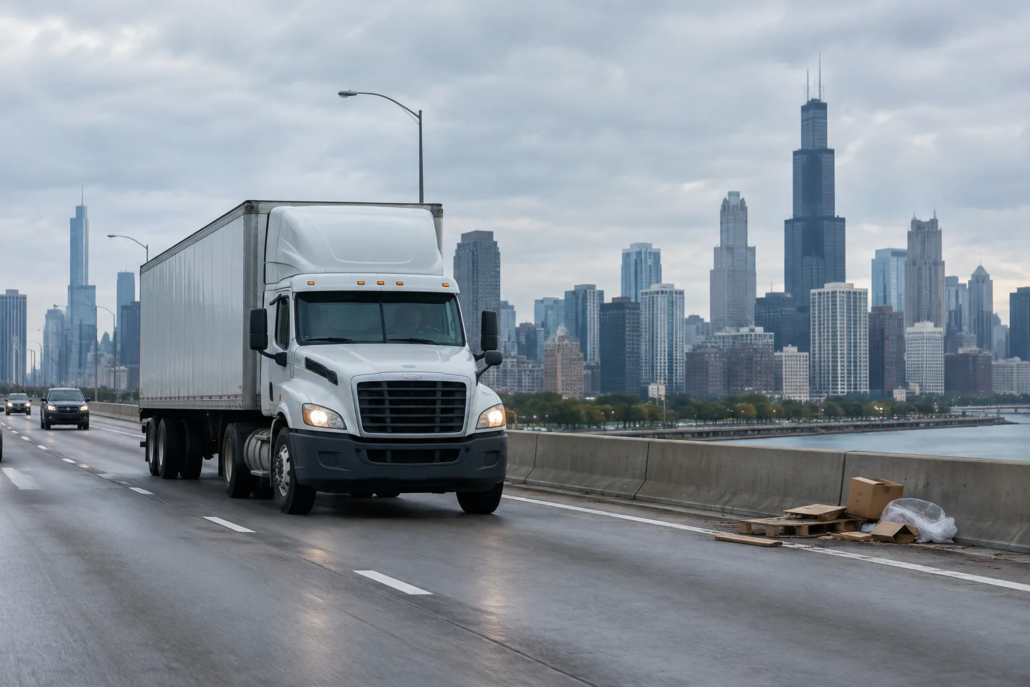
A truck passes through city traffic, and a piece of its load drops into the roadway. A driver may be struck directly, or another road user may swerve to avoid the debris and crash. In either situation, Chicago truck cargo falling accident liability can turn on more than who was behind the wheel: investigators may need to trace how the load was prepared, secured, covered, and transported. Dinizulu Law Group helps readers understand the legal questions that can arise after a truck-related injury. This article explains which parties may be involved, what records and physical evidence could help show how cargo escaped, and why the transport history matters. It also covers practical safety considerations and potential insurance issues. No single party is automatically responsible in every case; the facts and applicable Illinois law matter.
Who May Be Responsible When Cargo Falls From a Truck in Chicago?
Responsibility depends on the work each person or business performed and whether their decisions may have contributed to the cargo escaping. A truck driver may be relevant if the load was not checked before departure, if the truck was operated in a way that worsened an insecure load, or if a problem became apparent during the trip. A motor carrier may also be examined when its procedures, supervision, or equipment played a role.
The loading process can involve a shipper, a loading company, or other workers. If a business arranged the load or took responsibility for securing it, investigators may consider whether the cargo was distributed and restrained appropriately for its type and weight. The trailer’s owner or a maintenance provider could also be relevant if a defective door, latch, or other component allowed cargo to escape. These are possible lines of inquiry, not conclusions about fault.
How loading and securement decisions affect responsibility
Cargo type, weight distribution, restraints, and coverings can all matter. Responsibility may depend on who had control of each task and what information was available to them. A useful starting point is to understand the rules for properly securing truck cargo and how those practices may relate to the particular load.
Which Records and Physical Evidence May Explain a Chicago Truck Cargo Spill?
A cargo spill scene can change quickly as vehicles move and roadways are cleared. Photos or video taken safely from a distance may show where material landed, the truck and trailer, damage to restraints, or the condition of a cover or door. Witness accounts and nearby camera footage may help establish when cargo came loose and how the driver or other road users responded.
Records may help trace the load’s history. Depending on what exists and who controlled it, relevant materials could include shipping and loading documents, inspection records, dispatch communications, driver logs, maintenance files, and photographs taken before departure. Records may be held by different businesses, so a complete picture can require comparing details across sources. These evidence clues in a Chicago truck cargo securement case may help clarify whether a load was unevenly distributed, inadequately restrained, or affected by equipment problems.
In Chicago, the responding law-enforcement agency may create an incident or crash report, depending on where and how the event occurred. A report can be useful, but it may not answer every question about loading or transport. If a claim proceeds in court, the proper venue depends on the circumstances; a case may be handled in the Circuit Court of Cook County. Illinois rules and procedures can change, so local legal guidance may be useful when evaluating a particular claim.
What to Consider After Cargo Falls From a Truck
A falling load can cause harm through direct impact or by creating a hazard that leads to a secondary event. Someone may be struck by cargo, collide with debris, or be injured while braking or swerving to avoid it. A spill might also obstruct a lane or create another roadway hazard. The circumstances determine what injuries and losses may be connected to the event; injuries caused by truck freight spills can involve more than the initial impact.
Safety comes first. If cargo is in or near traffic, avoid approaching it when doing so could create further danger. When it is safe and practical, people may wish to note the location, time, truck or trailer details, and witness contact information, and preserve photos or video. Reporting the incident and seeking appropriate medical attention are also common considerations. For general guidance about steps to take after a truck accident, see the firm’s related resource.
Potential claims and insurance can be complex when several businesses handled the cargo. A carrier’s policy may not be the only coverage worth examining; information about the trailer owner or another involved business could also matter. The available policies depend on the facts and the entities involved. Reviewing insurance policies that may apply after a Chicago truck crash may help explain why identifying each party’s role is important. In Illinois, responsibility and any recovery can depend on the evidence and applicable rules, including how fault is allocated.
Frequently Asked Questions
Is the truck driver automatically responsible when cargo falls?
No. A driver’s conduct may be one part of the investigation, but cargo may have been loaded, secured, covered, or maintained by other people or businesses. The driver’s knowledge of a problem, the carrier’s procedures, and the condition of the trailer may also matter. Responsibility depends on the evidence and the applicable Illinois legal standards, rather than simply on which person was driving when cargo fell.
Can a shipper or loading company be responsible for a cargo spill?
Possibly. A shipper, loading company, or another party may be considered if it performed or controlled loading or securement tasks and those decisions contributed to cargo escaping. The contracts, work records, cargo characteristics, and division of responsibilities may all be relevant. A company’s involvement alone does not establish fault; the specific facts must be assessed under the law that applies.
What evidence may help show how cargo came loose?
Potentially useful evidence includes photos or video of the scene and load, damaged straps or coverings, witness accounts, incident reports, and loading, inspection, dispatch, or maintenance records. Not every item will exist or be available in every matter. Evidence from different sources may need to be considered together to reconstruct the cargo’s handling and transport history.
What if I was hurt while swerving to avoid falling cargo?
A person does not necessarily need to be struck directly by cargo for the spill to be relevant to an injury claim. The connection between the falling material, the response it prompted, and the resulting harm may need careful evaluation. The facts, available evidence, and Illinois law matter. A licensed attorney can discuss how those issues may apply to a particular situation.
How Dinizulu Law Group Can Help
Dinizulu Law Group is dedicated to helping people understand the issues that may follow a Chicago truck cargo spill. The firm can evaluate the circumstances, including how the load was handled, which parties may have had responsibilities, what records could be relevant, and whether more than one insurance policy may be involved. Each matter depends on its own facts, and no particular outcome can be promised. If you were injured when cargo fell from a truck, contact Dinizulu Law Group to discuss your situation and arrange a consultation.
The information in this article is for educational purposes only and does not constitute legal advice. Contact a qualified attorney authorized to practice in the jurisdiction that applies to your matter for advice specific to your situation.


Leave a Reply
Want to join the discussion?Feel free to contribute!