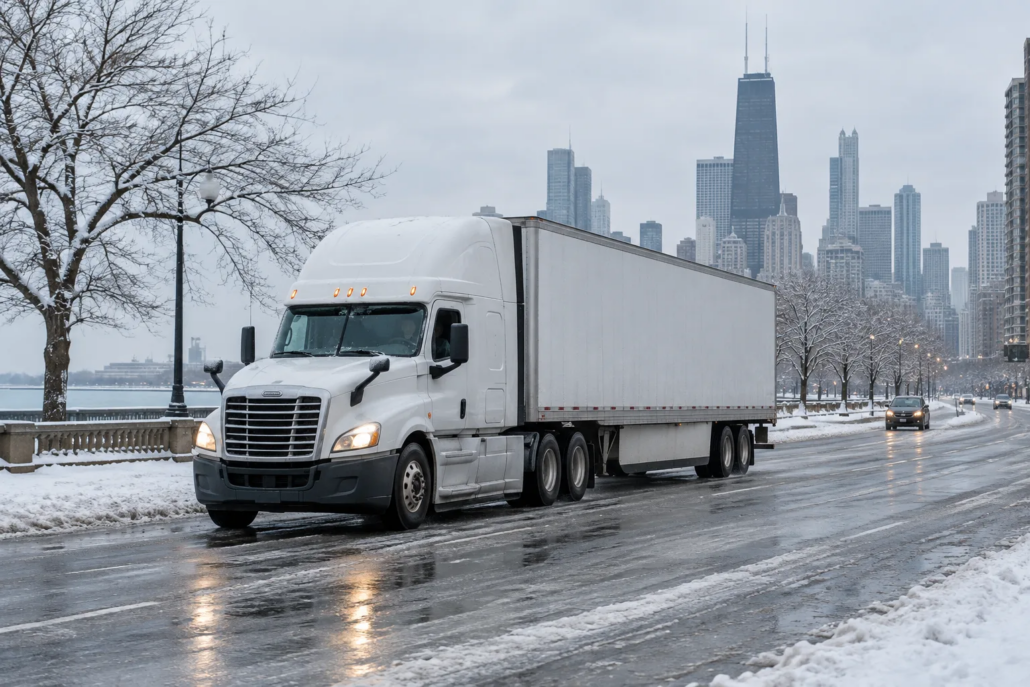
What Determines Liability After an Icy Chicago Truck Crash?
A truck sliding on an icy Chicago street can leave people wondering whether the weather caused the crash—or whether someone could have taken steps to reduce the risk. Chicago truck accident icy road liability is rarely decided by the word “ice” alone. Investigators may consider how fast the truck was traveling, how much room the driver left, whether the vehicle and tires were in suitable condition, and what the driver did as conditions changed. How spacing and speed affect Chicago truck rear-end liability is one related issue that can help explain why a truck may need substantial space to stop. Dinizulu Law Group helps readers understand the questions that can arise after a winter collision. This article explains who may bear responsibility, which scene and weather details can matter, and what records may help clarify how a skid began.
Chicago truck accident icy road liability: who may share responsibility?
A skid is a loss of traction, not a complete explanation of why a collision happened. Ice, packed snow, slush, or a sudden temperature drop may make driving more difficult, but the evaluation generally looks at the decisions and conditions surrounding the loss of control. Bad weather does not automatically make a driver responsible, and it does not automatically excuse the driver either.
A truck driver may be one potential responsible party if the evidence suggests the driver failed to adjust to conditions—for example, by traveling too fast for the available traction, following too closely, braking abruptly, or making a sharp steering correction. A carrier may also be relevant if its conduct, vehicle maintenance, or route and scheduling decisions contributed to the crash. Depending on the facts, maintenance providers or other parties could also warrant examination. Their involvement should not be assumed just because a truck skidded.
Speed, spacing, and braking
A heavy truck can require considerable distance to slow down, and slick pavement can make stopping and steering less predictable. A speed that might be manageable on dry pavement may be unsafe on an icy bridge, ramp, or shaded stretch. Drivers may need to leave more room and respond gradually rather than make sudden braking or steering movements. The circumstances matter, including visibility, traffic, road grade, and whether the hazard could reasonably be anticipated.
Tires, traction, and equipment
Tire condition and maintenance may be relevant, but a worn or damaged tire should not be presumed to have caused a skid. Inspection and service information can help show the vehicle’s condition before the crash. For a related overview, see how tire condition and maintenance can affect truck crash responsibility.
What Chicago scene and vehicle evidence may clarify a winter skid?
A careful review often considers the road, weather, truck, and timeline together. In Chicago, the same trip can involve changing conditions: a plowed main road, a slick bridge deck, and a ramp where snow or slush has collected. Investigators may consider where the truck first lost traction, the path it traveled, the point of impact, and whether other vehicles or obstacles affected the driver’s options.
Useful details may include:
- Photographs or video of the roadway, vehicle positions, tire marks, snow or ice, visibility, and nearby intersections or ramps.
- The precise crash location and time, along with weather observations and available road-treatment or maintenance information.
- Witness accounts and available camera footage that may help establish what the truck did before and during the skid.
- Vehicle inspection, maintenance, and repair records that could help determine whether brakes or other equipment were functioning properly.
Weather reports can provide context, but they do not necessarily establish the exact condition of a particular lane at the time of impact. Likewise, a crash report may record observations and statements without answering every question about legal responsibility. Relevant road records may depend on whether the location is maintained by the City of Chicago, Cook County, the Illinois Department of Transportation, or another entity. Evidence of roadway conditions in Chicago truck crashes can provide additional context for considering pavement and maintenance evidence.
Vehicle documentation may add another piece of the picture. Inspection logs, repair invoices, and maintenance histories may help identify concerns that existed before the trip. This related discussion explains records that can reveal truck brake maintenance and repairs. Records can inform an investigation, but a maintenance entry by itself does not prove that a particular defect caused the crash.
How can driver and carrier records help establish what happened?
The timing and context of a trip may matter alongside the physical evidence. A driver’s route, stops, and schedule can help investigators understand what was happening before the collision. Electronic logging device records may provide information about driving time and activity, but they do not independently establish the truck’s speed at the moment of a skid, the condition of the pavement, or who was at fault. Electronic logging device records from a truck driver may be one source to consider among others.
When a crash involves a commercial vehicle, potentially relevant information may be held by different people or organizations. Depending on the circumstances, that could include the driver, carrier, repair provider, or roadway authority. The type of record available and the process for seeking it can vary. In Illinois, legal responsibility may also be divided among multiple parties based on the evidence and applicable law; the presence of winter weather does not answer that question on its own.
A common mistake is to focus only on the truck’s final position or assume that a skid proves reckless driving. Those details can matter, but they need context. A useful review may compare witness accounts, photographs, weather information, vehicle records, and any available electronic data. It can also distinguish an unavoidable change in conditions from a risk that might have been managed through a different speed, greater spacing, appropriate equipment, or a safer response. The specific facts and current Illinois law guide any legal assessment.
Frequently Asked Questions
Does a police report decide who was at fault in an icy truck crash?
A police report can preserve important observations, statements, and scene details, but it does not necessarily resolve every question of legal responsibility. The report may be one source of evidence considered with photographs, witness accounts, weather information, vehicle records, and other available material. In Chicago and elsewhere in Illinois, fault depends on the full circumstances and applicable law, not simply on whether a report assigns or suggests blame.
Can a trucking company share responsibility for a winter crash?
It may, depending on the evidence and the company’s role. An investigation could examine whether carrier practices, vehicle maintenance, or other company-related conduct contributed to the collision. The fact that a driver works for a carrier does not automatically make the carrier legally responsible, and a company’s involvement should not be assumed. An attorney can assess how Illinois law applies to the particular facts and parties.
How soon should truck records be preserved after a crash?
Some records may be retained for limited periods or may be affected by ordinary business practices, so timing can matter. Which materials are relevant depends on the crash and could include electronic data, maintenance files, or video. A lawyer can explain whether preservation steps may be appropriate in a particular situation. This general information is not a case-specific instruction, and evidence availability varies.
Does responsibility change if the crash happened outside Chicago city limits?
The location can affect which roadway authority maintains the area and which court or procedures may be relevant. A crash near Chicago could occur on a road maintained by a city, county, state agency, or another entity. That does not by itself determine liability. Illinois law generally applies to Illinois claims, but local facts and any potentially responsible public or private parties require careful review.
How Dinizulu Law Group Can Help
Dinizulu Law Group is dedicated to helping people understand the questions that may follow a truck crash in Chicago, Illinois. The firm can evaluate how winter conditions, driving decisions, vehicle maintenance, roadway details, and available records may fit together, while considering whether more than one party could be involved. Every situation is different, and no result can be promised. If you have questions after a snow- or ice-related truck collision, contact Dinizulu Law Group to request a free consultation or case evaluation and discuss your circumstances.
The information in this article is for educational purposes only and does not constitute legal advice. Contact a qualified attorney licensed in Chicago, Illinois for advice specific to your situation.


Leave a Reply
Want to join the discussion?Feel free to contribute!