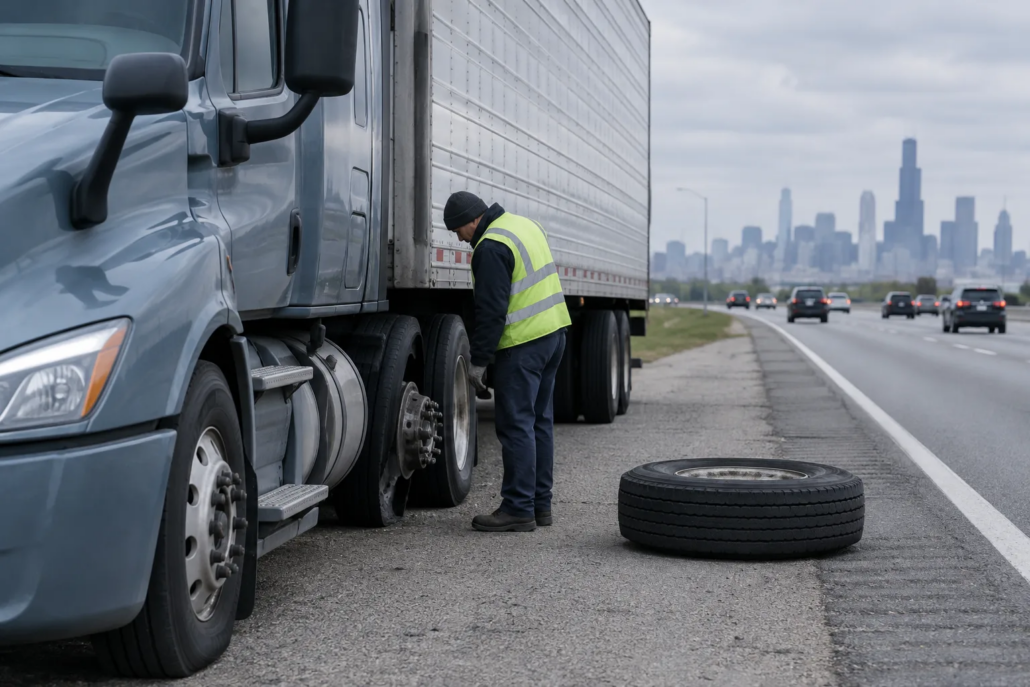
Could a Chicago Truck Tire Blowout Put Others at Risk?
A tire blowout on a Chicago highway can turn an ordinary trip into a sudden emergency. A Chicago truck tire blowout accident may begin with a tire that has been losing pressure for some time, a damaged component, an impact with roadway debris, or a combination of factors. The loud failure is only one part of the event: a driver may struggle to keep the truck in its lane, while detached rubber or other debris can create hazards for vehicles nearby. Dinizulu Law Group helps people understand the questions that may arise after serious truck crashes. This article follows a tire through selection, inspection, maintenance, repair, and its final contact with the road. It also explains what evidence may distinguish an unexpected failure from a condition that could have been detected, and which people or businesses may warrant investigation. A blowout alone does not establish who is legally responsible; the surrounding facts matter.
How a Chicago truck tire blowout can develop
A commercial tire’s history matters. The tire may be new, retreaded, previously repaired, or transferred between vehicles. Its condition can change through use, exposure, and maintenance. Investigators may consider the tire’s size and specifications for the truck, its age and service history, wear patterns, pressure condition, and whether the wheel-end assembly shows related damage. No single clue necessarily explains a failure; an examination should consider the tire and the sequence of events together.
Wear, pressure, load, and repair history
Underinflation can contribute to heat buildup and stress, while excessive wear, cuts, punctures, impact damage, or a poor repair may weaken a tire. A truck’s load and operating conditions can also matter. Those possibilities are not proof that any one person acted improperly. Inspection records, pressure-monitoring information if available, repair invoices, and fleet maintenance procedures may help establish what was known and when. A tire can also fail despite reasonable care, so the cause should not be assumed from the fact of a blowout.
The tire’s lifecycle may involve a carrier choosing replacement tires, a maintenance provider inspecting or repairing them, or a retread supplier supplying a casing or tread. Each role raises different questions about what work was performed and whether it was connected to the failure. In Chicago, Illinois, an investigation may need to account for multiple records and businesses rather than treating the truck’s driver as the only possible source of information.
What the tire, crash scene, and roadway may reveal
A blowout can affect more than the truck itself. A driver may have difficulty controlling the vehicle, and loose tread or tire fragments may strike another vehicle or cause a driver to swerve. The location of debris, scrape marks, vehicle damage, and the truck’s path may help reconstruct the sequence. Weather, traffic, visibility, and roadway conditions can also be relevant, but the presence of a hazard does not by itself prove that a road authority or another party is responsible.
Potholes, sharp objects, damaged pavement, or debris may contribute to tire damage or influence what happened after the failure. The scene clues in Chicago truck road-defect claims can help readers understand why pavement conditions and the position of debris may matter alongside the tire’s condition. Investigators may compare photographs, measurements, witness accounts, and available video rather than relying on a single scene detail.
Preserving physical and maintenance evidence
The failed tire should not be discarded, altered, or repaired before its condition has been documented and appropriately examined. The wheel, rim, valve, and nearby components may also help explain how the failure occurred. Maintenance and inspection records, driver reports, dispatch information, and documents showing tire purchase or repair may fill gaps that physical evidence cannot answer alone. Preserving evidence after a Chicago truck mechanical failure can be important because parts and records may become unavailable over time.
In Chicago, highway traffic and cleanup can change a crash scene quickly. Photographs taken when safe, witness contact information, and details about where debris was found may help preserve context. These materials do not decide liability by themselves, but they can support a fuller investigation of whether the tire, truck, road, or several factors contributed.
Who may be investigated after a blowout crash?
Responsibility depends on evidence connecting a person or business’s conduct or product to the crash and resulting harm. Depending on the facts, an investigation may examine:
- The motor carrier or fleet operator: tire selection, inspection practices, maintenance scheduling, repair decisions, and whether relevant problems were addressed.
- The driver: what the driver knew about tire condition, whether a warning or handling issue arose, and how the truck was operated before and after the failure.
- A maintenance or repair provider: the work performed, the information available at the time, and whether the work may relate to the failure.
- A tire, retread, or component supplier: whether a product defect or a problem in manufacture, design, or repair may have contributed. A product claim generally requires evidence; a blowout alone is not enough to establish a defect.
- A roadway-related entity or another road user: whether a specific hazard or collision sequence is supported by scene evidence. A road defect alone does not establish responsibility.
Potential liability and available insurance are related but separate questions. More than one policy may be relevant depending on the parties and circumstances. Readers can review information about insurance policies that may apply after a Chicago truck crash to understand why identifying coverage may require a separate inquiry. Claims arising in Chicago may involve proceedings in an appropriate Illinois court, but the proper venue and applicable rules depend on the particular facts. Illinois law can change, and legal standards may differ in other jurisdictions.
For an injured person, practical steps after the crash can include seeking appropriate medical evaluation, keeping records related to the event, and documenting the scene only when it is safe to do so. Do not put yourself in traffic or handle debris to gather evidence. These general considerations complement the more detailed steps to take after a truck accident. An attorney may assess which evidence is relevant and whether preservation requests or expert examination may be appropriate in the circumstances.
Frequently Asked Questions
Does a truck tire blowout automatically mean the trucking company was at fault?
No. A blowout is evidence of a tire failure, not automatic proof of negligence or legal responsibility. The cause may involve wear, pressure, an impact, a repair, a product issue, roadway conditions, or several factors. Investigators generally need to examine the tire and related records, as well as how the crash unfolded, before drawing conclusions about any party’s role.
Can tire debris cause a separate injury claim?
It may, depending on the facts. A person could be injured by tire debris itself, by a collision after a driver swerves, or by a loss of control involving the truck. Evidence about where debris came from, where it landed, and how the vehicles moved may help clarify the event. Whether a claim is legally supportable depends on the circumstances and applicable law.
What records may help explain a semi-truck tire failure in Illinois?
Potentially useful materials include inspection and maintenance records, tire purchase and repair history, driver reports, photographs, and physical evidence from the tire and wheel assembly. The relevant records depend on the failure and the parties involved. Their existence does not establish fault on its own; an investigation considers what each record shows and how it relates to the crash.
Could a road hazard and a tire problem both contribute to a crash?
Yes. A tire may have an existing weakness and then encounter an object or damaged pavement, or a road hazard may cause damage to an otherwise serviceable tire. Crash reconstruction may consider the tire’s condition, roadway evidence, vehicle damage, and timing together. Whether multiple causes create legal responsibility is a fact-specific question under applicable Illinois law.
How Dinizulu Law Group Can Help
Dinizulu Law Group is dedicated to helping injured people understand the questions raised by serious truck crashes. When a tire blowout is involved, an evaluation may consider the tire’s lifecycle, maintenance and repair history, roadway conditions, available physical evidence, and the roles of the driver, carrier, or other parties. The firm is committed to fighting for clients’ rights while assessing each matter on its own facts; no particular outcome can be promised. If a blowout crash in Chicago has affected you or someone close to you, contact Dinizulu Law Group to discuss your circumstances and request a free consultation or case evaluation.
The information in this article is for educational purposes only and does not constitute legal advice. Contact a qualified attorney licensed to practice in Illinois for advice specific to your situation; laws vary by location and may change.


Leave a Reply
Want to join the discussion?Feel free to contribute!