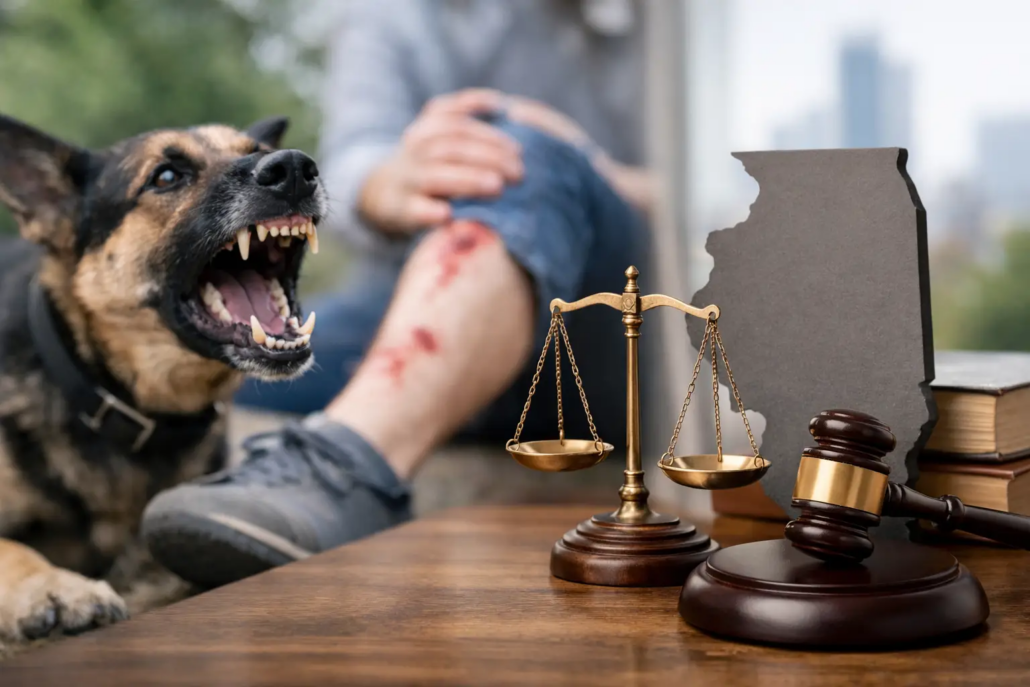
Dog Bite Liability Illinois and Your Right to Recover
A dog attack can turn an ordinary walk, visit, or delivery into a painful and frightening event in seconds. Questions about dog bite liability Illinois law often arise just as quickly: Who pays the emergency room bill? What if the dog never bit anyone before? What if the owner says the victim caused it?
Illinois law gives many injured people a strong path to seek accountability. But the outcome still depends on the facts, the evidence, and how promptly the claim is handled. A serious bite can leave more than a scar. It may require reconstructive care, cause nerve damage, lead to infection, keep someone out of work, and leave lasting fear that affects daily life.
Illinois Dog Bite Liability Is Often Strict
Illinois has a statute commonly called the Animal Control Act. Under this law, a dog owner may be responsible for the full amount of injuries when their dog attacks, attempts to attack, or injures someone without provocation.
Unlike a negligence claim, this does not generally require the injured person to prove the owner knew the dog had bitten someone before. Illinois does not follow a simple “one free bite” rule. A prior history of aggression can still be valuable evidence in some cases, but it is not a required starting point for a claim under the statute.
For an injured person to bring a statutory dog-bite claim, the facts generally need to show that they were peaceably conducting themselves and were legally allowed to be where the incident occurred. This can include a public sidewalk, a park, a neighbor’s home after being invited in, an apartment building hallway, or a delivery location.
The law can apply even when an owner did not intend for anyone to be hurt. A dog can slip a leash, push through a loose gate, or lunge while an owner is trying to hold it back. The owner may still be legally responsible for the harm that follows.
What Does “Without Provocation” Mean?
Provocation is one of the most disputed issues in dog bite cases. Insurance companies may argue that a victim startled, teased, struck, cornered, or otherwise provoked the animal. That argument can be painful and unfair, especially when the injured person is a child.
But a dog owner or insurer cannot simply label ordinary behavior as provocation. Walking near a dog, entering a space where a person has permission to be, or moving normally around an animal does not automatically excuse an attack. The specific circumstances matter: what happened in the seconds before the bite, whether the dog was restrained, what witnesses saw, and whether video footage exists.
Children deserve particular care in these cases. They may not be able to clearly explain what happened, and their injuries are often to the face, hands, or arms. A child may also need future medical treatment as scars change with growth. Families should not accept an insurer’s version of events without a full investigation.
Where the Attack Happened Can Affect the Claim
The location of a dog attack is not a minor detail. Someone bitten while lawfully visiting a friend or family member may have a statutory claim against the dog’s owner. The same may be true for a postal worker, delivery driver, contractor, or other worker lawfully performing a job.
Trespassing can complicate a claim because the statute generally protects people who are lawfully present. Even then, the situation may not be as simple as an owner suggests. Property boundaries, invitations, shared spaces, locked or open gates, and the reason the person entered can all matter.
Apartment and rental-property cases also require a closer look. The dog’s owner is often the primary responsible party, but a landlord, property manager, or homeowners association may have separate responsibility in limited circumstances. That can depend on factors such as control over the property, knowledge of a dangerous dog, lease terms, prior complaints, and whether the party had the ability to correct a dangerous condition.
Compensation Can Address More Than the First Medical Bill
Dog bite injuries can create immediate expenses and long-term consequences. A claim may seek compensation for emergency treatment, surgery, follow-up care, medication, physical therapy, lost income, and reduced earning ability when injuries interfere with work.
Illinois law may also allow recovery for pain, emotional distress, disfigurement, scarring, and loss of a normal life. These losses are real. Someone who develops anxiety around animals, avoids walking in their own neighborhood, or struggles with visible facial scarring has suffered harm that does not fit neatly on a receipt.
The value of a claim depends on the severity and permanence of the injury, medical recommendations, the impact on work and family life, available insurance coverage, and the strength of the evidence. Quick settlement offers often focus on current bills while overlooking future treatment and the full human cost of the attack.
Four Steps That Can Protect Your Claim
After receiving medical care, taking a few practical steps can make a meaningful difference.
- Report the incident. Contact local animal control or law enforcement when appropriate. An official report can help identify the dog, its owner, vaccination status, and prior incidents.
- Document the injury and scene. Photograph wounds, torn clothing, the location, broken fencing, open gates, and visible warning signs or their absence. Continue taking photographs as injuries heal or scars develop.
- Get witness information. Names, phone numbers, and brief observations from people who saw the attack can become crucial if the owner later disputes what occurred.
- Preserve medical records and avoid rushed statements. Follow treatment recommendations, keep bills and work-loss documentation, and be cautious when an insurer asks for a recorded statement or broad medical authorization.
If the dog is unknown or ran away, report that promptly and seek medical attention. Rabies concerns and infection risks should never be ignored. Medical documentation also establishes a clear record of the injury from the beginning.
Do Not Wait Too Long to Seek Legal Advice
Most Illinois personal injury claims have deadlines, and missing a deadline can jeopardize the right to recover. The applicable time limit may vary depending on who is responsible, whether the injured person is a minor, and whether a government entity is involved. Evidence can also disappear quickly. Doorbell footage may be deleted, witnesses may move away, and a property owner may repair a broken fence before it is documented.
A careful legal review can identify all potentially responsible parties, assess available insurance coverage, and push back when an insurer tries to shift blame onto the person who was hurt. It can also give an injured person room to focus on healing rather than arguing with adjusters while managing medical appointments and missed work.
At Dinizulu Law Group, Ltd, we believe people harmed by another person’s failure to control a dangerous animal deserve to be heard, treated with dignity, and taken seriously. A dog bite is not something a family should be pressured to simply absorb. Getting clear answers early can help protect both your health and your path toward accountability.


Leave a Reply
Want to join the discussion?Feel free to contribute!