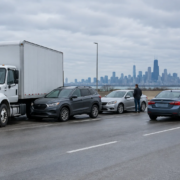
How Is Chicago Truck Chain-Reaction Liability Decided?
A truck crash can set off a chain of impacts in seconds. A passenger car may stop abruptly, another vehicle may strike it, and a truck behind them may be involved in a later collision. In Chicago, truck accident chain reaction liability depends on more than identifying the largest vehicle: the order of impacts, each driver’s actions, and the conditions on the road can all matter. Dinizulu Law Group helps readers understand the questions that may arise when several people and vehicles are involved. This article explains how investigators and legal professionals may examine the first collision and later impacts, what evidence can help establish the sequence, and why responsibility may extend beyond the drivers. The facts of each crash are different, so a pileup does not automatically mean that one person or company is responsible for every resulting impact.
How Does Impact Order Shape Chicago Truck Chain-Reaction Liability?
A multi-vehicle crash is best understood as a sequence of events, not a single collision. The first impact may have one cause, while a later driver’s response—or failure to respond—may raise a separate question. Investigators may examine where vehicles were positioned, which parts of each vehicle were damaged, and whether the timing and direction of those impacts fit the accounts of drivers and witnesses.
For example, a truck might strike a vehicle that slows suddenly. That initial contact may push the car into another lane or leave it stopped in traffic. A following driver could then have time to brake or steer away—or may have too little time because of speed, distance, limited visibility, or a sudden change in traffic. The mechanics of the later collision need separate attention; involvement in one impact does not by itself establish fault for all the others.
Why the first crash may not explain every impact
The location of damage, tire marks, vehicle positions, and available camera footage can help clarify whether a later collision was a direct result of the first or involved additional contributing conduct. Speed, following distance, stopping distance, and road conditions may affect whether a driver had a reasonable opportunity to avoid another vehicle. See how spacing and stopping distance shape Chicago truck rear-end liability for more on the factors that may matter in a following-vehicle collision.
What Evidence Can Reconstruct a Multi-Vehicle Truck Pileup in Chicago?
A reliable reconstruction depends on information that helps establish where vehicles were and when each impact happened. Potentially useful evidence may include:
- Photographs of vehicle damage, resting positions, debris, and visible roadway conditions.
- Witness accounts describing traffic movement and the order of impacts.
- Video from nearby businesses, traffic systems, or vehicle cameras, if available and retained.
- Vehicle data or records that may provide information about speed, braking, or movement, depending on the vehicle and system.
- Police or other investigating-agency reports, which may record observations and statements but are not necessarily the final word on civil responsibility.
In Chicago, the responding agency may vary with the crash location and circumstances. Weather, construction, low visibility, traffic flow, or a road defect can also affect the sequence. A pothole or lane shift, for instance, could contribute to an evasive maneuver or make a later impact harder to avoid. Photographs, measurements, and scene conditions may help assess these possibilities; see evidence of roadway conditions in Chicago truck crashes for a closer look at roadway-related proof.
Evidence can become harder to obtain over time. Video may be overwritten, vehicles may be repaired, and physical conditions at the scene may change. In a Chicago truck pileup, preserving and comparing relevant evidence can help distinguish what caused the first collision from what contributed to later ones.
Who Besides the Drivers May Share Responsibility?
The driver involved in a particular impact is not necessarily the only party whose conduct matters. Depending on the facts, a truck’s owner, a motor carrier, a maintenance provider, or another business may be relevant to the investigation. The connection between a driver and a company can matter, but a job title or contract alone does not resolve responsibility. The specific relationship, conduct at issue, and applicable Illinois law may need to be assessed. Read about how Illinois law may treat trucking-company responsibility for contractor drivers for more context.
Illinois generally applies comparative-fault principles in personal injury cases. This means the conduct of more than one person may be considered, and a person’s share of fault can affect whether and how damages may be recovered. How those principles apply depends on the evidence and circumstances; identifying the first vehicle in the chain does not settle the question.
Insurance is another part of the process, but coverage and fault are distinct issues. The truck, other vehicles, and potentially involved businesses may have separate policies, with different terms and limits. Identifying insurance policies that may apply after a Chicago truck crash can be important when several claims arise, but it does not determine who caused each impact. A Chicago, Illinois, injury claim may involve overlapping factual and coverage questions that warrant careful review.
Frequently Asked Questions
Does the truck automatically bear responsibility because it is the largest vehicle?
No. Vehicle size alone does not establish legal responsibility. A review generally considers how the crash unfolded, including each driver’s actions, the timing of impacts, road and traffic conditions, and available evidence. A truck may be involved in the first collision without being responsible for every later impact. Conversely, a driver or business may have responsibility even if its vehicle was not the first one struck. The details matter.
Can a driver be responsible for a later collision even if they did not cause the first one?
Possibly. A later driver’s speed, following distance, attention, and opportunity to brake or avoid a stopped vehicle may be relevant to a separate impact. The analysis can also account for sudden or unexpected events and the conditions at the scene. In Illinois, fault may be considered among multiple parties, so the cause of the initial crash and the cause of each later collision may need to be evaluated separately.
What if a road hazard contributed to the pileup?
A road condition may be relevant if evidence suggests it contributed to the first collision or made a later impact harder to avoid. The investigation may consider the hazard’s location, visibility, how vehicles responded, and whether a responsible party may have had a role in the condition. Establishing that a hazard existed is not, by itself, enough to determine legal responsibility. The facts and applicable Illinois law matter.
What if several people disagree about the order of impacts?
Conflicting accounts can make physical and recorded evidence especially important. Vehicle damage, debris, scene measurements, witness statements, and available video or vehicle data may help clarify the sequence. Not every source will be available or conclusive, and an investigating report may not resolve every civil-liability question. A legal professional can review the available information and explain how it may apply to a specific situation.
How Dinizulu Law Group Can Help
Dinizulu Law Group is dedicated to helping people understand the questions that can arise after a serious truck crash involving several vehicles. The firm can evaluate how the reported sequence of impacts, available evidence, potentially responsible parties, and insurance issues may relate to a claim under Illinois law. Because each collision has its own circumstances, an assessment should be based on the specific facts rather than assumptions about which vehicle was largest or struck first. If you were involved in a Chicago truck pileup, contact Dinizulu Law Group to request a free consultation or case evaluation and discuss your options.
The information in this article is for educational purposes only and does not constitute legal advice. Contact a qualified attorney authorized to practice in the jurisdiction that applies to your matter for advice specific to your situation.


