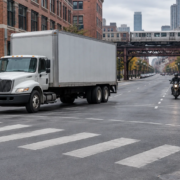
How Can a Truck’s Left Turn Endanger Chicago Motorcyclists?
A truck turning left across an intersection can leave a motorcyclist with little room to react. A motorcycle may be less visible beside or in front of a large vehicle, while a truck’s cab and trailer can follow different paths through the turn. A Chicago truck motorcycle left-turn accident may therefore involve more than a question of who entered the intersection first. Dinizulu Law Group helps Chicago readers understand the kinds of facts that can matter in truck collision claims. This article explains how vehicle size and turning movement create risks, what scene details may help clarify how a crash happened, and why the full circumstances matter when assessing responsibility under Illinois law.
Why a Chicago truck motorcycle left-turn accident can happen
A left turn requires a driver to cross the path of traffic moving in the opposite direction or through an intersection. A truck’s length and height can affect the driver’s view, and the cab may not follow the exact path of the trailer. A motorcycle, meanwhile, presents a narrower profile than a passenger vehicle. These factors can make it harder for a driver to judge the motorcycle’s position or closing speed, but they do not establish what happened in a particular crash.
The turning path and sightlines
The cab may begin turning before the trailer follows, and the trailer may track inside or outside the cab’s path depending on the maneuver and roadway. A truck may also need more room to turn than a car. The motorcycle’s location—such as whether it was approaching, proceeding straight, or beside another vehicle—can affect how the two paths intersect. Evidence of a truck’s turning path and trailer off-tracking may help explain the geometry, but those issues matter only if the scene supports them in the specific left turn.
Sightlines can also change as vehicles move. A truck’s windshield pillars, mirrors, other traffic, or roadside objects may affect what a driver could see at a given moment. Likewise, a rider’s view of an approaching truck may be partially blocked by traffic or the intersection layout. Chicago streets vary in lane width, traffic flow, and visibility, so the setting and exact vehicle positions deserve close attention.
What scene details may clarify a truck-motorcycle crash in Chicago
No single detail necessarily answers why a truck and motorcycle collided. A careful review may compare evidence from several sources and consider whether their accounts fit together. Relevant information can include:
- Signal timing and entry: Which signal indications each driver faced, when the vehicles entered, and how the signal sequence progressed. Signal phases and vehicle positions can help frame the question of right of way, but a signal phase alone does not prove fault. Read more about how Chicago signal phases affect left-turn truck collisions.
- Vehicle positions and movement: The motorcycle’s lane and direction, the truck’s starting position, its turn angle, and where each vehicle came to rest, if that can be reliably determined.
- Physical and visual evidence: Vehicle damage, debris, skid or scrape marks, and photographs or video that may show the intersection, sightlines, or positions. The availability and usefulness of this evidence can vary.
- People’s observations: Witness accounts may help establish what they saw, though distance, obstructions, and the brief timing of a collision can affect what any observer could perceive.
In Chicago, an intersection may have city traffic signals or nearby cameras, but the existence, availability, or retention of recordings should not be assumed. A police report can provide an initial account, but it may not capture every detail about the signal, sightlines, or turning path. Comparing the report with photographs, witness observations, and other available evidence can help readers understand how to assess a Chicago truck crash police report. Liability depends on the evidence and applicable Illinois law, not on one isolated observation.
What to consider after a truck-motorcycle intersection collision
After a collision, immediate safety and medical needs take priority. If it is safe and practical, documenting what is remembered can help preserve details that may otherwise become harder to recall. An injured person should not put themselves in traffic or another unsafe setting to gather evidence.
When circumstances allow, useful information may include the intersection, direction of travel, approximate vehicle positions, signal observations, weather and visibility, and names or contact information for witnesses. Photographs taken safely may show the vehicles, roadway, traffic controls, and visible conditions. Keep relevant records, such as photos and communications, together. Do not assume that an early recollection or report captures every detail; accounts can differ, and further information may become available.
A truck-motorcycle crash may raise questions about more than the truck driver’s actions. Depending on the facts, investigation may examine the truck’s operation, the motorcycle’s movement, the roadway, and other circumstances. A left-turn truck accident liability assessment should consider the whole sequence rather than presume that either vehicle’s size or position decides fault. Illinois law governs claims arising in Chicago, and legal rules may vary by location or change over time.
For additional general information about practical steps to take after a truck accident, readers can review guidance on documenting a collision and addressing issues that may arise when multiple parties are involved.
Frequently Asked Questions
Can a truck’s left turn create a particular risk for a motorcyclist?
It can. A turning truck may cross the motorcycle’s path, and the motorcycle’s smaller profile, the truck’s sightlines, and the vehicles’ different turning paths can make the interaction difficult to assess. These are possible risk factors, not proof that a particular driver caused a collision. The vehicles’ positions, timing, and other scene evidence matter.
Does a green light mean the truck or motorcyclist is automatically at fault?
Not necessarily. A signal indication is one piece of information, and the timing, direction of travel, and point at which each vehicle entered the intersection may matter. Other evidence may also be relevant. In Chicago, as elsewhere in Illinois, responsibility should be assessed from the circumstances and applicable law rather than from the signal color alone.
What evidence may help explain how a truck and motorcycle collided?
Potentially useful evidence may include photographs, available video, witness observations, vehicle damage, roadway marks, and information about signal timing. The truck’s position and path, the motorcycle’s lane and direction, and visibility conditions may also help explain the sequence. What is available differs from one intersection and collision to another.
Can a police report determine liability for a Chicago truck-motorcycle crash?
A police report may record information gathered at the scene, but it is not necessarily a complete reconstruction or a final legal decision about fault. Its account can be considered alongside other available evidence, such as photographs, witness statements, and vehicle damage. The significance of a report depends on its contents and the broader circumstances.
How Dinizulu Law Group Can Help
Dinizulu Law Group is dedicated to helping injured people understand the questions that can arise after a truck-motorcycle collision in Chicago. The firm can review the circumstances, discuss what evidence may be relevant, and explain how Illinois law may apply to a particular situation. Each collision is different, and an evaluation depends on the available information. If you have questions about a left-turn crash, contact Dinizulu Law Group to request a free consultation or case evaluation and explore your legal options.
The information in this article is for educational purposes only and does not constitute legal advice. Contact a qualified attorney licensed in Illinois for advice specific to your situation.


