Why Can Chicago Trucks Get Stuck at Railroad Crossings?
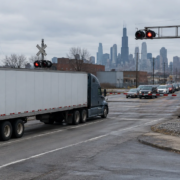
A long truck approaches a railroad crossing as traffic slows ahead. The driver may have little room to turn, and the trailer may not clear the tracks as quickly as a passenger car. A Chicago truck railroad crossing accident can happen when vehicle dimensions, crossing layout, traffic queues, warning devices, or route choices combine in a dangerous way. Understanding those factors matters because an impact or a truck stuck on the tracks can raise questions about more than one person’s actions.
Dinizulu Law Group helps readers understand the issues that can arise after serious truck collisions. This article explains why trucks may be vulnerable at rail crossings, what carrier and crossing conditions may have contributed, and which evidence may help clarify the sequence of events. The details of each collision are different, so responsibility depends on the available facts.
Why Chicago Truck Railroad Crossing Accidents Can Happen
Rail crossings can be challenging for large vehicles because a truck needs sufficient room, time, and a suitable path to get fully across. A tractor-trailer’s length can mean the rear of the vehicle remains over the rails after its front has passed. A low-clearance undercarriage or uneven approach can also matter: the trailer or another part of the vehicle may make contact with the crossing surface, depending on its design and the truck’s configuration.
Vehicle dimensions and crossing geometry
The angle of approach, steepness of the road, track spacing, and available space beyond the tracks all affect whether a truck can cross without stopping. A turn immediately before or after the tracks may require a wider path. If the truck must turn across traffic, nearby vehicles or curbs can limit its options. A route that works for a car may not provide enough clearance or turning room for a long combination vehicle.
Route planning and vehicle dimensions are separate from the hazards posed by a bridge or overpass, but both can raise questions about clearance and whether the chosen route suited the truck. Our discussion of how truck height and route selection can affect Chicago crash liability addresses related planning issues.
Queued traffic and warning devices
A truck can enter a crossing with an apparently open path and then encounter a queue on the far side. If traffic stops before the truck can clear the tracks, its size may leave it with fewer options than a smaller vehicle. Gate arms, flashing lights, bells, and signals provide important warnings, but investigators may need to establish when they activated, what the driver could see, and how the truck was positioned at that time.
Who May Share Responsibility for a Crossing Collision?
Responsibility is not determined simply by the fact that a truck and train were involved. Depending on the evidence, a review may consider the truck driver’s actions, carrier policies and route instructions, crossing design or maintenance, warning-device operation, and the conduct of other road users. Each role must be considered in context; a crossing hazard or a company’s involvement alone does not establish fault.
A carrier’s records may help show what route was assigned, whether restrictions or clearance information were considered, and whether the truck’s dimensions were accounted for. Driver schedules, dispatch communications, vehicle inspection records, and training materials may also be relevant in some cases. Information about a crossing’s operation or physical condition may help clarify whether a warning device or roadway feature played a part.
Chicago-area cases may involve state and local roadways, rail operators, private property, or multiple jurisdictions. The Illinois Commerce Commission has railroad-safety responsibilities, and the agency’s role may be relevant to some crossing-related questions. A civil case filed in Cook County would be handled under applicable court and venue rules; the proper forum depends on the circumstances. For a broader discussion of how Chicago truck-rail crossing crashes can involve multiple parties, see our related article.
What Facts Can Help Explain How the Crash Happened?
A careful review can help distinguish a driver decision from a route-planning issue, a traffic obstruction, or a problem with crossing conditions. Available evidence varies by collision, and records may be held by different people or organizations. Useful information may include:
- Scene and vehicle evidence: photographs, measurements, physical damage, vehicle dimensions, and the truck’s position relative to the tracks.
- Crossing and traffic information: warning-device records where available, sightlines, road layout, traffic queues, and the space beyond the crossing.
- Company and trip records: dispatch messages, route instructions, schedules, inspection records, and documents describing the truck or trailer configuration.
- Witness observations: what people nearby saw or heard, including the warning sequence, the direction of travel, and whether the truck stopped or became stuck.
Witness accounts can be particularly useful when they describe specific observations rather than conclusions about fault. For example, what witnesses may observe at Chicago truck-rail crossings may help establish whether vehicles were backed up beyond the tracks or how the truck moved as warnings began.
In Chicago, road and rail settings differ from one crossing to another. An industrial-area crossing may have different turning space and traffic patterns from a crossing near a busy urban corridor. It is also important not to assume that one photograph or a single account tells the whole story. In many cases, records from multiple sources need to be compared to understand timing and vehicle movement.
Frequently Asked Questions
Can a truck become stuck on railroad tracks even if the crossing is level?
Yes. A truck may be unable to clear the tracks because traffic is stopped beyond them, its length limits maneuvering room, or the roadway geometry restricts movement. A level crossing does not ensure that the vehicle has a clear exit path. The specific reason needs to be assessed from the truck’s configuration, crossing layout, surrounding traffic, and the sequence of events.
What evidence can clarify whether crossing warnings worked?
Depending on what is available, investigators may review crossing-device records, maintenance information, scene evidence, and witness accounts. The timing of a warning, the truck’s location, visibility, and traffic conditions may all matter. Not every crossing retains or provides the same information, so evidence can vary. A conclusion about warning-device operation should be based on records and observations, not assumption.
Could a trucking company share responsibility for a rail-crossing crash?
Possibly, depending on the facts. Questions may include whether the assigned route suited the truck’s dimensions, what instructions or restrictions were provided, and whether relevant carrier procedures were followed. A company’s involvement does not by itself establish liability. An attorney evaluating a particular matter may review the records and applicable Illinois law to assess the potential roles of the driver, carrier, and other parties.
Does a collision in Chicago automatically mean a Cook County court will hear the case?
Not necessarily. Where a claim may be filed depends on jurisdiction, venue rules, the parties, and the facts surrounding the collision. A crash occurring in Chicago may make Cook County relevant, but it does not alone answer every court or filing question. Procedures and legal requirements can vary by location and may change, so a licensed attorney can explain how they apply to a particular matter.
How Dinizulu Law Group Can Help
Dinizulu Law Group is dedicated to helping injured people understand the questions that may follow a truck collision. In a railroad-crossing case, the firm can evaluate available information about the vehicle, route, crossing conditions, traffic, and the roles of potentially involved parties. The facts and applicable law matter, and no particular result can be promised. If you or a family member has been affected by a Chicago-area truck and rail collision, contact Dinizulu Law Group to discuss your situation and request a free consultation or case evaluation.
The information in this article is for educational purposes only and does not constitute legal advice. Contact a qualified attorney authorized to practice in the jurisdiction that applies to your matter for advice specific to your situation.


