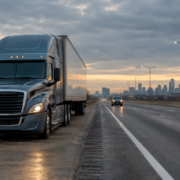
What Records Reveal Fault When Chicago Trucks Pull Over?
A vehicle colliding with a truck stopped on the shoulder can raise questions that are not answered by the point of impact alone. In Chicago, the truck may have stopped because of a mechanical problem, traffic conditions, or another reason, and the available warning time can matter. Dinizulu Law Group helps readers understand the kinds of facts that may be relevant; for a related overview, see how a disabled commercial truck can create Chicago accident liability.
Chicago truck shoulder accident liability may depend on where the truck stopped, how visible it was, what warnings were used, and what an approaching driver could reasonably perceive and do. The collision may involve questions about more than one person’s actions. This guide explains what investigators may examine, what records may help reconstruct the event, and why no single detail automatically determines fault.
What to examine in Chicago truck shoulder accident liability
Why the truck stopped and where it was positioned
The reason for the stop is an important starting point. A truck that became disabled unexpectedly may present different questions from one stopped for a planned task or because of a developing traffic situation. Investigators may look at whether the stop was necessary, how long the truck remained there, and whether there was room to move farther from active traffic. The shoulder’s width, surface, curve, nearby ramps, and sight distance can all help explain the choices available.
The truck’s position also matters. A vehicle partly encroaching on a travel lane, stopped near a merge, or positioned beyond a crest may create a different hazard than one fully on a broad, straight shoulder. Records about a breakdown, dispatch communications, maintenance history, and the driver’s account may help establish when the problem began and what followed. These facts can inform how a disabled commercial truck can create Chicago accident liability, but the circumstances of each collision still need individual review.
Warning devices and time to respond
Investigators may examine whether the truck’s lights were operating and whether hazard lights or other warning devices were used. Depending on the circumstances, commercial-vehicle safety rules may require warning measures when a vehicle is stopped; the specific requirements can depend on the roadway and situation. The timing matters too: a warning placed only shortly before impact may provide less notice than one displayed while the truck is stationary for a longer period.
Could approaching drivers see the stopped truck in time?
Visibility is not simply a question of whether the truck could be seen in a photograph taken after the crash. The relevant issue may be what an approaching driver could see from the road, at the time, and with the available distance to respond. Darkness, rain, glare, a curve, a hill, roadside barriers, or another vehicle can affect sight lines. Investigators may compare the truck’s lights and reflective surfaces with the roadway lighting and weather conditions. These details can help assess how a parked truck can create a Chicago visibility hazard.
The approaching vehicle’s speed, lane position, following distance, braking, and steering may also be examined. A collision with a stopped truck does not, by itself, establish that the approaching driver was solely responsible. Nor does a truck being stopped on a shoulder automatically resolve the truck driver’s responsibility. Investigators may consider whether a driver had enough time and distance to recognize the hazard and respond, along with whether the truck’s location or warnings made that response more difficult. For additional context, see factors that shape liability in a Chicago truck rear-end crash.
Chicago road conditions vary by location. A shoulder near an expressway entrance, construction area, or busy interchange may have different visibility and traffic patterns from a quieter road. The precise crash location can help identify relevant roadway features, traffic controls, and available public or private camera footage. Weather and lighting conditions at the time—not assumptions based on the usual conditions—may be important.
What evidence can help clarify a roadside truck collision?
A careful review may bring together physical evidence, electronic records, and accounts from people who saw the event. Useful sources can include:
- Photographs or video showing the truck’s position, lighting, warning devices, roadway layout, and damage.
- Witness accounts describing when the truck stopped and when it became visible to approaching traffic.
- Available dashcam, nearby surveillance, or vehicle data, subject to access and retention limits.
- Dispatch, maintenance, and breakdown records that may help establish the reason for the stop and its duration.
- Weather, lighting, and roadway information relevant to sight distance and stopping conditions.
A police report can be an important starting point, but it is one record rather than a complete reconstruction. It may not include every witness account, warning device, or sight-line detail. Comparing the report’s description of the truck’s location and the collision sequence with photographs and other available evidence may reveal questions that need follow-up. See how errors in a Chicago truck accident police report can affect the record.
Responsibility may involve the truck driver, another driver, or other parties, depending on the evidence and applicable Illinois law. If a claim is pursued in Cook County, the Cook County Circuit Court may be relevant, although proper venue depends on the specific circumstances. Identifying potentially responsible parties can also affect which coverage sources are considered, including insurance policies that may apply after a Chicago truck crash. Insurance availability and responsibility are separate questions and should not be assumed from the presence of a commercial vehicle alone.
Frequently Asked Questions
Does hitting a stopped truck automatically make the approaching driver responsible?
No. The impact alone does not establish who is legally responsible. The review may consider the truck’s location, visibility, warning measures, and reason for stopping, as well as the approaching driver’s speed, attention, and opportunity to avoid the collision. In Illinois, how fault is evaluated depends on the evidence and the law applicable to the particular situation.
What if the truck had its hazard lights on?
Working hazard lights may be relevant, but they are only one part of the picture. Investigators may also ask when they were activated, whether other warning devices were used when required, and whether the truck could be seen from a reasonable distance. Road lighting, weather, roadway shape, and traffic can affect how effective a warning was.
Can a trucking company be involved in a shoulder-crash claim?
Possibly. Depending on the facts, questions may arise about the truck’s condition, dispatch instructions, maintenance, or the company’s role in the stop and response. A company’s involvement is not automatic proof of fault. Records and the relationship between the driver and company may need review to determine whether a claim against another party is supported.
What if I do not know how long the truck was stopped?
That timing may be established through more than one source. Witnesses, dispatch or maintenance records, available camera footage, and vehicle data may help show when the truck stopped or when a warning was activated. Some records may not be available indefinitely, and access can depend on the circumstances. A lawyer can discuss what information may be relevant to a particular claim.
How Dinizulu Law Group Can Help
Dinizulu Law Group is dedicated to helping people understand the issues that can arise after a truck-related collision in Chicago. A review may consider the reason for the stop, the truck’s position and visibility, warning measures, the approaching driver’s actions, and records that may help clarify the timeline. The firm is committed to fighting for clients’ rights while evaluating each matter on its own facts; no particular result can be promised. Contact Dinizulu Law Group to request a free consultation and discuss whether the available information may support a claim.
The information in this article is for educational purposes only and does not constitute legal advice. Contact a qualified attorney authorized to practice in the jurisdiction that applies to your matter for advice specific to your situation.


