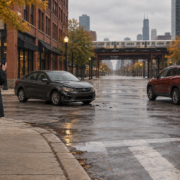
What Can Support a Chicago Hit-and-Run Car Accident Claim?
A collision can leave you trying to remember a blur of details while the other driver is already gone. In the days that follow, a Chicago hit-and-run car accident claim may raise two separate questions: what evidence could help identify the vehicle or explain the crash, and what insurance coverage might be available? Dinizulu Law Group helps Chicago-area readers understand these issues without assuming every policy or claim works the same way.
A simple, organized record can make later conversations with police, insurers, and counsel clearer. This guide covers what to note about the scene, how to preserve information and contact insurers, and common issues to consider when the driver is not identified. If you are dealing with a commercial vehicle, evidence that can help identify a truck after a Chicago hit-and-run may involve additional details.
How to preserve evidence after a Chicago hit-and-run
When it is safe to do so, make a record as soon as practical. Memory can fade, and details that seem minor at first may help distinguish one vehicle from another or place it at a particular location. Do not put yourself in traffic or approach another driver to gather information.
Record what you remember about the scene
Write down the date and approximate time, the precise location, your direction of travel, weather and lighting conditions, and what happened immediately before and after impact. Note the vehicle’s color, body style, make or model if known, damage, and any partial plate characters. Separate what you saw directly from what you later heard or inferred.
Also record the names and contact details of witnesses, if they are willing to provide them. Photograph your vehicle and the surrounding scene from a safe place. Keep original photos and videos, and make a backup; avoid editing the files or adding captions that could be mistaken for original details.
Check for nearby cameras and other records
Look for cameras on nearby buildings, businesses, parking facilities, or vehicles. Record their locations and the names of the property owners or managers if apparent. Footage may not be kept indefinitely, and access depends on who controls it and applicable rules. A note about a camera’s location can help an insurer or attorney assess whether a preservation request is appropriate.
If the vehicle may have been a commercial truck, record any visible company markings, trailer details, or distinctive features without guessing. Keep those observations separate from assumptions about who owned or operated it.
Contact insurers and explore possible coverage
A hit-and-run does not automatically mean there is no possible insurance route. Depending on the facts and policy language, a person may be able to explore uninsured motorist (UM) coverage under an applicable auto policy. Whether an unidentified driver or vehicle qualifies under a particular policy can depend on its terms and the circumstances, so avoid treating coverage as certain before it is reviewed.
Consider contacting the insurer for each potentially relevant policy, such as your own auto policy or a policy that may cover the vehicle you occupied. Prompt notice can help the insurer begin its review. Ask what information it needs, how to submit photographs and witness details, and whether it has specific instructions for a hit-and-run claim. Keep a record of when you contacted the insurer and what was requested.
If the other vehicle may have been a commercial truck, coverage questions can involve policies beyond a personal auto policy, but that does not mean a commercial policy necessarily applies. This overview of insurance policies that may apply after a Chicago truck crash is relevant only when the facts point to a truck and should not be taken as a conclusion about coverage in an individual case.
Report the collision to the appropriate law enforcement agency and keep any incident or report number provided. In Chicago, that may involve contacting the Chicago Police Department; follow the agency’s instructions for the circumstances. A police report can document information gathered, but it may not identify the other driver or resolve insurance questions. An insurer may ask for the report or other records as part of its own review.
Avoid common evidence and claim mistakes
Uncertainty is normal after a driver leaves the scene. A few careful habits can help keep the record useful without requiring you to reach conclusions before the facts are known.
- Do not fill gaps with guesses. Mark estimates as estimates, especially for speed, distance, or plate details. If your recollection changes, note when and why rather than silently replacing the first account.
- Keep records together. Save photographs, witness contact details, insurer communications, repair estimates, and any medical bills or records in one secure place. Do not alter original files.
- Be cautious with public posts. A short online description can omit context or conflict with later recollection. Consider keeping detailed accounts for communications with appropriate professionals.
- Read policy instructions carefully. Notice requirements, proof requests, and coverage terms vary. Ask the insurer to explain any request you do not understand, and keep copies of what you send.
An injured passenger may have questions about coverage or a claim that differ from the driver’s, depending on who owns the vehicles and what policies may apply. See general information about potential compensation for an injured passenger after an Illinois crash; that resource is not specific to every hit-and-run situation.
An Illinois hit-and-run accident lawyer may be able to review the available records, policy language, and investigation status with you. The appropriate next steps depend on the facts, and there may be more than one potential source of information or coverage to evaluate.
Frequently Asked Questions
What if I did not get the other vehicle’s license plate?
A complete plate is not the only potentially useful detail. Write down any partial characters you recall, along with the vehicle’s color, shape, damage, direction of travel, and approximate time and location. Witness accounts or nearby camera footage may add context. Be clear about what you remember firsthand and what remains uncertain; do not try to turn an incomplete observation into a definite identification.
Can uninsured motorist coverage apply if the driver was never found?
It may be worth asking an insurer to review the applicable policy, but coverage is not automatic. Policy language and the circumstances of the collision can affect whether an unidentified vehicle qualifies and what documentation is required. Contact the insurer promptly, describe the situation accurately, and ask which policy provisions and records it will consider. An attorney can also help explain how the terms may apply to the facts.
Should I contact a business that may have camera footage?
You can note the camera’s location and the business or property manager associated with it. Footage access and retention practices vary, and a camera may not capture the collision or may not be controlled by the business you first approach. An insurer or attorney may be able to assess how to request preservation or access through appropriate channels. Avoid entering restricted areas or interfering with equipment.
Can a passenger make a separate claim after a Chicago hit-and-run?
A passenger may have claim or coverage questions distinct from the driver’s, but the available options depend on the people, vehicles, policies, and facts involved. The passenger’s own insurance, a vehicle owner’s policy, or other coverage may need review. Preserve the passenger’s account and related records separately, and ask an attorney to assess how the policies and circumstances fit together.
How Dinizulu Law Group Can Help
Dinizulu Law Group is dedicated to helping people understand their options after a Chicago car crash, including when the other driver leaves the scene. The firm can review the available evidence, help identify questions to raise with insurers, and explain how different policy terms may affect a claim. Every situation turns on its own facts, and an initial review is not a promise of a particular result.
If you have questions about a Chicago hit-and-run, contact Dinizulu Law Group to request a free consultation or case evaluation. The team is ready to evaluate your situation and discuss possible next steps.
The information in this article is for educational purposes only and does not constitute legal advice. Contact a qualified attorney authorized to practice in the jurisdiction that applies to your matter for advice specific to your situation.


