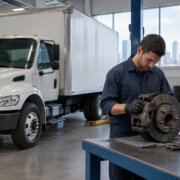
Who May Be Liable After a Chicago Truck Brake Failure?
A truck that cannot stop in traffic can cause a serious crash, but a brake problem does not, by itself, explain why it happened or who may be responsible. Chicago truck brake failure accident liability can depend on what the driver knew, whether the carrier maintained the vehicle, whether a repair was performed correctly, and whether a component failed unexpectedly. Dinizulu Law Group helps people understand the questions an investigation may need to answer, without treating an early account of the crash as proof of fault. This article discusses the possible roles of drivers, trucking companies, and repair providers; the evidence that may help distinguish among them; and practical points to consider after a crash in Chicago, Illinois. The truck’s stopping distance, speed, following distance, and road conditions may also matter, as explained in this discussion of how stopping distance shapes Chicago truck rear-end liability.
Why Chicago truck brake failure does not settle accident liability
A failed or weakened braking system is a mechanical condition, not a complete explanation of a collision. Investigators need to consider what led to the condition and how people or businesses involved in operating and maintaining the truck responded. A brake problem could arise from wear, a missed defect, inadequate repair, a sudden component failure, or more than one contributing factor.
The driver’s role in operating the truck
A driver’s conduct may matter if evidence suggests the driver knew about a braking issue, failed to report a warning or defect, or continued driving when a problem was apparent. The driver’s actions before the collision also matter. Speed, following distance, load, traffic, weather, and the time available to react may affect whether the truck could stop safely. A truck that strikes another vehicle from behind does not automatically establish that a brake defect caused the crash or identify who should answer for it.
The carrier’s role in inspection and maintenance
A carrier may have responsibility for maintenance systems, repair decisions, vehicle assignments, and responding to reported defects. Those questions are separate from whether the driver made a reasonable choice in the moment. The details of the truck’s operation and the parties’ relationship can matter, too. For a related discussion, see carrier responsibility when a truck driver works as a contractor. In Chicago, Illinois, the relevant facts may include both the crash scene and records created before the truck entered the roadway.
What evidence can help identify the cause?
A careful investigation compares the physical condition of the brakes with the truck’s maintenance history and the events leading up to the crash. No single record necessarily answers every question. For example, a recent inspection entry may be useful, but investigators may also need to determine what was inspected, whether a defect was visible, and whether the truck was driven after a problem was reported.
Potentially useful material may include:
- Inspection and maintenance records, including defect reports and follow-up work.
- Repair orders, invoices, and notes describing brake-system work or replacement parts.
- Driver logs, dispatch communications, and records of reported vehicle concerns.
- Photographs, measurements, and examinations of brake components and related systems.
- Available vehicle data, which may help establish aspects of the truck’s movement but may not directly record the condition of every brake component.
These records that may clarify Chicago truck brake failure liability can help establish what was known, when it was known, and what work followed. The truck and removed parts may also require prompt documentation before repairs, disposal, or other changes affect their condition. The specific evidence available depends on the vehicle and circumstances, and a mechanical finding should be considered alongside the crash facts.
How should people think about responsibility and next steps?
In many cases, responsibility is evaluated by separating the possible causes rather than assuming that one party must be at fault. A driver may have played a role in operating the truck; a carrier may have influenced maintenance or dispatch decisions; and a repair provider may be relevant if its work contributed to the brake condition. A part’s condition may raise separate questions about its service life or manufacture. These are lines of inquiry, not conclusions about any particular crash.
After a collision, immediate safety and medical needs come first. When it is practical and safe, information about the vehicles, scene, witnesses, and reported brake concerns may help preserve an accurate account. Avoid relying only on an early explanation such as “the brakes failed”: it may describe what someone experienced without establishing the underlying cause. These general steps to take after a Chicago truck accident provide additional context.
The condition of a truck or component can change once it is repaired, moved, or discarded. Photographs, inspection notes, and a documented examination may therefore be important. Guidance about evidence preservation after a Chicago truck mechanical failure explains why mechanical evidence may deserve attention. In Chicago and elsewhere in Illinois, the proper investigation and any legal claims depend on the circumstances; laws and procedures can vary by location and may change.
Frequently Asked Questions
Does a brake failure automatically prove that someone was negligent?
No. A brake problem may be an important fact, but it does not by itself establish how the problem developed or whether a person or business failed to act reasonably. Investigators may examine the vehicle, maintenance history, repair work, driver conduct, and road conditions. The available evidence and applicable law determine how those facts may be evaluated in a particular claim.
Could a repair shop be responsible for a truck brake problem?
A repair provider may be relevant if evidence indicates that its work or a failure to address an identified issue contributed to the crash. That requires more than showing that repairs occurred before a collision. The nature of the work, information available to the provider, condition of the components, and connection between the repair and the crash may all matter. An investigation would need to assess the specific facts.
Can a truck’s manufacturer be part of the investigation?
Possibly. If a component appears to have failed despite appropriate use and maintenance, investigators may consider whether a defect or other product-related issue contributed. A component’s failure alone does not establish a manufacturing or design defect. The part’s condition, history, specifications, and relevant expert analysis may help determine whether that possibility warrants further review.
What if the cause of the brake problem is not immediately clear?
That is not unusual in a complex mechanical investigation. The cause may require review of records, inspection of the truck and components, and comparison with evidence about the crash. More than one factor may have contributed, and some information may not be available. A qualified attorney can discuss what investigative options may fit the circumstances without assuming a particular result.
How Dinizulu Law Group Can Help
Dinizulu Law Group is dedicated to helping people understand the issues that can arise after a serious truck crash in Chicago, Illinois. A review may consider the driver’s actions, the carrier’s maintenance practices, repair history, available mechanical evidence, and how the crash occurred. The firm is committed to fighting for clients’ rights and is ready to evaluate the circumstances and explain potential options. If you have questions about a truck brake failure crash, contact Dinizulu Law Group to request a free consultation or case evaluation.
The information in this article is for educational purposes only and does not constitute legal advice. Contact a qualified attorney authorized to practice in the jurisdiction that applies to your matter for advice specific to your situation.


