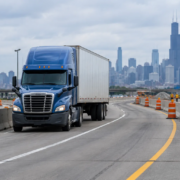
Can Speed or Lane Choice Affect Chicago Work-Zone Fault?
A truck moving through a construction zone has to respond to a changing road environment: lanes may narrow, traffic may shift, and vehicles may slow with little room to maneuver. After a Chicago work-zone truck crash, questions about liability can involve both the truck’s operation and the temporary traffic controls. The decisions made by drivers and the people responsible for planning or maintaining the work zone may need careful review.
For injured people, identifying which safety decisions mattered can help make a confusing collision easier to understand. Dinizulu Law Group helps people evaluate truck accident questions by looking at the circumstances and available evidence, not assumptions about who must be at fault. This article explains how temporary traffic patterns can interact with truck speed, lane position, signs, barriers, and roadway conditions. It also describes how records may help clarify events and why a safety-rule concern alone does not settle a claim. The details of each crash matter, and legal rules can vary by location.
How work-zone design and truck movement interact in Chicago
A work zone changes the space and cues drivers normally rely on. Temporary lane markings may not match older permanent markings, barriers can reduce a truck’s maneuvering room, and advance warnings must be visible and understandable to approaching traffic. A tractor-trailer may need more space and time to adjust its position than a passenger vehicle, especially where traffic is merging or slowing.
That does not make a collision inevitable or automatically identify who is responsible. Investigators may examine whether the temporary traffic pattern was clear, whether a driver responded reasonably to the conditions, and how those factors combined. In Chicago, the setting matters: a city street project, an expressway work zone, and a state highway project may involve different road layouts and responsible agencies. IDOT manages many state highways, while the Chicago Department of Transportation oversees city transportation infrastructure. The particular location and project determine which records or organizations may be relevant.
Did speed and following distance leave room to respond?
A queue can form near a lane closure, and traffic may brake quickly as vehicles merge. A truck’s speed, following space, braking, and load may all be relevant to whether the driver had room to respond. The analysis should account for the actual roadway, visibility, traffic flow, and warning conditions—not just a single number in isolation. For more on that issue, see truck stopping distance and following space in Chicago crashes.
How can a truck’s lane position affect liability?
The truck’s path through a narrowed or shifted lane may matter. Its position relative to temporary markings, adjacent vehicles, barriers, and the merge point can help explain whether a maneuver contributed to a collision. Details about truck lane-position and merge decisions in Chicago collisions may be especially relevant when a crash happens where lanes converge.
What evidence can show how the work zone and truck contributed?
A sound review looks at the scene as it existed at the time of the collision, rather than relying only on a general description of the project. Temporary signs may be moved, lane markings may change, and barriers or equipment may be removed as work progresses. Photographs, video, witness accounts, vehicle data, and project records may help show the relationship between the truck, the traffic pattern, and other vehicles.
Depending on the circumstances, useful material may include:
- Images or video showing signs, cones, barriers, lane markings, lighting, and sightlines.
- Available vehicle or fleet records that may help establish speed, braking, or movement before impact.
- Work-zone plans, inspection records, or traffic-control documents relevant to the project and time period.
- Witness observations and reports that help establish where vehicles were positioned and how traffic flowed.
These materials can be incomplete or may need context. For example, a sign visible in a photograph does not by itself establish when it was placed or whether it was visible to a driver approaching from a particular direction. Reviewing evidence from temporary work-zone layouts and truck movements can help explain what types of records may clarify that larger picture.
When can a roadway condition contribute to a work-zone crash?
The temporary traffic plan is only part of the scene. Pavement changes, debris, drainage, uneven surfaces, or an abrupt lane shift may affect how a vehicle moves through a work area. These conditions may interact with truck maneuvering and the available warning. In some cases, investigating Chicago truck crashes involving lane shifts or roadway hazards helps identify whether roadway conditions should be considered alongside driver conduct and work-zone setup.
How responsibility and safety rules are assessed after a crash
More than one decision-maker may warrant examination after a work-zone collision. Depending on the evidence, that could include a truck driver, motor carrier, work-zone contractor, or a public entity responsible for some part of the road or traffic setup. Their involvement is not proof of fault. A careful assessment asks what each party did or failed to do, whether that conduct was unreasonable under the circumstances, and whether it contributed to the injuries claimed.
In Illinois, a personal injury claim may involve questions about the conduct of multiple parties. The facts, applicable law, and any defenses can affect how responsibility is evaluated. When a public entity or public project is involved, additional legal considerations may apply. The proper analysis depends on the location and circumstances, so a general article cannot determine who is liable in an individual case.
Evidence that a trucking safety rule may have been violated can be relevant, but it does not automatically establish that the violation caused a particular crash or injury. The surrounding facts and causal connection matter. This distinction is discussed further in how trucking safety-rule violations affect an Illinois injury claim.
People reviewing a crash may find it useful to avoid drawing conclusions from one detail alone. For example, a damaged barrier does not necessarily show when it was struck, and a truck’s final position may not reveal its full path. Records can also be time-sensitive: video may be overwritten, and work-zone conditions can change. In many cases, preserving available information and getting an informed review can help clarify what questions remain. The appropriate next steps depend on the person’s circumstances and should be discussed with a licensed attorney.
Frequently Asked Questions
Who may be responsible for a Chicago work-zone truck crash?
Responsibility depends on the evidence and may involve a truck driver, motor carrier, work-zone contractor, or an entity responsible for part of the roadway or traffic controls. More than one party may need to be considered. A party’s presence at the site or connection to the project does not establish fault by itself. Investigators generally examine each party’s decisions, the applicable duties, and whether the conduct contributed to the collision and claimed injuries.
Can confusing temporary signs affect a truck accident claim?
They may be relevant. The placement, visibility, timing, and consistency of temporary signs can help explain what drivers were told to expect. Investigators may compare those details with lane markings, barriers, lighting, and the truck’s approach. A sign that appears confusing in a photograph does not automatically prove that it caused the crash; the full scene and other evidence matter.
What if both the truck and the work-zone layout played a role?
A crash can involve several contributing conditions or decisions. The fact that a work-zone setup may have been difficult to navigate does not automatically excuse a driver’s conduct, and a driver’s action does not necessarily answer every question about the setup. In Illinois, how responsibility is evaluated depends on the facts and applicable law. An attorney can review the circumstances and explain how those issues may relate to a particular claim.
Does a possible trucking safety-rule violation prove liability?
Not by itself. A potential violation may be one piece of evidence, but the surrounding circumstances and connection to the collision or injury also matter. Investigators may consider vehicle records, observations, work-zone conditions, and other available information. Whether a specific rule applies and what weight it carries are fact- and law-dependent questions that require review of the particular incident.
How Dinizulu Law Group Can Help
Dinizulu Law Group is dedicated to helping injured people understand the questions that may arise after a Chicago work-zone truck crash. A review may consider the truck’s speed and position, the temporary traffic-control setup, roadway conditions, and records that could help reconstruct events. The firm is committed to fighting for clients’ rights while evaluating each situation on its own facts; no particular outcome can be promised. If you have questions about a construction-zone truck crash in Chicago, contact Dinizulu Law Group to request a free consultation or case evaluation.
The information in this article is for educational purposes only and does not constitute legal advice. Contact a qualified attorney licensed to practice in Illinois for advice specific to your situation; laws vary by location and may change.


