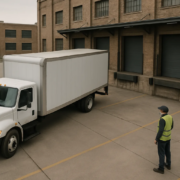
Who Else May Share Fault in a Chicago Truck Backing Crash?
Backing a large commercial truck can be difficult in a crowded alley, loading dock, warehouse yard, parking lot, or construction area. Mirrors may not show every person or vehicle, and a reversing truck can move through a blind zone quickly. When a delivery truck backs into a car in Chicago, the driver’s actions matter—but they may not be the only facts that deserve examination.
For someone injured in a reversing collision, the practical questions often begin immediately: Was a spotter assigned? Were warning alarms or cameras working? Did the site have a safe traffic plan? Did the employer provide adequate training and supervision? A Chicago truck backing accident lawyer at Dinizulu Law Group can help explain how these questions may fit into an Illinois personal injury analysis.
This article covers immediate steps after a crash, the evidence that can clarify what happened, and why responsibility may extend beyond the person behind the wheel. It is general information, not a substitute for advice about a specific incident.
Why a Chicago Truck Backing Accident May Involve More Than the Driver
A driver may be responsible for failing to check the path, respond to a warning, or use reasonable care while reversing. However, a commercial vehicle reverse accident often occurs within a larger system. The truck may belong to a carrier, be leased from another company, or be operated at a property controlled by a separate business.
The role of the employer and carrier
Employers and motor carriers may have responsibilities involving driver training, route planning, supervision, vehicle inspection, and workplace procedures. The available evidence may show whether the driver had instructions for backing in confined areas, whether those instructions were followed, and whether supervisors addressed known safety concerns. These facts do not automatically establish liability, but they can help identify the parties and theories that require review.
Site operators and other participants
A loading dock, warehouse, construction zone, or private parking area may have its own rules for separating pedestrians, passenger vehicles, and commercial trucks. A property operator, general contractor, delivery coordinator, or logistics company may have controlled access, assigned a spotter, or directed where the truck should maneuver. If a spotter was present, the person’s training, position, communications, and ability to see the travel path may also matter.
In Chicago, Illinois, these questions can be important because backing maneuvers take place in varied environments, from narrow alleys to busy commercial properties. Liability depends on the facts and applicable law, not simply on who was closest to the truck.
What Evidence Can Clarify a Truck Backing Crash in Illinois?
Evidence can disappear quickly after a commercial vehicle collision. Businesses may routinely overwrite surveillance footage, vehicles may be repaired, and witnesses may remember different details as time passes. Generally speaking, prompt documentation can help preserve a clearer account for an insurance or legal review.
Important evidence may include:
- Scene evidence: photographs of vehicle positions, tire marks, damage, sight lines, lighting, dock edges, cones, barriers, and the truck’s path.
- Vehicle evidence: inspection and maintenance records, backup-camera footage, sensor data, alarm condition, mirror position, and repair history.
- Electronic evidence: onboard camera recordings, telematics, GPS data, dispatch communications, access-control records, and nearby business surveillance.
- People and policies: names and contact information for witnesses, the driver, spotters, supervisors, delivery personnel, and site managers, along with written backing procedures and training records.
- Official records: crash reports, photographs, and other materials collected by responding authorities, such as the Chicago Police Department or Illinois State Police when applicable.
A delivery truck backs into a car in Chicago may leave physical clues that do not appear in a short incident report. For example, damage location and vehicle positioning may help assess direction and movement, while camera footage may show whether a warning was given or whether another person entered the maneuvering area. A lawyer may also examine whether relevant records are held by the carrier, property owner, contractor, or maintenance provider.
The Illinois legal analysis may involve more than one potentially responsible party and may also consider each person’s share of fault. Because rules and procedures can vary by location and may change, case-specific review is important.
What Should an Injured Person Do After a Commercial Vehicle Reverse Accident?
The first priority after a collision is safety and appropriate medical attention. A person involved in a crash may be shaken or unaware of the full extent of an injury. Without diagnosing or recommending treatment, it is generally sensible to communicate health concerns to qualified medical professionals and follow their instructions.
When circumstances permit, practical preservation steps may include:
- Report the collision. Notify the appropriate property manager, employer representative, or law enforcement agency. Ask how the incident will be documented.
- Record the setting. Take photographs or video of the vehicles, surrounding area, lighting, signs, barriers, dock layout, and visible warning equipment, if it is safe to do so.
- Identify witnesses. Obtain names and contact details for people who saw the maneuver, heard warnings, operated a spotter position, or arrived immediately afterward.
- Keep related records. Preserve incident reports, insurance communications, photographs, medical records, wage documentation, and messages concerning the collision.
- Avoid guessing about fault. An initial statement made before all evidence is available may omit important facts. Clear, accurate communication is preferable to speculation.
A person should also be cautious about discarding damaged property or allowing relevant electronic evidence to be lost. Depending on the circumstances, an attorney may send preservation requests to a carrier, employer, property operator, or contractor. A Chicago truck backing accident lawyer can discuss how Illinois deadlines, insurance issues, and possible defendants may affect the evaluation of a claim.
Frequently Asked Questions
Is a truck driver always responsible for a backing collision?
No. The driver’s conduct is often examined, but responsibility is not automatically limited to the driver. Depending on the evidence, an employer, motor carrier, property operator, contractor, vehicle owner, maintenance provider, or spotter may also be relevant. The analysis may consider who controlled the maneuver, what safety procedures applied, whether equipment worked, and how each person’s conduct contributed under Illinois law.
What if the truck was backing in a private parking lot or loading dock?
A collision on private property can still involve an injury claim, but the facts and applicable rules may differ from a crash on a public roadway. Investigators may examine the property’s traffic plan, access rules, lighting, surveillance, delivery instructions, and warnings. In Chicago, Illinois, the owner or operator of a commercial site may possess important records, but possession of evidence does not by itself establish legal responsibility.
Can a spotter be involved in truck backing crash liability?
Potentially, depending on the spotter’s assigned role, training, visibility, communications, and conduct. A spotter may have been expected to guide the driver, keep others outside the maneuvering area, or stop the operation when the path became unsafe. The existence of a spotter does not automatically shift blame away from the driver or establish fault by the spotter; the full circumstances require review.
How long do I have to explore a Chicago truck accident claim?
Illinois deadlines can depend on the type of claim, the identity of a potential defendant, the location, and other facts. Claims involving public entities may involve additional notice or timing requirements. Because evidence can also be lost before a deadline arrives, someone injured in a commercial vehicle reverse accident may benefit from promptly discussing the matter with a licensed Illinois attorney.
How Dinizulu Law Group Can Help
Dinizulu Law Group is dedicated to helping injured people understand the evidence and legal issues that may arise after a truck backing collision. The firm’s review may consider the driver, carrier, employer, site operator, spotter, vehicle systems, surveillance, witness accounts, and applicable Illinois procedures.
The team is committed to fighting for clients’ rights while explaining the process in clear terms. If you or a family member was injured in a Chicago, Illinois truck backing accident, contact Dinizulu Law Group for a free consultation or case evaluation. The firm is ready to evaluate your situation and discuss your legal options.
The information in this article is for educational purposes only and does not constitute legal advice. Contact a qualified attorney licensed in Chicago, Illinois for advice specific to your situation.


