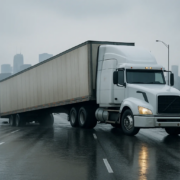
Why Call a Chicago Jackknife Crash Lawyer After a Swing?
A motorist traveling beside a tractor-trailer may have only moments to react when the trailer begins sliding toward adjacent lanes. In Chicago, winter precipitation, crowded expressways, construction zones, and sudden traffic changes can create conditions in which a truck’s trailer moves in a direction the driver cannot immediately correct. A Chicago jackknife truck accident lawyer can help explain the evidence, but understanding the mechanics is an important first step.
A jackknife occurs when the tractor and trailer no longer track in a straight line and fold toward one another at an angle. The trailer may swing across one or more lanes, strike nearby vehicles, or block the roadway. This article explains why that loss of control can happen, what injured motorists should document when it is safe to do so, and how investigators may assess responsibility. Dinizulu Law Group provides legal guidance to people evaluating truck accident claims in Chicago, Illinois.
How a Chicago Jackknife Truck Accident Develops
A tractor-trailer is an articulated vehicle: the tractor and trailer pivot at the coupling point. That design allows the truck to turn, but it also means the trailer can respond differently from the tractor when traction or braking changes. During a jackknife, the tractor may continue forward while the trailer slides, rotates, or pushes the tractor sideways.
Braking imbalance and loss of traction
One common mechanism involves unequal braking or traction between the tractor and trailer. If the trailer wheels lock or lose grip before the tractor, the trailer can begin to swing sideways. A tractor can also lose traction, causing the front or rear portion to move out of line. Modern commercial vehicles may use systems intended to reduce wheel lock, but equipment condition, maintenance, road conditions, and the specific event still matter when analyzing a crash.
Speed can increase the forces involved and reduce the time available to correct a developing slide. A downhill grade may add momentum, while rain, ice, snow, standing water, loose gravel, or worn pavement can reduce tire grip. These factors do not by themselves establish fault, but they can help explain why a trailer moved across lanes in Chicago, Illinois.
Steering, loading, and roadway conditions
An abrupt steering maneuver may cause the tractor to change direction faster than the trailer can follow. The trailer can then swing outward, particularly during emergency braking or a sudden lane change. Cargo distribution may also affect stability. An improperly secured or unevenly distributed load can shift the center of gravity or alter how the trailer responds to braking and turning.
Investigators may consider the truck’s speed, the driver’s inputs, the braking system, tire condition, cargo securement, road grade, weather, visibility, and traffic pattern. A complete analysis generally looks at how these factors interacted rather than assigning a conclusion from the word “jackknife” alone.
Evidence That May Explain a Trailer Swing in Chicago
After a truck crash, physical evidence can change quickly. Vehicles may be moved, skid marks may fade, road surfaces may be treated, and weather conditions may shift. When it is safe and practical, injured motorists or witnesses may document the scene without entering traffic or interfering with emergency responders.
Useful observations may include:
- The tractor’s direction and the trailer’s final position, including whether the trailer crossed into another lane.
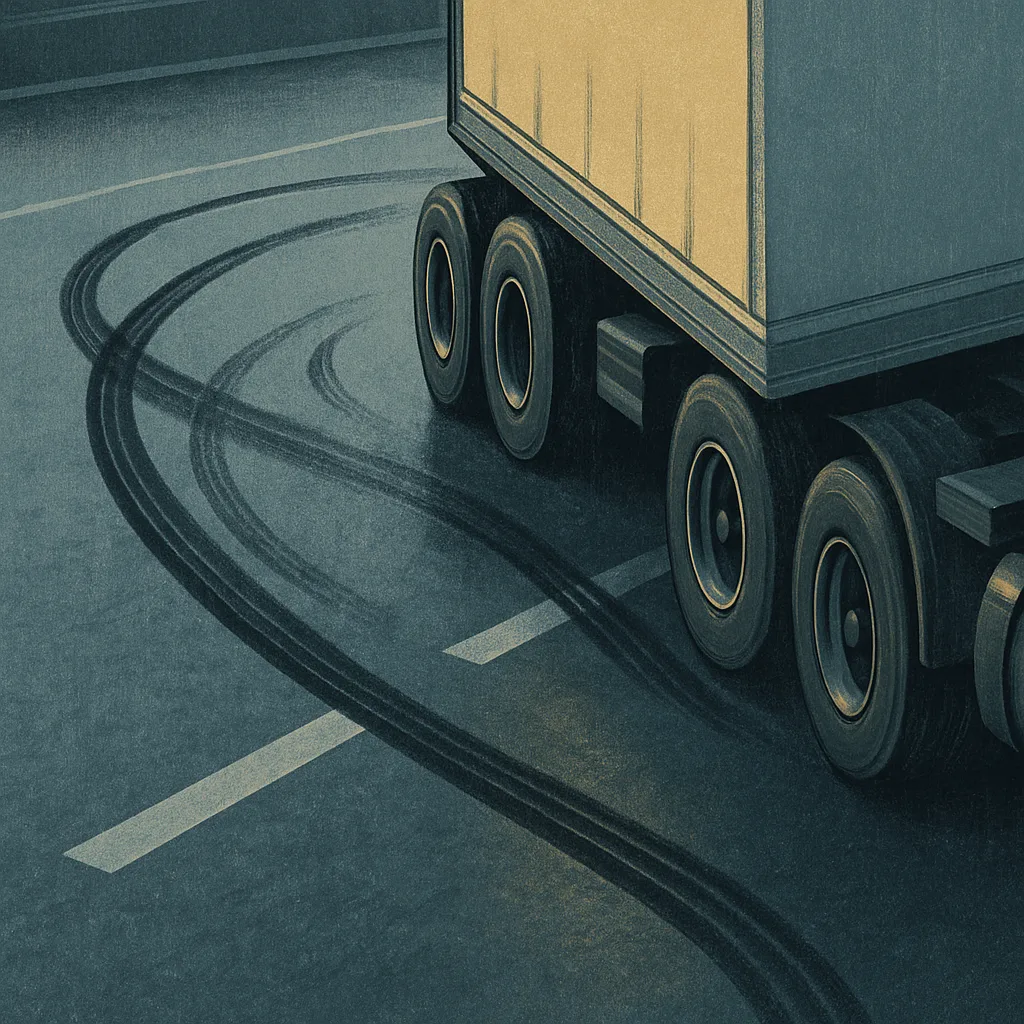
- Skid marks, tire scuffs, fluid trails, gouges, debris fields, and areas where the road surface appears wet, icy, dirty, or damaged.
- Weather, lighting, visibility, precipitation, standing water, and the apparent condition of the roadway.
- Damage patterns on each vehicle, including the height, angle, and location of contact points.
- Nearby traffic signals, lane markings, construction barriers, shoulders, ramps, and other features that may have affected movement.
- Names and contact information for witnesses, along with photographs or video from legally obtained sources.
The Chicago Police Department, Illinois State Police, or other responding agencies may create reports, diagrams, photographs, or measurements. Illinois Department of Transportation records or maintenance information may also become relevant when roadway conditions are disputed. A report is important evidence, but it may not answer every question about braking, cargo, visibility, or the timing of the trailer’s movement.
For a truck skid accident in Chicago, photographs should show both close details and the broader scene. A close image may capture tread marks or a damaged guardrail; a wider image may show lane geometry, grade, traffic controls, and the trailer’s relationship to the tractor. Depending on the circumstances, attorneys and qualified experts may review vehicle data, inspection records, maintenance materials, driver logs, cargo documents, video, and event data.
Jackknife Semi-Truck Crash Liability and Common Mistakes
A jackknife does not automatically determine who is legally responsible. Depending on the facts, an investigation may examine the truck driver’s conduct, the motor carrier’s policies and supervision, maintenance or inspection issues, cargo loading, a parts or equipment problem, or a roadway condition. Other vehicles may also be relevant if an abrupt maneuver was a response to traffic.
Illinois personal injury claims can involve questions of comparative responsibility, available insurance, and deadlines. The specific rules and procedures may depend on the location of the collision, the parties involved, and the type of claim. Cook County proceedings and Illinois state law may apply to a Chicago case, while federal motor-carrier safety requirements may provide context for some trucking practices. Laws and procedures can vary by location and may change after publication.
Common evidence-related mistakes include:
- Assuming the truck’s final position tells the entire story. The trailer may move after the initial impact, and vehicles may be repositioned by responders.
- Posting detailed conclusions online. Public statements, photographs, or social media comments may be viewed out of context during an insurance or legal dispute.
- Ignoring less visible injuries or symptoms. A person may not immediately understand the medical significance of symptoms. Medical evaluation and treatment decisions should come from qualified healthcare professionals.
- Delaying preservation of records. Commercial vehicle video, surveillance footage, dispatch materials, and electronic data may be subject to retention limits or routine deletion.
- Accepting an early liability conclusion without reviewing the evidence. A carrier or insurer may have access to documents that an injured motorist has not seen.
A Chicago jackknife truck accident lawyer may review the collision evidence, identify potentially responsible parties, communicate with insurers, and explain available options. The appropriate approach depends on the facts and does not guarantee a particular result.
Frequently Asked Questions
What makes a tractor-trailer jackknife in Illinois?
A jackknife may develop when the tractor and trailer lose traction or respond differently to braking, steering, or a change in direction. Contributing conditions can include excessive or unsuitable speed, braking imbalance, a downhill grade, slippery pavement, abrupt steering, tire or brake problems, and cargo issues. In Illinois, investigators generally need to examine the total circumstances rather than treating the jackknife itself as automatic proof of negligence.
Can skid marks show how a Chicago truck crash happened?
Skid marks and tire scuffs may help show braking, loss of traction, direction of travel, or the path of a sliding trailer. They are most useful when considered with photographs, vehicle damage, road grade, weather, traffic-camera footage, and witness accounts. Marks can fade or be altered by traffic and weather, so their interpretation may require qualified collision analysis rather than a visual assumption.
Who may be responsible for a jackknife collision?
Potentially relevant parties may include the truck driver, motor carrier, maintenance provider, cargo loader, equipment manufacturer, or another road user, depending on the evidence. Responsibility is fact-specific. Insurance coverage and legal deadlines can also vary. A lawyer evaluating a tractor-trailer jackknife in Illinois may examine records and the collision sequence before discussing which claims or parties may be involved.
What should I preserve after a jackknife truck accident?
When safe, preserve photographs of vehicle damage, the roadway, lane positions, skid marks, weather, and visible hazards. Keep medical and repair records, identify witnesses, and retain relevant communications with insurers. Do not place yourself in traffic to obtain evidence. Because video and commercial vehicle data may not be retained indefinitely, an attorney may discuss preservation steps suited to the circumstances.
How Dinizulu Law Group Can Help
Dinizulu Law Group is dedicated to helping injured motorists understand the evidence and legal issues that may arise after a Chicago truck collision. The firm is committed to fighting for clients’ rights while examining practical details such as trailer position, skid marks, vehicle damage, roadway conditions, driver conduct, and trucking records.
If you or a family member was involved in a jackknife crash, the team is ready to evaluate your situation and explain potential legal options. Contact Dinizulu Law Group for a free consultation or case evaluation.
The information in this article is for educational purposes only and does not constitute legal advice. Contact a qualified attorney licensed in Chicago, Illinois for advice specific to your situation.


