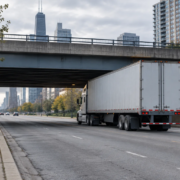
Could Truck Height or Routing Decide Chicago Overpass Fault?
A truck striking a bridge or overpass can cause more than visible damage to the structure. The event may also injure people nearby and raise questions about whether the truck’s height was known, whether its route was appropriate, and whether warnings were available. In Chicago, where commercial vehicles travel through a mix of industrial corridors, neighborhood streets, and busy arterial roads, route choices can matter. For background on route data after a Chicago truck bridge strike, it helps to understand how electronic records may fit into an investigation.
Chicago truck low-bridge accident liability is not established simply because a truck hit an overpass. Investigators may need to determine what the driver and carrier knew, what route instructions they followed, and whether any failure contributed to the collision and resulting injuries. Dinizulu Law Group helps readers understand the questions that may arise after a truck crash. This article covers route and vehicle evidence, possible responsibility, and practical considerations for injured people and witnesses. It offers general information about Chicago and Illinois; laws and procedures vary by location and may change.
Chicago Truck Low-Bridge Accident Liability and Route Evidence
A bridge strike can prompt an investigation into the relationship between the truck’s actual height and the clearance along its route. The relevant height may depend on the tractor, trailer, cargo, and vehicle configuration. A route that is suitable for one vehicle may not be suitable for a taller one, so investigators may compare vehicle measurements with the clearance information available at the time.
What investigators may look for after a bridge strike
Evidence may include photographs of the scene, the bridge and any clearance signs, vehicle inspection or loading records, and statements from the driver and witnesses. Electronic information can add context: GPS history, dispatch communications, electronic logging data, and navigation records may help show where the truck traveled and what directions were provided. Records can also help distinguish a driver’s independent route choice from instructions or procedures set by a carrier.
That material may be time-sensitive, and its availability can vary. A focused review of route data after a Chicago truck bridge strike explains why electronic records can matter. Data does not necessarily show what a person saw or understood, so investigators may compare it with signs, road conditions, communications, and other evidence.
Chicago streets and routes vary in their suitability for large vehicles. Construction, temporary restrictions, detours, or obscured warnings may be relevant, but their presence does not by itself establish fault. Investigators generally need to examine the specific route and circumstances rather than assume a single cause.
How Route Planning and Carrier Procedures May Matter
Route planning can involve more than the driver’s last turn. A carrier may use dispatch instructions, routing software, vehicle-specific navigation settings, or established procedures for checking height restrictions. The investigation may ask whether the people involved had accurate vehicle dimensions and whether the selected route took known clearance limits into account. A navigation system’s suggested path is one piece of evidence, not a complete answer about responsibility.
Which companies or decision-makers may warrant investigation
Depending on the facts, investigators may examine the driver’s decisions, the carrier’s planning and training practices, and the roles of other businesses involved in arranging transportation. Relevant material could include route instructions, driver training on height restrictions, vehicle specifications, and communications about a detour or delivery destination. Reviewing carrier hiring and training records after a truck crash may help clarify whether qualifications or supervision are relevant, but a collision alone does not prove negligent hiring or training.
A broker’s involvement does not automatically make it responsible for a crash. Still, contracts and communications may be worth reviewing if a broker played a meaningful role in selecting a carrier or arranging the shipment. Learn more about when a transport broker may face liability after a Chicago crash.
Chicago truck bridge-strike claims may involve questions of Illinois law and, depending on the circumstances, proceedings in the Circuit Court of Cook County. Whether a safety requirement was violated is distinct from whether that violation caused an injury and who may be legally responsible. Evidence of a possible breach may matter, but it does not automatically resolve those questions. For more context, see how trucking safety violations may affect an injury claim.
What Injured People and Witnesses Can Do After a Strike
A bridge strike can create hazards around traffic, damaged vehicles, or the structure itself. Personal safety should come first. People at the scene generally should avoid placing themselves near moving vehicles or attempting to inspect the bridge or truck. If someone is injured or there is an immediate safety concern, appropriate emergency services can assess the situation.
When it is safe and appropriate, observations made soon after the event may help preserve useful context. A witness or injured person might note:
- The approximate time and location, including nearby intersections or landmarks.
- The direction the truck was traveling and the lane or route it appeared to take.
- Visible vehicle features, such as the type of trailer, without approaching traffic.
- The positions of vehicles, debris, signs, or temporary road conditions, if safely observable.
- Names and contact details of willing witnesses, and whether official responders attended.
Photographs may be useful only when they can be taken safely. Do not disturb evidence or enter a roadway to obtain an image. An injured person may also keep relevant records, such as incident information and communications, as circumstances permit. These are general considerations, not instructions for every situation. More practical information appears in steps to take after an Illinois truck accident.
Later, an investigation may compare scene observations with vehicle records, route data, bridge-clearance information, and witness accounts. In Chicago, roadwork and detours can make the route at the exact time of a collision important. Clear notes about what a person personally observed can be more useful than guesses about fault or what happened outside their view.
Frequently Asked Questions
Does a truck hitting a bridge automatically mean the driver was negligent?
No. A bridge strike alone does not establish negligence or identify who may be responsible. Investigators may consider the vehicle’s height, available clearance warnings, route instructions, road conditions, and what the driver and carrier knew. They may also examine whether an event such as a detour or obstructed sign affected the route. The legal significance of those facts depends on the evidence and applicable Illinois law.
Can a trucking company be responsible for an overheight truck collision?
It may be possible, depending on the company’s role and the evidence. Investigators might review whether the carrier supplied accurate vehicle dimensions, provided route directions, trained drivers on clearance restrictions, or had procedures for choosing routes. Those questions do not mean a carrier is automatically liable. Responsibility depends on the facts, the applicable legal standards, and whether a relevant act or omission contributed to the collision and injury.
What if a navigation system directed the truck under a low bridge?
A navigation instruction may be relevant, but it does not settle the question of fault. Investigators may ask what system was used, whether it had vehicle-height information, what route settings were selected, and whether the driver or carrier had other warnings or instructions. They may also compare electronic records with signs, road conditions, and dispatch communications to understand how the route was chosen.
What evidence can help explain a Chicago truck bridge strike?
Potentially useful evidence may include scene photographs taken safely, witness accounts, bridge-clearance information, vehicle and load measurements, dispatch messages, GPS history, and navigation or logging data. Some records may not remain available indefinitely, and no single item necessarily proves what happened. A review may compare different sources to reconstruct the route and assess what information was available to the people involved.
How Dinizulu Law Group Can Help
Dinizulu Law Group is dedicated to helping injured people understand the questions that can arise after a commercial truck collision. A review of a potential claim may consider vehicle height, route selection, electronic records, carrier procedures, and the actions of other involved parties. The firm can evaluate how those facts may relate to an injury claim under applicable Illinois law, without assuming that any one detail decides the outcome. If a truck strike caused an injury in Chicago, contact Dinizulu Law Group to discuss your circumstances and request a free consultation or case evaluation.
Disclaimer: The information in this article is for educational purposes only and does not constitute legal advice. Contact a qualified attorney licensed in Illinois for advice specific to your situation.


