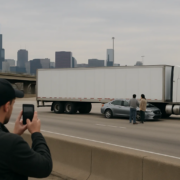
Who Pays for an Illinois Contractor Truck Crash in Chicago?
A commercial truck may display one company’s name, be owned by another business, and be driven by an independent contractor. After a crash, that can leave an injured person asking: who is actually responsible? The answer is not always found on the truck’s doors or in an initial police report.
The question of Illinois trucking company independent contractor accident liability in Chicago, Illinois often turns on the working relationship among the driver, motor carrier, broker, lessor, and vehicle owner. A company’s use of the term “independent contractor” does not automatically resolve the issue. The facts surrounding control, hiring, safety oversight, and legal authority may matter.
Dinizulu Law Group provides guidance on the issues that can arise in truck accident and personal injury claims. This article explains why multiple businesses may be relevant, what identifying information to preserve, and how Illinois responsibility may be evaluated after a Chicago-area collision.
How Illinois Trucking Company Independent Contractor Accident Liability Is Analyzed
Illinois generally looks at the substance of a working relationship rather than relying only on a label. In a truck crash claim, the driver may be treated as an employee, an independent contractor, an agent, or part of a more complicated business arrangement. The classification can affect whether a carrier may be responsible for conduct connected to the driver’s work.
The independent-contractor label is not the entire analysis
Courts may examine who had the right to control important details of the work. Relevant facts can include who assigned routes, set delivery schedules, required safety procedures, supervised performance, maintained the truck, controlled dispatch, and could discipline or terminate the driver. The actual day-to-day arrangement may be more important than a contract’s title.
That does not mean a trucking company is automatically liable whenever a contractor causes a collision. Responsibility is fact-specific. A carrier may face a direct negligence claim based on its own conduct, while a separate theory may concern whether the driver was acting within the scope of an agency or employment relationship.
Why the visible company name may not identify every party
A truck may have a carrier’s operating authority, an owner-operator’s ownership interest, a leasing company’s equipment, and a broker’s shipment records. In Chicago, Illinois, those details can become important when determining who selected the driver, who controlled the load, and who had safety responsibilities.
The company name on the vehicle is useful evidence, but it should not necessarily be treated as a complete list of potentially relevant parties.

Leases, Operating Authority, and Other Sources of Responsibility
Truck transportation arrangements often involve several contracts. A driver may own the tractor but lease it to a motor carrier. The carrier may provide dispatch services and insurance while a separate company owns the trailer. A broker may have arranged the shipment without employing the driver. Each relationship can raise different questions about responsibility.
What a leased-truck arrangement may show
A lease can identify who had possession and control of the vehicle during a particular trip. It may also address maintenance, inspections, insurance, loading, dispatch, and compliance duties. The existence of a lease does not by itself establish liability, but the agreement and the parties’ conduct can help clarify their roles.
Operating authority can also be relevant. A carrier identified in federal or state transportation records may have obligations connected to the trip, but the presence of operating authority is not alone a final answer to an Illinois negligence claim. An attorney may review transportation records, contracts, and testimony together rather than relying on one label or database entry.
Potentially relevant sources of evidence
- The truck’s identifying numbers, markings, and license plate information, recorded without altering or distributing private data.
- The names of the driver, motor carrier, owner, broker, shipper, and delivery company, if available.
- Photographs showing the truck, trailer, damage, cargo, roadway, and surrounding conditions.
- The police crash report and any information exchanged at the scene.
- Witness names and contact information, along with the approximate time and location of the collision.
- Medical and repair records, kept according to the instructions of the relevant providers and professionals.
For a Chicago truck accident involving an independent contractor, these details may help connect the physical vehicle to the businesses behind its operation. Records can change or become harder to obtain, so preserving what is already available can be important.
Hiring Practices, Carrier Control, and Common Mistakes After a Crash
Responsibility may involve more than whether the driver made a mistake behind the wheel. Depending on the facts, an investigation may examine hiring and qualification practices, training, supervision, vehicle maintenance, dispatch pressure, hours-of-service compliance, cargo securement, and the carrier’s response to known safety concerns. These issues concern the conduct of particular parties and should be evaluated using reliable evidence rather than assumptions.
An injured person may not have access to the carrier’s personnel file, electronic logging information, inspection records, onboard camera data, or dispatch communications. Those materials may be held by different businesses. The process for seeking them can depend on the claim, the parties involved, and the applicable Illinois and federal rules.
Common mistakes that can obscure the business relationships
- Recording only the largest company name. Save every available identifier, including the trailer information and any company or carrier details shown on documents.
- Assuming the driver is the only responsible party. The driver’s role may be only one part of a carrier, lease, ownership, or brokerage structure.
- Posting detailed statements online. Public comments, photographs, or speculation about fault can be taken out of context.
- Waiting to investigate the commercial records. Important electronic and business records may have retention limits or may be stored by entities outside Illinois.
- Accepting a contractor label without reviewing the facts. A written designation may not describe the level of control used in practice.
Illinois law, federal motor-carrier requirements, and procedural rules can change and may apply differently depending on the location and circumstances. A Chicago-area attorney can evaluate which parties and records may be relevant without assuming that every company connected to a shipment is legally responsible.
Frequently Asked Questions
Can I bring a claim against a trucking company if the driver was called an independent contractor?
Possibly. The label does not automatically determine the result. Illinois analysis may consider the carrier’s right to control the driver’s work, the driver’s role during the trip, and whether the carrier itself may have acted negligently. The available contracts, dispatch records, safety materials, and other evidence can affect the analysis. A licensed attorney can assess the particular relationship and claims that may be available.
What if the truck was owned by the driver but operated under another company’s authority?
An owner-operator may own the vehicle while leasing it to or operating under a motor carrier. That arrangement can create separate questions about vehicle maintenance, dispatch, insurance, regulatory compliance, and control. Ownership alone may not determine who is responsible for a collision. The lease, operating records, and conduct of each business may need to be reviewed under Illinois law and any applicable federal requirements.
How can I identify the companies connected to a truck crash in Chicago?
Preserve photographs of the truck and trailer, the information exchanged at the scene, the police report, witness details, and any shipment or delivery information you received. Do not assume the most prominent name is the only relevant business. Transportation records, insurance information, and contracts may identify additional parties, but access to those records may require formal investigation or legal process.
Does a broker become responsible for a crash caused by a contractor?
Not automatically. A broker’s role may differ from that of a motor carrier, shipper, vehicle owner, or employer. The analysis can depend on what the broker agreed to do, what it actually did, and whether the claim concerns selection, control, or another alleged act or omission. Because these relationships vary, responsibility should be evaluated from the records and facts rather than from the business title alone.
How Dinizulu Law Group Can Help
Dinizulu Law Group is dedicated to helping injured people understand the business relationships that may matter after a commercial truck collision. The firm can review available crash information, identify questions involving contractors, carriers, leases, ownership, and hiring practices, and explain potential legal options under Illinois law. The team is committed to fighting for clients’ rights while approaching each matter according to its specific facts.
If you were injured in a truck crash in Chicago, Illinois, contact Dinizulu Law Group for a free consultation or case evaluation. Sharing the information you have may help the firm determine how it can assist.
The information in this article is for educational purposes only and does not constitute legal advice. Contact a qualified attorney licensed in Chicago, Illinois for advice specific to your situation.


