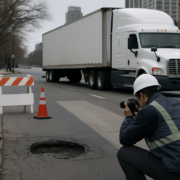
When Road Conditions Trigger a Chicago Truck Accident Claim
A truck swerves around a pothole, crosses an uneven lane transition, or encounters debris that has fallen into traffic. In seconds, the truck may brake, change direction, or collide with another vehicle. For someone injured in a Chicago truck accident caused by a road hazard, an important question is whether responsibility extends beyond the driver.
Roadway conditions can involve several potential contributors. Depending on the facts, those contributors may include a public entity responsible for the road, a construction contractor, a private property owner, the trucking carrier, or another motorist. The answer usually depends on who controlled the hazard, what was known about it, whether warnings were provided, and how the truck and other vehicles responded.
Dinizulu Law Group helps injured people understand the evidence and legal issues that may shape a personal injury claim. This article explains how road-hazard cases are evaluated, what evidence can clarify the sequence of events, and why identifying every possible contributor matters in Chicago, Illinois.
When Can a Road Hazard Contribute to a Chicago Truck Accident?
A road hazard is not automatically proof that a government agency or private party is liable. A legal claim generally requires evidence connecting a responsible party’s conduct or legal duty to the crash and resulting injuries. Road ownership and control are often the starting points.
Common roadway hazards
Potential hazards in Chicago and surrounding communities may include:
- Potholes, pavement depressions, broken edges, or uneven surfaces
- Unsafe lane transitions near resurfacing or utility work
- Construction debris, fallen cargo, or objects left in a travel lane
- Inadequate barriers, lighting, channelization, or warning signs
- Drainage or weather-related conditions that create dangerous standing water or ice
- Roadway design features that make a turn, merge, or grade difficult to navigate
A public entity may have responsibilities related to a road it owns or controls, but governmental liability is subject to Illinois law and may be affected by immunities, notice requirements, exceptions, and claim deadlines. The City of Chicago, Cook County, the Illinois Department of Transportation, and other entities may have different responsibilities depending on the road and project involved. A road’s location alone does not establish which agency had a duty.
Why the truck’s reaction matters
The hazard may be only one part of the event. Investigators may examine the truck’s speed, braking, lane position, steering input, following distance, load, tire condition, and direction of travel. A carrier may also be relevant if maintenance, dispatch pressure, training, inspection, or supervision affected the truck’s ability to respond safely. Liability can be shared among parties, or the evidence may show that a particular alleged contributor was not legally responsible.
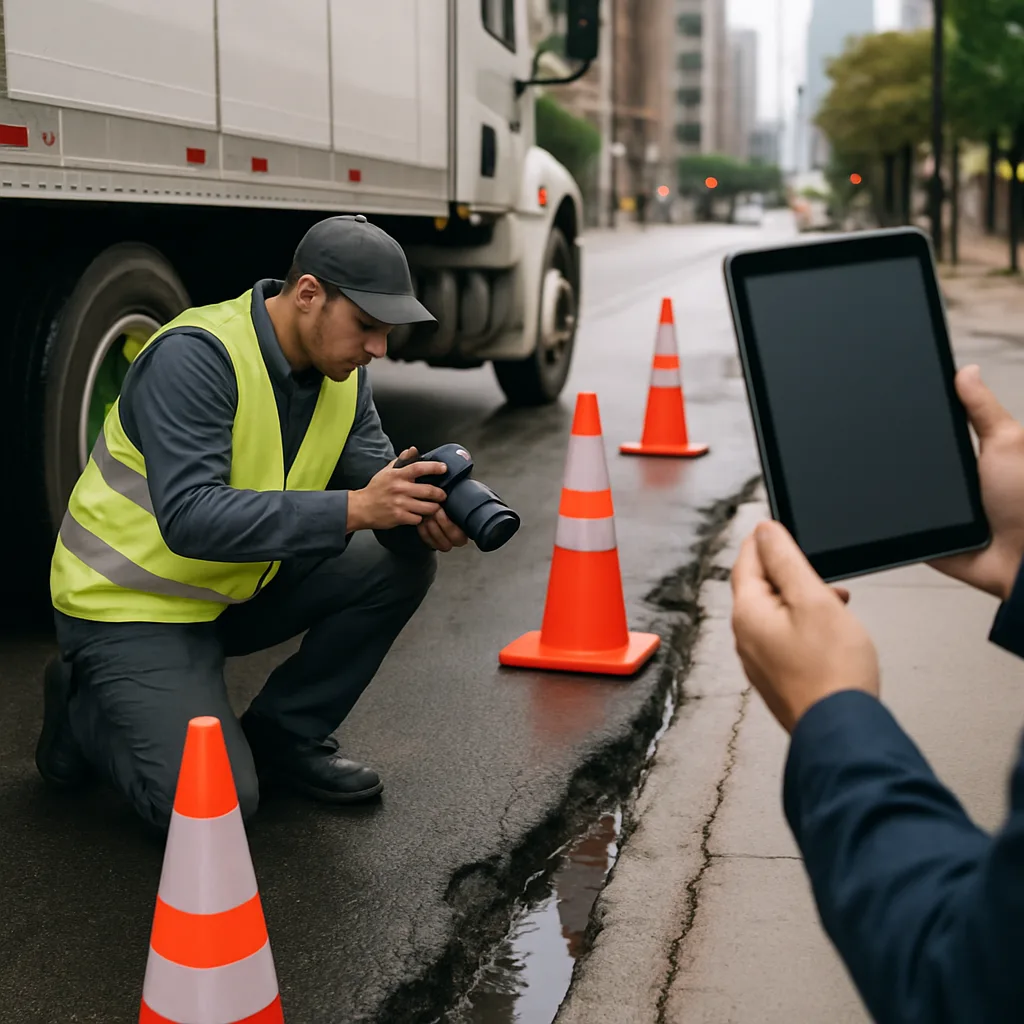
Evidence That Can Clarify Government or Carrier Liability
Road-hazard cases can become difficult when the condition changes after the crash. A pothole may be filled, debris removed, construction barriers moved, or snow and water conditions altered. Evidence should be evaluated promptly and from more than one source.
Useful categories may include:
- Scene photographs and video. Images can show the hazard’s location, size, depth, lane position, sight distance, lighting, traffic controls, and the relationship between the road and the vehicles. Photos from multiple angles may be more informative than a close-up alone.
- Roadway complaints and maintenance records. Prior reports, service requests, inspection logs, work orders, repair histories, and agency communications may help establish how long a condition existed or who knew about it. A complaint does not by itself prove legal notice or liability, but it may be an important investigative lead.
- Construction and traffic-control records. Contracts, project plans, lane-closure information, daily reports, subcontractor records, and records of warning devices may help identify who designed, installed, or maintained a changed traffic pattern.
- Weather and visibility information. Rain, snow, ice, standing water, glare, and reduced visibility may affect how the hazard appeared and how vehicles reacted. Weather does not automatically excuse unsafe conduct, nor does it automatically create liability.
- Vehicle and electronic data. Event data, electronic logging information, onboard camera footage, GPS records, dispatch messages, inspection reports, and maintenance records may help establish speed, braking, route, timing, and vehicle condition. The availability and interpretation of this information vary by vehicle and system.
In an Illinois roadway defect truck accident, evidence may also include police reports, witness accounts, 911 records, nearby business or traffic-camera footage, photographs taken by other drivers, and medical records documenting reported injuries. A lawyer may coordinate preservation and review of these materials while considering applicable Illinois deadlines and procedural requirements.
Building a Complete Liability Analysis After a Road Hazard Crash
A strong investigation does not assume that the first apparent cause is the only cause. Instead, it reconstructs the roadway, the truck, the traffic around it, and the decisions made before and during the collision.
Questions investigators may examine
- Who owned, operated, designed, or maintained the roadway?
- Was the hazard permanent, temporary, weather-related, or created by a work project?
- Did a public agency, contractor, carrier, or motorist receive notice of it?
- Were signs, cones, barriers, lights, or other warnings required and present?
- Did the truck driver have a reasonable opportunity to see and avoid the condition?
- Was the truck traveling, braking, turning, merging, or changing lanes when it encountered the hazard?
- Did tires, brakes, steering, suspension, cargo, or other equipment affect the response?
- Did another vehicle’s movement force or contribute to the truck’s maneuver?
Illinois follows a comparative-fault framework in personal injury cases, but how it applies depends on the evidence and the claims involved. A public-body claim may also involve special statutory protections and procedural issues that do not apply in the same way to a private carrier or contractor. Because laws vary by location and may change, the analysis for Chicago, Illinois, should be based on the specific roadway, parties, and timing.
Common mistakes can include assuming the truck driver is solely responsible, overlooking a construction contractor, failing to document lane changes, or treating weather as the complete explanation. Another problem is focusing only on vehicle damage while failing to preserve the road condition and surrounding context. A careful review may help distinguish a genuine roadway defect from a condition that was visible, temporary, unavoidable, or unrelated to the collision.
Frequently Asked Questions
Can bad weather make a government agency or trucking carrier liable?
Bad weather alone does not establish liability. Rain, snow, ice, or flooding may affect visibility, traction, and braking, but the analysis still asks what each potentially responsible party knew or should have known and whether reasonable precautions were taken. Weather records, road-treatment logs, warnings, vehicle data, and witness accounts may help explain the conditions. Responsibility may depend on the interaction between weather, roadway design, maintenance, and vehicle conduct.
What if road debris came from another vehicle?
A driver or carrier may potentially be relevant if evidence shows that cargo was not secured, an object fell from a vehicle, or the vehicle created the debris. Other possibilities may include a construction operation, maintenance activity, or unidentified motorist. Establishing the source can be difficult, so photographs, witness statements, traffic video, vehicle damage, and timing evidence may matter. The legal analysis depends on identifying the source and connecting it to the collision.
Does a truck’s electronic data matter in a roadway-defect case?
It can. Depending on the truck and equipment, electronic data may help show speed, braking, steering, route, engine activity, or timing. Camera footage and dispatch records may also provide context. Data is not self-explanatory, and its meaning may depend on calibration, preservation, and the surrounding physical evidence. An attorney may evaluate what information exists and how it fits with photographs, vehicle inspections, witness accounts, and the police investigation.
Can several parties share responsibility for a Chicago truck crash?
Yes, multiple parties may be investigated when a roadway condition, construction activity, vehicle defect, carrier practice, or another driver contributed to one crash. Illinois rules concerning comparative fault and claims against public entities can be complex and fact-specific. Identifying a possible contributor does not establish legal liability. A complete evaluation generally considers each party’s role, applicable defenses or immunities, evidence of causation, and the injuries claimed.
How Dinizulu Law Group Can Help
Dinizulu Law Group is dedicated to helping injured people examine the full chain of events after a commercial truck collision. The firm is committed to fighting for clients’ rights while evaluating roadway photographs, construction conditions, complaints, weather, vehicle movements, carrier records, and other evidence that may identify responsible parties.
A roadway-hazard investigation may involve public agencies, private contractors, trucking companies, insurers, and technical evidence. The team is ready to evaluate your situation, explain potential legal options, and discuss the issues that may affect a claim in Chicago, Illinois. Contact Dinizulu Law Group for a free consultation or case evaluation.
The information in this article is for educational purposes only and does not constitute legal advice. Contact a qualified attorney licensed in Chicago, Illinois for advice specific to your situation.


