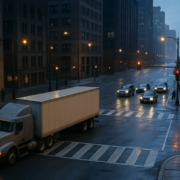
What Should a Chicago Truck Red-Light Crash Lawyer Preserve?
A truck entering an intersection after the signal changes can leave a motorist facing vehicle damage, physical symptoms, and unanswered questions about what happened. If you are searching for a Chicago truck red light accident lawyer, you may also be wondering whether responsibility rests with the driver, the trucking company, a maintenance provider, or another party.
In Chicago, a red-light crash is not always resolved by identifying who received a citation. The investigation may turn on when the signal changed, what each driver could see, how the intersection was designed, and whether the truck’s equipment or operating conditions affected the event. Dinizulu Law Group can serve as a knowledgeable guide while these issues are evaluated.
This article explains what to document after an intersection collision, how signal and camera evidence may be preserved, why witness information matters, and when an employer may become part of the investigation. It provides general information about potential truck accident liability in Chicago, Illinois, not a determination about any particular crash.
Who May Be Responsible in a Chicago Truck Red-Light Accident?
Responsibility depends on the facts established by the available evidence. A truck driver may be investigated if distraction, inattention, speeding, impairment, or a failure to respond to the signal contributed to the collision. However, the analysis should also consider whether the driver had a clear view of the signal and whether the truck’s position, height, turn path, or trailer created a visibility issue.
Why the Traffic Signal Is Only One Part of the Analysis
A citation or police report can be important, but it may not answer every liability question. Investigators may examine:
- The sequence and duration of the traffic signals;
- Whether the truck entered on yellow, red, or during a protected movement;
- Sightlines affected by buildings, parked vehicles, weather, or other traffic;
- The truck’s speed, braking, steering, and lane position;
- Whether a turn, wide trailer path, or intersection design affected visibility; and
- Whether a malfunction, obstructed signal, or roadway condition played a role.
In Chicago, Illinois, intersections vary substantially in layout and traffic volume. A careful review may require photographs, measurements, vehicle data, video, and testimony rather than reliance on a single account.
Potentially responsible parties can include the truck driver and, depending on the evidence, the motor carrier or employer. A maintenance contractor, vehicle owner, or public entity responsible for a signal or roadway may also require review. Whether a claim can be brought against any of these parties depends on the facts, applicable Illinois law, and available proof.
What Evidence Can Clarify a Commercial Truck Traffic Signal Violation?
Evidence can disappear quickly. Traffic cameras may record over older footage, nearby businesses may retain video for limited periods, and witnesses may forget important details. After a semi truck intersection crash in Chicago, early documentation can help preserve the circumstances for later evaluation.
Signal Timing, Camera Footage, and Intersection Geometry
A lawyer or investigator may seek information from the agency or entity responsible for the signal, which may include Chicago transportation authorities or another roadway owner. Signal-phase records, controller information, maintenance logs, and reports of malfunctions may help show how the intersection operated. The availability and retention period for these materials can vary, so no particular record should be assumed to exist.
Truck accident camera footage in Illinois may come from traffic cameras, nearby stores, residences, buses, dashboard cameras, or other vehicles. A preservation request may be considered when relevant video is likely to be overwritten. Investigators may also inspect the intersection from the drivers’ approaches to assess signal visibility, sight distance, lane configuration, and obstructions.
Useful documentation may include:
- Photographs or video of the vehicles, roadway, signal heads, lane markings, and surrounding sightlines;
- The names and contact information of witnesses, recorded promptly and accurately;
- The approximate time, direction of travel, weather, lighting, and traffic conditions;
- Police exchange information and any incident number, if available; and
- Information about nearby cameras, businesses, transit vehicles, or residential buildings.
The goal is not to create a theory before the facts are known. It is to preserve information that may later help distinguish a driver error from a visibility, equipment, signal, or roadway issue.
When Can a Trucking Company or Other Party Enter the Investigation?
Commercial truck cases often involve more than the person behind the wheel. The employer or motor carrier may have information about the driver’s work assignment, route, training, vehicle inspection history, dispatch communications, and hours of service. Those records may help establish what the driver was doing and what the company knew or should have known, subject to the facts and applicable Illinois law.
Employer responsibility is not automatic simply because a truck bears a company name or the driver was working. An investigation may examine whether the driver was acting within the scope of employment and whether the company exercised relevant control over the trip. Separate issues, such as hiring, supervision, training, maintenance, or scheduling, may also arise, but each requires supporting evidence.
Common Mistakes After an Intersection Truck Crash
People involved in a Chicago truck collision may unintentionally make evidence harder to evaluate by:
- Assuming the police citation resolves all liability issues;
- Failing to record witness information before people leave;
- Posting detailed conclusions about fault on social media;
- Giving a recorded statement without understanding the questions being asked; or
- Waiting so long that video, vehicle data, or business surveillance is no longer available.
Depending on the circumstances, an attorney may help identify potentially responsible parties, communicate with insurers, evaluate evidence, and explain how a claim may proceed in Illinois. A serious injury claim may involve medical records and other damages evidence, but those issues should be assessed individually rather than assumed.
Frequently Asked Questions
Does a red-light ticket prove who is liable in a Chicago truck crash?
Not necessarily. A ticket may document an alleged traffic violation, but civil responsibility can involve additional questions. The parties may dispute the signal phase, timing, visibility, speed, braking, or whether another condition contributed to the collision. In Chicago, Illinois, liability is generally evaluated from the full body of evidence, including photographs, video, witnesses, vehicle data, and applicable legal standards.
How can I find truck accident camera footage in Illinois?
Potential footage may come from traffic systems, nearby businesses, residences, transit vehicles, or other motorists. Retention practices vary, and some systems may overwrite recordings. A lawyer may help identify likely sources and consider preservation communications. There is no guarantee that footage exists or can be obtained, but identifying cameras promptly may improve the chance that relevant evidence is not lost.
Can a truck’s employer be responsible for an intersection collision?
Possibly, depending on the driver’s employment relationship, the purpose of the trip, and the evidence concerning company conduct. The employer may have records relevant to dispatch, training, supervision, maintenance, or scheduling. A company is not automatically liable merely because its truck was involved. Responsibility must be evaluated under the facts and applicable Illinois law.
What details should witnesses provide after a Chicago truck crash?
Witnesses should provide their names and reliable contact information, along with what they personally observed. Helpful details may include the direction each vehicle traveled, the apparent signal phase, truck speed, lane position, braking, and where the witness was located. Witnesses should avoid guessing or adopting someone else’s version of events. Their independent observations may be especially valuable when video is unavailable.
How Dinizulu Law Group Can Help
Dinizulu Law Group is dedicated to helping injured people understand the evidence and legal issues that may arise after commercial truck and auto collisions. The firm can evaluate questions involving signal timing, intersection visibility, witness accounts, camera footage, vehicle records, and possible employer responsibility.
The team is committed to fighting for clients’ rights while recognizing that every case depends on its own facts, evidence, and applicable Illinois law. If you or a family member was injured in a Chicago truck red-light crash, contact Dinizulu Law Group for a free consultation or case evaluation to discuss your situation and legal options.
The information in this article is for educational purposes only and does not constitute legal advice. Contact a qualified attorney licensed in Chicago, Illinois for advice specific to your situation.


