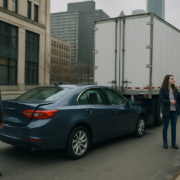
Who Is Liable? Chicago Rear End Truck Accident Lawyer
A rear-end collision with a tractor-trailer can leave a smaller vehicle badly damaged and its occupants unsure what to do next. If you are searching for a Chicago rear end truck accident lawyer, one important question is whether the truck driver is automatically responsible. The answer is not always.
Rear-impact crashes often involve more than the position of the vehicles at the moment of impact. Following distance, traffic congestion, a downhill grade, visibility, mechanical problems, and the actions of vehicles farther ahead may all affect how fault is evaluated. Injuries also may not be fully apparent immediately after a collision.
Dinizulu Law Group provides legal information and representation for people dealing with truck and auto accident concerns. This article explains what an injured motorist in Chicago, Illinois should consider after a tractor-trailer strikes a vehicle from behind, including how to preserve evidence, describe what happened carefully, and understand the possible sources of liability.
Why a Chicago Rear-End Truck Accident Is Not Automatically the Truck Driver’s Fault
A driver generally has a duty to operate with reasonable care and maintain enough control and distance to respond to traffic. In many rear-end crashes, that makes the following driver an important focus of the investigation. However, a liability decision requires a review of the complete sequence of events rather than an assumption based only on vehicle position.
Conditions that may affect stopping distance
A commercial truck carries substantial weight and may need significant time and space to stop. That does not by itself excuse unsafe driving, but investigators may examine whether the truck was traveling too fast for conditions, following too closely, or distracted. They may also consider:
- A downhill roadway that increased momentum;
- Stop-and-go traffic or an unexpected traffic backup;
- Rain, snow, glare, darkness, or obstructed visibility;
- A sudden stop by the vehicle immediately ahead; and
- A mechanical issue involving brakes, tires, steering, or other equipment.
A truck following distance accident in Chicago may involve a combination of these factors. The relevant question is often whether each driver acted reasonably under the circumstances and whether a particular action contributed to the impact.
The role of vehicles ahead
A chain-reaction crash can involve multiple vehicles. A car may stop suddenly because another motorist changed lanes, entered traffic, or collided with a vehicle farther ahead. Evidence may show that the truck driver had enough time to respond, or it may raise questions about whether another driver created an unexpected hazard. A careful investigation should preserve both possibilities until the facts are clearer.
Evidence and Fault Questions in Semi-Truck Rear-End Collisions in Illinois
After a crash in Chicago, Illinois, physical evidence can change quickly. Vehicles may be moved, repaired, or inspected by different people. Photos, witness information, medical records, and available video can help establish what happened without relying only on memory.
Documenting vehicle damage and traffic conditions
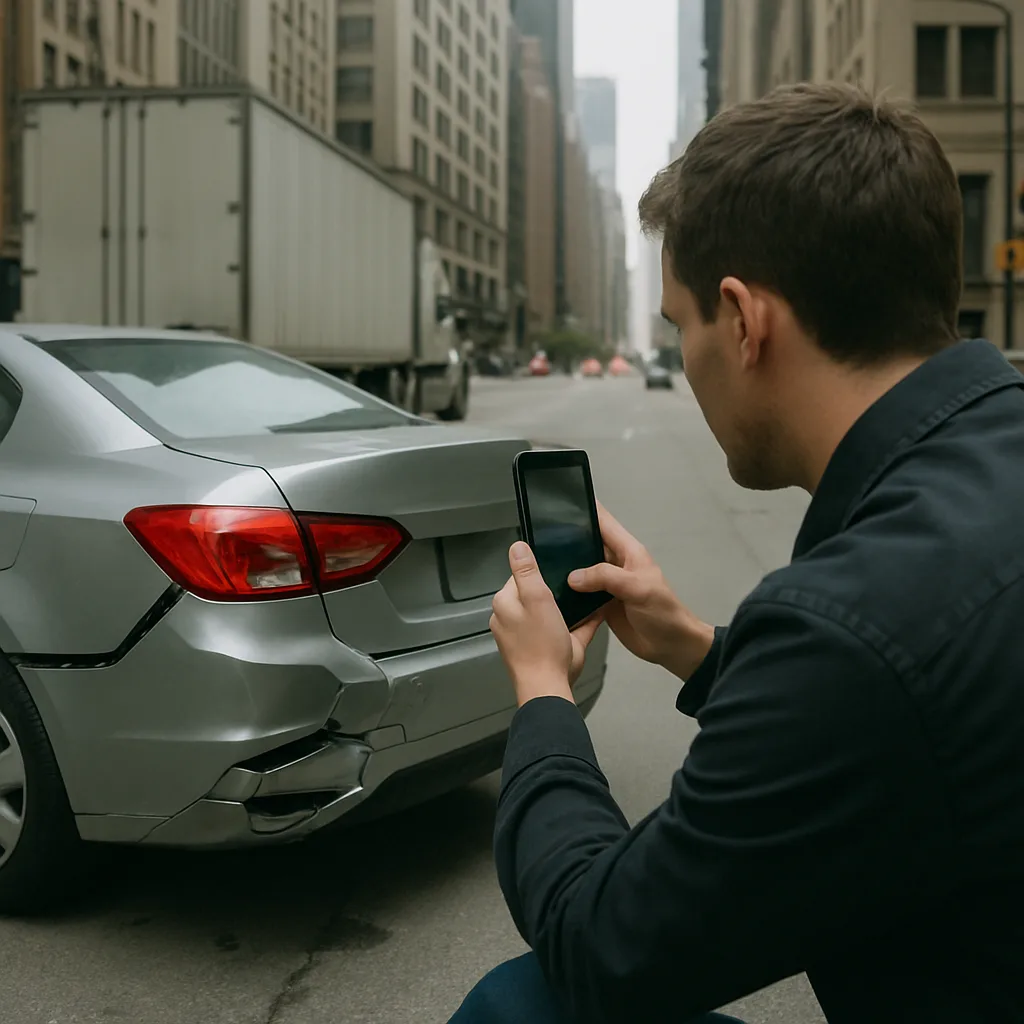
When it is safe to do so, an injured motorist may photograph the vehicle from several angles, including the rear impact area, crushed components, glass, undercarriage, and the surrounding roadway. Images of skid marks, debris, lane positions, weather, road grade, traffic backups, and sight lines may also be relevant. Do not place yourself in danger to collect photographs.
Useful information may include:
- The date, time, and general location of the collision;
- The direction of travel and lane configuration;
- Whether traffic was moving, stopped, or merging;
- Names and contact information for witnesses, when available;
- Police report or incident information; and
- Photos, videos, vehicle repair records, and insurance communications.
Dashcam footage, nearby business video, traffic-camera footage, and electronic data from a commercial vehicle may be important, but availability and retention periods vary. An attorney may assess whether preservation requests or further investigation are appropriate under the circumstances.
Identifying potentially responsible parties
The truck driver may be one source of liability, but not necessarily the only one. Depending on the facts, an investigation may examine the trucking company, a maintenance provider, a loading contractor, a parts manufacturer, or another motorist. Employment and agency relationships can also matter, and those questions may require records that an injured person cannot obtain independently.
Illinois applies comparative-fault principles. This generally means that responsibility may be allocated among parties based on the evidence, and an injured person’s own conduct can affect a claim. Because the governing rules and deadlines depend on the specific facts and jurisdiction, a licensed Illinois attorney should evaluate the situation rather than relying on a general assumption about who pays.
Protecting Your Position After a Truck Rear-End Crash
The first priority after a collision is safety and appropriate medical attention. A person may feel relatively well at the scene and notice discomfort later. Symptoms can develop after the initial stress of a crash has subsided, so describing changes in condition to a healthcare professional may help create an accurate record. Legal readers should not treat this information as a diagnosis or as a substitute for medical guidance.
Avoiding premature statements about fault
At the scene, people often say they are sorry, did not see the truck, or stopped suddenly. Casual statements can later be taken out of context. A safer communication approach is to provide factual information, cooperate with appropriate authorities, and avoid guessing about speed, stopping distance, or legal responsibility.
When speaking with an insurer, a motorist may be asked for a recorded statement or broad authorization. Depending on the circumstances, an attorney may advise on how to respond and what information is relevant. This does not mean a person should refuse lawful requests or hide facts. It means communications should be accurate and carefully understood.
Preserving injury and loss information
Keep copies of medical bills, appointment information, prescriptions, repair estimates, wage documentation, and notes about how the injury affects ordinary activities. Do not exaggerate symptoms, but do not dismiss them merely because they were not immediate. A lawyer evaluating a Chicago truck accident may compare these records with vehicle damage, photographs, crash reports, witness accounts, and available commercial-vehicle data.
Evidence can be especially important when the trucking company or insurer disputes how the impact occurred. A consultation may help identify which records matter and whether additional parties or contributing conditions should be examined.
Frequently Asked Questions
Is a truck driver presumed at fault in a rear-end collision in Chicago?
Not automatically. A rear-impact collision may support questions about the following driver’s speed, attention, and following distance, but liability depends on the full evidence. Investigators may also examine sudden traffic changes, roadway conditions, visibility, mechanical issues, and the conduct of other motorists. In Illinois, fault may be allocated among multiple parties when the evidence supports shared responsibility.
What should I photograph after a Chicago truck crash?
When conditions are safe, photographs may include damage to every involved vehicle, debris, skid marks, lane positions, traffic controls, road conditions, visibility, and the surrounding roadway. Pictures of the vehicle interior and damaged safety equipment may also be useful. Witness information and available video can supplement photographs. Do not enter traffic or delay emergency care to collect evidence.
Can delayed pain matter after a tractor-trailer collision?
Yes, symptoms may become noticeable after the collision rather than at the scene. The fact that discomfort was delayed does not by itself establish or disprove an injury. A healthcare professional can evaluate symptoms and discuss appropriate care. From a legal perspective, records showing when symptoms began, what was reported, and how the condition affected daily activities may become relevant.
What if the truck driver says I stopped suddenly?
A sudden stop is one fact, not an automatic answer to liability. The investigation may consider why traffic stopped, how much space existed between vehicles, whether the truck had a clear view, road conditions, and whether another vehicle triggered the sequence. Avoid arguing at the scene or making guesses. Preserve available evidence and obtain legal guidance specific to the circumstances.
How Dinizulu Law Group Can Help
Dinizulu Law Group is dedicated to helping injured motorists understand the evidence and legal issues that may arise after a truck or auto collision. The firm is committed to fighting for clients’ rights while examining vehicle damage, traffic conditions, medical documentation, insurance communications, and potential sources of responsibility.
A Chicago truck accident lawyer may be able to help evaluate whether the available facts support a claim and identify questions that require further investigation. Contact Dinizulu Law Group for a free consultation or case evaluation to discuss what happened and explore your legal options.
The information in this article is for educational purposes only and does not constitute legal advice. Contact a qualified attorney licensed in Chicago, Illinois for advice specific to your situation.


