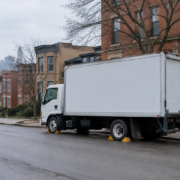
What Can Make a Parked Truck Roll Into Chicago Traffic?
A delivery truck is stopped on a Chicago street or beside a loading dock. The driver steps away, and the truck begins to move—possibly toward traffic, a parked car, a cyclist, or a pedestrian. When that happens, people may ask whether the parking brake failed, was not engaged, or whether the truck’s position, the ground, or loading activity played a role. Questions about Chicago truck rollaway accident liability often turn on how the vehicle was left and what evidence can explain its movement. For background on how a parked truck can create a Chicago crash hazard, it helps to distinguish an obstruction from a truck that actually rolls. Dinizulu Law Group helps Chicago-area readers understand the issues that can arise after truck collisions. This article discusses possible causes, evidence investigators may examine, and how responsibility may be assessed under Illinois law. Each situation depends on its facts.
How Chicago Truck Rollaway Accident Liability Is Evaluated
A truck may start rolling if its parking brake is not set, does not hold, or is affected by a mechanical problem. But a collision involving a moving, unattended truck does not, by itself, prove brake failure. The vehicle may have been left in a position that allowed movement, or the cause may involve more than one condition. Investigators generally consider how the truck was secured and the circumstances in which it was parked.
Parking conditions and securement
Relevant details may include whether the parking brake was applied, whether the transmission or drivetrain was placed in an appropriate setting, and whether wheel chocks or other securement measures were used. The truck’s position matters, too. A slope, uneven pavement, a curb, or a surface disturbed during work may affect how a vehicle moves. The vehicle’s load and any loading or unloading activity may also be relevant to its stability or the timing of the event.
In Chicago, a truck may be stopped at a curb, in an alley, in a service area, or at a loading dock. The circumstances and applicable responsibilities can differ across those settings. A truck can pose risks before it moves—for example, by blocking sight lines or occupying a busy loading area—but those concerns are distinct from what causes a rollaway. The parking location and the actions taken to secure the truck may help explain whether the movement was preventable and which parties’ conduct should be examined.
What Evidence Can Explain Why an Unattended Truck Moved?
The reason a truck moved may not be apparent from the final resting position alone. A careful investigation may compare physical evidence with vehicle, site and witness information. That can help distinguish a failure to secure the truck from a mechanical issue, an unusual surface condition, or a sequence involving several contributing factors.
Mechanical and site evidence
A qualified inspection may examine the parking-brake components, tires, drivetrain and other relevant systems. Maintenance, inspection and repair records may provide context about the truck’s condition, but their meaning depends on the details and timing. A reported brake problem is not automatically proof that a defect caused the crash. See records that may help establish truck brake failure liability for related information about evaluating mechanical evidence.
The location can matter as much as the vehicle. Photographs, video, measurements and witness accounts may help show the truck’s original position, the slope or condition of the surface, and its path after moving. In a Chicago delivery or loading-area crash, available site video and delivery or loading records may also help clarify who was present and what work was underway. Records that can clarify a Chicago truck loading-area crash may provide useful context about activity at the location. Investigators may also consider who controlled the loading area and who had responsibility for securing the vehicle, without assuming that any one party is automatically at fault.
How Are Responsibility and Multiple Impacts Assessed?
Responsibility may depend on the conduct of the driver and other people or businesses whose actions contributed to the event. Depending on the facts, questions may concern who parked the truck, what securement steps were taken, whether a mechanical condition was known or reasonably detectable, and who directed or controlled loading activity. A carrier, maintenance provider or property operator may be relevant to an investigation, but involvement alone does not establish legal responsibility.
Illinois negligence principles may be relevant when evaluating whether someone failed to use reasonable care and whether that conduct contributed to an injury or damage. Illinois law also addresses shared fault, so the facts about each person’s conduct may matter. The applicable legal analysis can depend on the circumstances and may change over time. For a case involving Chicago, the proper court and procedures depend on the parties and claims; some matters may be handled in Cook County courts.
A rolling truck may hit one vehicle and push it into another, or move from a loading area into a street and strike multiple road users. Investigators may examine the timing and sequence of each impact rather than treating the event as one undifferentiated collision. The positions of the vehicles, damage patterns, video and witness accounts can help explain how the impacts unfolded. For more on how liability may be assessed in a Chicago truck chain-reaction crash, see the related discussion. Preserving available information and documenting what is known can help an attorney evaluate the issues, but what evidence is available varies by case.
Frequently Asked Questions
Does a truck rolling into traffic automatically prove a parking-brake failure?
No. A rollaway can raise questions about the parking brake, but the movement alone does not establish that the brake failed or that a defect caused the crash. The truck may not have been secured, or the surface, vehicle position, loading activity or another condition may be relevant. A mechanical inspection and other evidence can help clarify the cause. The facts of each incident matter.
Who may be responsible when an unattended truck rolls into a car?
Potential responsibility depends on the circumstances, including who parked and secured the truck, whether a mechanical issue contributed, and who controlled any loading activity. A driver, carrier, maintenance provider or property operator may warrant examination in some cases, but no party is automatically liable simply because of their role. An assessment may also consider whether more than one person or entity contributed to the event.
What evidence may help explain a truck rollaway in Chicago?
Useful evidence may include photographs or video of the truck’s position and path, witness accounts, vehicle inspection findings, maintenance and repair records, and delivery or loading information. The surface, slope and layout of the parking area may also matter. Whether any particular item exists or is relevant depends on the location and circumstances, including how quickly the evidence is preserved or becomes unavailable.
Can one rolling truck cause separate claims for multiple collisions?
It can. A truck may strike one vehicle and cause it to hit another, or make successive impacts with different vehicles or property. Investigators may analyze the timing, sequence and cause of each impact. The injuries, damage and contributing conduct may differ across people involved, so questions about responsibility and potential claims are assessed using the facts of each collision.
How Dinizulu Law Group Can Help
A rollaway crash can raise questions about securement, vehicle condition, loading operations and the sequence of impacts. Dinizulu Law Group is dedicated to helping people understand the legal issues that may arise after a truck accident in Chicago and throughout Illinois. The firm can review the available information, explain potential paths for investigating responsibility, and discuss how the facts may apply to your circumstances. Contact Dinizulu Law Group to request a consultation and talk through your situation.
The information in this article is for educational purposes only and does not constitute legal advice. Contact a qualified attorney authorized to practice in the jurisdiction that applies to your matter for advice specific to your situation.


