Which Collision Details Aid a Chicago Truck Merge Lawyer?
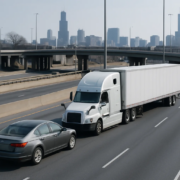
A truck moves into the next lane on the Kennedy Expressway, Bishop Ford Freeway, or another Chicago roadway. A car or motorcycle occupant may hear the familiar explanation afterward: the smaller vehicle was in the truck’s blind spot. But that statement does not, by itself, answer whether the lane change was made safely or who may be legally responsible.
If you are looking for a Chicago truck lane change accident lawyer, it is important to understand that a blind spot may be only one part of the investigation. A careful review can examine mirror coverage, camera systems, turn signals, speed differences, lane markings, available merging space, driver workload, and the trucking company’s safety practices. Dinizulu Law Group can serve as a knowledgeable guide while these issues are evaluated. The firm’s Chicago truck blind spot and lane-change accident lawyer resource provides additional background on why a blind-spot explanation does not end the analysis.
This article explains what evidence may clarify a sideswipe or merge collision, how Illinois liability questions can extend beyond the driver, and what car and motorcycle occupants should know after a crash. The facts of each collision matter, and legal standards can depend on the location, vehicles, evidence, and people involved.
Why a Chicago Truck Lane-Change Crash May Involve More Than a Blind Spot
A tractor-trailer has substantial blind areas, but the existence of a blind spot does not automatically establish fault by the other vehicle. Commercial drivers generally must account for limited visibility and confirm that a lane is reasonably clear before moving across lane markings. The investigation may ask whether the driver used available mirrors and camera systems, activated a turn signal, checked more than once, and allowed enough space for a vehicle traveling at a different speed.
Visibility is only one part of the analysis
Investigators may compare the truck’s mirror configuration with the position of the smaller vehicle. A car that was visible in a side mirror moments earlier may have moved into a different position as the truck began merging. Some trucks also use side-view cameras or other monitoring equipment, but the presence of technology does not prove how it was used or whether it was functioning at the relevant time.
Road design matters too. Faded lane markings, construction shifts, narrow lanes, entrance ramps, parked vehicles, and heavy traffic can affect a driver’s workload and the amount of room available. Chicago traffic patterns can create rapidly changing speed differences, particularly where vehicles enter or exit busy expressways.
Signals and merging space can change the picture
A turn signal is important evidence, but signaling alone does not make a lane change safe. The timing of the signal, the distance between vehicles, the truck’s speed, and whether the car or motorcycle had a reasonable opportunity to react may all be relevant. A sideswipe can occur even when the truck driver claims the other vehicle was hidden, and damage patterns may help determine how the vehicles moved in relation to each other.
What Evidence Can Clarify Truck Sideswipe Liability in Illinois?
A statement from one driver is rarely the only useful source of information. In a Chicago, Illinois truck crash, investigators may compare physical evidence with digital records and independent observations. Potentially relevant evidence can include:
- Dashcam or helmet-camera footage from the involved vehicle or a nearby motorist.
- Photos showing vehicle damage, paint transfer, debris, lane markings, and the roadway’s configuration.
- Witness names and contact information, including people who saw the truck before contact occurred.
- Traffic-camera footage, when available and preserved through the appropriate process.
- The truck’s electronic control module or other onboard data regarding speed, braking, steering, and timing.
- Inspection, maintenance, and repair records for mirrors, cameras, lights, and other visibility equipment.
Dashcam footage should be preserved in its original form when possible. Automatic recording systems may overwrite files, and a phone video can lose useful context if it is trimmed or repeatedly resaved. A vehicle’s final resting position and damage location may also be important, so photographs taken soon after the collision can be valuable.
Electronic data is not a complete answer by itself. It may require technical interpretation and comparison with roadway evidence, witness accounts, and vehicle damage. Dinizulu Law Group discusses how truck electronic data that can clarify a lane-change crash may fit into a broader evidence review.
In Illinois, a potential claim may also involve questions about shared fault. The effect of a person’s alleged contribution to a crash can depend on the evidence and applicable Illinois law. An attorney evaluating a collision may consider whether the truck crossed a solid or broken marking, whether the smaller vehicle was speeding or changing lanes, and whether either driver had a reasonable chance to avoid contact. These are fact-specific questions, not conclusions that can be made from the word “blind spot” alone.
Who May Be Responsible for a Commercial Truck Unsafe Lane Change?
The truck driver may be one part of the case, but the investigation can extend to the carrier and other businesses. Depending on the facts, relevant issues may include driver training, supervision, dispatch expectations, vehicle maintenance, and the company’s response to known safety concerns. A carrier may also have records that help identify who controlled the truck and how it was being operated.
Potentially responsible parties can vary. They may include:
- The truck driver, if the driver failed to check visibility, signal, yield, or maintain a safe lane position.
- The motor carrier, depending on the employment relationship and evidence concerning supervision, policies, or operations.
- A vehicle owner, maintenance provider, or equipment company if a visibility-related defect contributed to the collision.
- Another business involved in leasing, dispatching, or contracting, depending on the actual relationship and applicable law.
Identifying the carrier can be more complicated than reading a name on a trailer. An investigation may examine the cab and trailer ownership, insurance information, bill of lading, lease documents, and the relationship between an owner-operator and a motor carrier. This is why an overview of potentially responsible parties in a truck accident may be useful when more than one business appears connected to the vehicle.
Carrier-level questions can include whether the driver was properly qualified, trained on safe lane changes, and supervised after prior safety concerns. Depending on the evidence, commercial carrier hiring and training records may warrant review. An independent-contractor label also does not resolve every legal question. Illinois cases may require examination of contracts, control, insurance, and the conduct that led to the crash; Illinois trucking company responsibility for an independent contractor can be a separate issue.
Practical evidence concerns after a Chicago crash
After a collision, people may be focused on medical care and immediate safety. Those priorities matter. When reasonably possible, occupants can preserve dashcam files, photograph the vehicles and roadway, identify witnesses, and keep records relating to the crash. Dinizulu Law Group offers additional information about steps to take after a Chicago truck accident.
A person should avoid guessing about fault or making a detailed statement based on incomplete information. Law enforcement reports, including reports prepared by the Chicago Police Department or Illinois State Police, can be important, but they may not contain every detail. Depending on the circumstances, a claim may involve proceedings in Cook County or another appropriate court, and deadlines can apply. Laws and procedures vary by jurisdiction and may change, so a licensed Illinois attorney can explain how they relate to a particular collision.
Frequently Asked Questions
Does a truck driver automatically avoid responsibility if a vehicle was in a blind spot?
No. A blind spot can be relevant, but it does not automatically determine responsibility. The investigation may consider whether the driver used available mirrors or cameras, signaled in time, checked traffic, maintained a safe speed, and had enough room to merge. Evidence such as dashcam footage, lane markings, witness accounts, electronic data, and damage patterns may provide a more complete explanation of how the collision occurred.
What should a motorcycle rider preserve after a truck sideswipe in Chicago?
A rider may have useful evidence from helmet cameras, motorcycle cameras, photographs, clothing or equipment damage, witness information, and medical records. Original video files should be preserved when possible. Roadway conditions, lane markings, and the truck’s position may also matter. Because evidence can be lost or overwritten, a lawyer can explain preservation options based on the specific collision and applicable Illinois procedures.
Can a trucking company be involved even if its driver caused the lane change?
Possibly. The answer depends on the driver’s relationship with the carrier and the facts concerning supervision, training, vehicle maintenance, dispatch, hiring, and control. A company may not be responsible simply because its name appears on a truck. Investigators generally need to examine contracts, ownership, insurance, employment or contractor arrangements, and the conduct connected to the crash.
How can damage patterns help explain a semi-truck blind-spot crash?
Damage location, paint transfer, scrape direction, debris, and the final positions of the vehicles may help reconstruct movement and the point of contact. These details cannot establish liability by themselves, and they may require an accident-reconstruction review. They can, however, be compared with driver statements, lane markings, video, and electronic data to test whether the vehicles were merging, traveling alongside each other, or changing position before impact.
How Dinizulu Law Group Can Help
Dinizulu Law Group is dedicated to helping Chicago, Illinois car, motorcycle, and truck-crash victims understand the evidence and legal issues that may affect a claim. The firm is committed to fighting for clients’ rights while examining the driver’s conduct, truck equipment, carrier relationships, and available records. A focused review may include dashcam footage, photographs, witnesses, roadway conditions, electronic data, and insurance information.
If you or someone close to you was involved in a truck lane-change or sideswipe collision, contact Dinizulu Law Group for a free consultation or case evaluation. The firm is ready to evaluate your situation and discuss potential legal options without promising a particular result.
The information in this article is for educational purposes only and does not constitute legal advice. Contact a qualified attorney licensed in Chicago, Illinois for advice specific to your situation.


