Why Are Chicago Truck Railroad Crossing Crashes Complex?
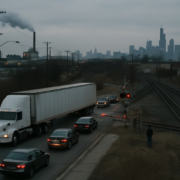
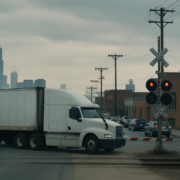
A truck approaches a railroad crossing while traffic is backed up on the other side. The driver may have entered legally, but a train begins approaching before the truck can clear the tracks. In another situation, a commercial vehicle may strike a crossing gate, stop too close to the rails, or block nearby lanes after a separate collision. These events can create difficult questions about Chicago truck railroad crossing accident liability.
A crossing crash is not always just a claim against the truck driver. The facts may involve the motor carrier, a shipper or receiver, a railroad company, a public agency responsible for the roadway, or another motorist who contributed to the traffic backup. Warning equipment, sight distance, route planning, driver training, and emergency communications may all matter.
Dinizulu Law Group can help readers understand the issues that commonly require investigation. This article explains how route choice and traffic conditions may contribute to a collision, how crossing warnings and stopping position are evaluated, what happens when a truck becomes trapped or obstructs traffic, and how resulting injuries or deaths may affect a claim. Illinois law applies differently depending on the facts, and laws and procedures may change over time.
Why Does Chicago Truck Railroad Crossing Accident Liability Involve Multiple Risks?
A railroad crossing combines a roadway controlled by drivers with a rail corridor operated under a separate system of signals, schedules, gates, and safety procedures. A commercial truck’s size and weight can make ordinary traffic problems more consequential. It may need more distance to stop, more room to maneuver, and a clear exit on the far side before entering the crossing.
Route choice and traffic backup
A key question in a truck stuck on railroad tracks accident in Illinois is why the vehicle was on that route and whether the driver could reasonably see that the truck would clear the crossing. Investigators may examine navigation instructions, dispatch communications, delivery requirements, construction detours, vehicle dimensions, and prior knowledge of the crossing. A route that is technically open to trucks may still create a practical hazard if traffic routinely queues across the tracks.
Traffic backup can also create a chain of responsibility. A truck driver may misjudge available space, but congestion could result from a lane closure, an earlier crash, a delivery operation, or a traffic-control decision. The relevant issue is not simply who touched whom. It is whether a person or organization acted unreasonably and whether that conduct contributed to the foreseeable danger.
Different parties may control different details
The motor carrier may have information about training, routing, driver qualification, and company communications. A railroad or public entity may possess records concerning signals, gates, maintenance, sight lines, and prior reports. Identifying the correct parties early can be important because evidence may be held by several organizations.
How Do Crossing Warnings, Stopping Position, and Emergency Calls Affect Fault?
After a commercial vehicle crossing accident, physical positioning often becomes central. Investigators may ask whether the truck stopped on the rails, stopped short of the crossing, or remained in a queue that extended over the tracks. They may also assess whether the truck struck a gate or signal, whether a warning device was operating, and how much time passed between the obstruction and the train’s impact.
Warning equipment and driver response
Crossing signals and gates provide important evidence, but their presence does not answer every liability question. A review may consider:
- Whether lights, bells, gates, or other warnings were active;
- Whether the driver had a clear view of the crossing and the roadway beyond it;
- Whether traffic conditions left enough room to clear the tracks;
- Whether the truck’s height, length, or cargo affected maneuverability;
- Whether the driver attempted to move away from the rails after becoming stuck; and
- Whether other vehicles prevented the truck from proceeding or backing out.
In Chicago, Illinois, crossing design and traffic patterns can vary significantly from one location to another. A fact-based investigation may use photographs, video, event data, witness accounts, onboard camera footage, and vehicle inspection records. Railroad signal records and crossing maintenance materials may also be relevant, depending on who controls the equipment and what evidence is available.
Emergency notifications can change the analysis
If a truck becomes trapped or disabled on the tracks, the timing and method of emergency notification may matter. Investigators may ask whether the driver knew how to report an obstruction, whether a warning was communicated to railroad personnel, and whether dispatchers, police, or emergency services received useful information. These questions do not automatically establish fault, but they may help reconstruct the available options and the time before impact.
What Should Injured People Know About Evidence and Illinois Claims?
Injuries may result from the train striking the truck, the truck striking another vehicle, a chain reaction in backed-up traffic, or debris and equipment being thrown into nearby lanes. A person does not necessarily need to be inside the truck to suffer serious harm. Occupants of passenger vehicles, pedestrians, crossing workers, and others near the roadway may be affected.
Evidence may disappear or become harder to obtain
Depending on the circumstances, useful materials may include:
- Photos and videos showing vehicle positions, gates, signals, traffic queues, sight lines, and damage;
- Police, fire, emergency medical, and railroad incident records;
- Truck telematics, dash-camera footage, electronic logs, dispatch messages, and route data;
- Maintenance and inspection records for the truck, crossing equipment, roadway, and surrounding signals;
- Witness contact information and statements about warnings, congestion, and movement before impact; and
- Medical records documenting evaluation, treatment, limitations, and the relationship to the collision.
Generally speaking, injured people should avoid guessing about fault in public statements or social media posts. They should also be cautious about giving a recorded statement to an insurer before understanding what information is being requested. An attorney may advise on evidence preservation and communications based on the particular facts.
Potential claims and defenses
Illinois personal injury claims may involve negligence, comparative responsibility, and disputes about causation. The responsible party may argue that a warning was visible, that an unexpected traffic event caused the obstruction, or that another person was primarily at fault. A claim may also require analysis of commercial insurance, employer responsibility, railroad operations, public-entity rules, and applicable filing deadlines. These issues are fact-specific, and time limits vary by claim type and defendant.
When a death occurs, surviving family members may face a separate wrongful-death process as well as the practical burden of investigating what happened. A railroad crossing truck crash lawyer in Chicago can help organize the factual questions and identify which records may need to be requested or preserved.
Frequently Asked Questions
Can a truck driver be liable if traffic forced the truck onto the tracks?
Possibly, but the answer depends on the full sequence of events. Investigators may examine whether the driver entered without enough room to clear the crossing, whether another vehicle or traffic-control condition caused the backup, and what the driver did after recognizing the danger. Illinois liability may be divided among multiple parties when more than one person or organization contributed to the crash. The available evidence is usually more important than the label placed on the incident.
Could a railroad be responsible for a truck crossing collision?
A railroad may become part of the investigation when questions concern warning devices, crossing maintenance, signal timing, sight obstructions, or the response to a reported obstruction. That does not mean a railroad is automatically liable. Responsibility depends on the applicable duties, the condition of the crossing, notice of a problem, and whether any conduct contributed to the collision. Records and qualified investigation are important before drawing conclusions.
What if a train hits a vehicle near, but not on, the crossing?
A collision near a crossing can still raise crossing-related issues. The analysis may include traffic backup, blocked lanes, warning equipment, visibility, debris, and how vehicles moved after an initial impact. A person injured in a secondary collision may have a claim even if the train did not strike that person’s vehicle directly. Causation and fault require a careful review of the entire sequence rather than only the final point of contact.
Does a fatal railroad crossing truck crash create a wrongful-death claim?
A fatal crash may support a wrongful-death claim under Illinois law, but the available claim, eligible beneficiaries, damages, and deadlines depend on the circumstances. The investigation may address the truck operator, carrier, railroad, public entities, and other contributing actors. Families may also need to preserve employment, medical, financial, and crash evidence. A licensed Illinois attorney can explain how the law may apply to the specific family and incident.
How Dinizulu Law Group Can Help
Dinizulu Law Group is dedicated to helping people understand complex truck accident, personal injury, and wrongful-death issues in Chicago, Illinois. The firm is committed to fighting for clients’ rights while examining the practical details that can distinguish a railroad crossing collision from an ordinary traffic crash. That review may include route information, traffic conditions, warning systems, emergency notifications, vehicle data, witness accounts, and injury documentation.
The firm is ready to evaluate your situation and discuss potential legal options without promising a particular result. Contact Dinizulu Law Group for a free consultation or case evaluation.
The information in this article is for educational purposes only and does not constitute legal advice. Contact a qualified attorney licensed in Chicago, Illinois for advice specific to your situation.