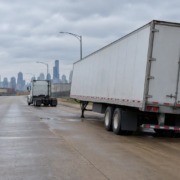
Could Parties Face Chicago Trailer Separation Liability?
A trailer coming loose from a tractor on a Chicago road can turn an ordinary trip into a serious crash in seconds. The immediate question may be what the driver did, but Chicago trailer separation accident liability can also depend on the coupling, inspections, maintenance, and who owned or serviced the trailer. A detached trailer might move into another lane, block traffic, or strike a vehicle even if the tractor continues forward.
Dinizulu Law Group helps Chicago-area readers understand the different factual questions that can arise after a truck crash. This guide explains how a trailer can separate, which people or businesses may warrant investigation, what records can help clarify the sequence, and why identifying a potentially responsible party is different from determining insurance coverage. Responsibility is not automatic: it depends on the evidence and applicable Illinois law, which can vary by situation and may change.
Who May Share Chicago Trailer Separation Accident Liability?
A trailer connects to a tractor through a coupling system, commonly involving a fifth wheel and a kingpin. A separation may raise questions about whether the connection was properly made, whether a locking component was damaged, or whether a mechanical problem developed during travel. The nature and condition of the failed part can help distinguish among possible causes. For an overview of mechanical issues, see common Chicago trailer coupling failure issues.
The driver and carrier
A driver’s actions may be relevant if evidence raises questions about coupling checks, a noticed warning sign, or the response to a developing problem. A carrier may also warrant examination if its practices, instructions, equipment, or maintenance decisions contributed to the event. Whether a carrier may be responsible for a driver or contractor depends on the work arrangement, the degree of control, and other facts—not simply the label used in a contract. Read more about when a Chicago carrier may be responsible for contractor conduct.
The trailer owner or repair provider
The trailer may be owned by a business other than the motor carrier. Its maintenance history, inspection practices, and any known mechanical concerns may matter. If a repair provider worked on the coupling or related components, records may help show what work was requested and performed. These are investigative possibilities, not conclusions that any particular person or company was at fault.
What Can Inspections and Maintenance Records Reveal?
A careful review often asks what was known about the equipment before the trailer separated. Commercial vehicle rules may require inspections in particular circumstances, but which requirements apply depends on the vehicle, operation, and facts. A useful inquiry may include inspection timing, reported defects, completed repairs, and whether a concern was addressed before the truck returned to service.
Records that may help establish the equipment’s history include:
- Driver inspection reports and trip-related checklists, if maintained.
- Repair orders, maintenance logs, and invoices for the tractor, trailer, fifth wheel, or kingpin.
- Records showing trailer ownership, leasing, assignment, or transfer between businesses.
- Photographs, witness accounts, and physical evidence documenting where the trailer and coupling components came to rest.
- Dispatch, load, and trip records that may help establish which equipment and personnel were involved.
The timing and condition of a defect can matter. For example, evidence of a prior report about a coupling problem may prompt questions about whether it was investigated and repaired. On the other hand, the existence of a defect alone does not establish who caused it or whether it caused the separation. Inspection records should be considered alongside physical evidence and testimony. For more on this issue, review pre-trip and periodic truck inspection duties.
In Chicago, a crash may involve multiple businesses and records held in different places. Preserving and comparing those materials can help clarify whether a problem arose during coupling, inspection, maintenance, or operation. The exact legal significance of a record depends on the facts and applicable Illinois law.
How Is Responsibility Evaluated After a Trailer Separates?
An investigation generally works from the physical event outward: where the tractor and trailer were, what components failed or disengaged, and what the people and businesses involved knew beforehand. No single clue necessarily answers every question. A damaged coupling component, for example, may need examination in context with inspection entries and repair history.
Common sources of confusion include assuming that the driver is the only possible responsible party, treating trailer ownership as proof of fault, or believing that a maintenance entry resolves the issue by itself. A more complete review considers each party’s role and whether the available evidence connects that role to the separation and resulting harm.
Insurance is a related but separate question. A driver, carrier, trailer owner, or repair provider may have different coverage arrangements, and identifying a potentially responsible party does not by itself establish which policy applies. Learn about commercial insurance coverage in a Chicago truck crash.
People involved may also encounter reports and records created by police, insurers, or businesses. Those materials can be useful, but they may not answer every mechanical or responsibility question. In a Chicago or other Illinois matter, venue, evidence, and applicable rules depend on the circumstances. Laws and procedures vary by location and may change, so general information cannot resolve an individual claim.
Frequently Asked Questions
Does a trailer separating automatically mean the driver was at fault?
No. A separation does not, by itself, establish fault. The driver’s actions may be relevant, but investigators may also examine the coupling, inspection history, maintenance, trailer ownership, and any repair work. Which facts matter depends on how the separation occurred and what evidence is available. A qualified attorney can assess how Illinois law may apply to the specific circumstances.
Can a trailer owner be responsible if a carrier operated the truck?
Possibly, depending on the owner’s role and the evidence. The owner’s maintenance practices, knowledge of a defect, and responsibility for supplying or servicing the trailer may be relevant. Ownership alone does not prove liability, and a carrier’s involvement does not automatically eliminate questions about other parties. The facts, agreements, and applicable Illinois law all matter.
What if no one knows when the coupling problem began?
The timing may be uncertain at first. Physical examination of the coupling and related parts, along with inspection and repair records, may help establish whether a condition existed before the trip or developed later. Witness accounts and photographs may provide additional context. No one record necessarily settles the question, and conclusions depend on the evidence as a whole.
Could more than one business or insurance policy be involved?
Yes. A crash may involve a driver, carrier, trailer owner, or repair provider, and those parties may have separate insurance arrangements. Potential responsibility and insurance coverage are related but distinct questions. Policy terms, the parties’ roles, and the facts of the crash can affect the analysis. An attorney can review the circumstances and explain options for evaluating applicable coverage.
How Dinizulu Law Group Can Help
Dinizulu Law Group is dedicated to helping people understand the questions that can arise after a truck crash in Chicago. When a trailer separates, the firm can evaluate the available information about the coupling, inspection history, maintenance, ownership, and relationships among the businesses involved. That review may help identify what remains unclear and what legal options may be worth discussing. Every matter is different, and no outcome can be promised. If you have questions about a trailer separation crash, contact Dinizulu Law Group to request a free consultation or case evaluation.
The information in this article is for educational purposes only and does not constitute legal advice. Contact a qualified attorney licensed in Illinois for advice specific to your situation.


