When Should Chicago Underride Lawyers Preserve Evidence?
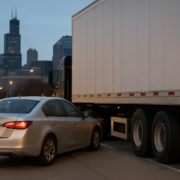
A passenger vehicle can sustain devastating damage when it slides beneath the rear of a tractor-trailer instead of colliding with the trailer’s rear structure. Why does Chicago truck underride guard design matter after a crash? The answer may involve far more than who struck whom from behind. Investigators may need to examine the guard’s height, strength, attachment, condition, compatibility, and the truck’s position and visibility at the time of impact.
Families may also face urgent questions about medical care, vehicle repairs, lost income, and preserving evidence before a damaged truck or car is altered. Preserving evidence after a Chicago underride collision can be especially important because physical evidence may change quickly. Dinizulu Law Group provides information to help injured motorists and families understand the issues a Chicago truck underride accident lawyer may investigate. This article explains the mechanics of underride crashes, potential evidence, possible responsible parties, and practical steps after a collision.
Why Chicago Truck Underride Crashes Raise Guard-Design Questions
In a typical rear underride collision, the front of a passenger vehicle moves beneath the trailer’s rear. The trailer may then intrude into the passenger compartment or strike the vehicle above its primary crash-protection structures. The result can be substantially different from an ordinary rear-end impact, although the exact injuries and vehicle damage depend on speed, angle, vehicle design, restraint use, and other facts.
How severe injuries can occur
Underride forces may contribute to roof intrusion, head and neck trauma, brain injury, spinal injury, crush injuries, and severe lacerations. A passenger or driver may also suffer injuries from airbags, restraints, glass, or secondary impacts. These are general injury patterns, not a diagnosis of any individual’s condition. Why underriding can turn truck crashes deadly offers additional background on this collision dynamic.
A guard is intended to help limit the extent to which a passenger vehicle travels under a trailer in certain impacts. That does not mean every underride collision proves a guard defect or establishes liability. A careful review may consider the guard’s design, installation, condition, the trailer’s configuration, and the circumstances of the crash.
Why an ordinary rear-end analysis may be incomplete
A rear impact may initially appear to be a straightforward speeding, following-distance, or failure-to-stop case. However, Chicago rear-end truck crash liability questions may also include whether the truck was visible, whether brake lights or reflective features were functioning, whether the trailer was stopped or moving, and whether the rear guard performed as expected. Chicago, Illinois traffic conditions, roadway lighting, congestion, weather, and work-zone activity may also form part of the reconstruction.
What Guard Design and Truck Evidence May Show
The phrase “guard design” can refer to several features rather than one isolated part. Investigators may document the guard’s dimensions, location, materials, attachment points, deformation, corrosion, repairs, and relationship to the trailer and passenger vehicle. They may also consider whether the guard was altered, damaged before the crash, or maintained in a condition that affected its performance.
Design, compatibility, and maintenance issues
A liability analysis may examine whether:
- The rear guard was present and properly mounted.
- Its height, width, strength, or position affected engagement with the passenger vehicle.
- The tractor, trailer, and passenger vehicle were compatible in relevant ways.
- The guard showed prior damage, corrosion, loose connections, or unapproved alterations.
- Inspection, repair, and maintenance records reveal earlier problems.
- The trailer configuration, cargo, suspension, or loading changed the vehicle’s height or behavior.
Applicable federal requirements and Illinois law may be relevant, but the precise requirements depend on the vehicle, equipment, date, and facts. Laws and standards can vary by jurisdiction and may change over time. A lawyer or qualified crash investigator may need to compare the physical evidence with the requirements applicable to that particular tractor-trailer.
The condition of the truck matters beyond the guard itself. Truck equipment failure and maintenance issues may help readers understand why inspection histories, repair invoices, photographs, and parts preservation can matter in an Illinois truck underride claim.
Physical, electronic, and scene evidence
Useful evidence may include:
- Photographs and measurements of the passenger vehicle, trailer, guard, roadway, lighting, and visibility conditions.
- The vehicles and damaged components, preserved before repair, salvage, or disposal.
- Witness names and contact information, along with statements about traffic, speed, braking, and visibility.
- Police reports, emergency-service records, surveillance video, and dash-camera footage.
- Driver logs, inspection records, dispatch information, and maintenance documents.
- Event-data or telematics records concerning speed, braking, steering, and impact timing.
Black-box data in a truck underride claim may supplement, but not replace, photographs, measurements, witness accounts, and physical inspection. Electronic data can be overwritten or lost, so preservation requests may be important depending on the circumstances.
What Injured Motorists and Families Should Consider After a Crash
Safety and medical attention come first. Generally, people involved in a truck collision may benefit from calling emergency services, receiving an appropriate medical evaluation, reporting the crash, and recording witness information when it is safe to do so. Photos should show the vehicles, guard, trailer markings, roadway position, lighting, weather, debris, and relevant sight lines without placing anyone in danger.
The steps to take after an Illinois truck accident may also include keeping insurance communications, medical records, wage information, receipts, and photographs in an organized file. Depending on the circumstances, an attorney may advise against giving a recorded statement or accepting a settlement before the injuries, evidence, and insurance coverage are better understood. This is general information, not a directive for any particular claim.
Which parties may be examined?
A Chicago truck underride accident lawyer may investigate more than the driver’s conduct. Potentially relevant parties can include:
- The motor carrier that employed or dispatched the driver.
- The trailer owner, leasing company, or equipment lessor.
- A maintenance or repair provider.
- A manufacturer or supplier, depending on the evidence and applicable law.
- An independent contractor or other business involved in transportation operations.
- A passenger vehicle driver or another road user, if comparative responsibility is disputed.
Which trucking companies and contractors may share responsibility explains why ownership, control, maintenance, dispatch, hiring, and contractual relationships may require review. Illinois applies comparative-fault principles in personal-injury cases, but how those principles affect a claim depends on the facts and current Illinois law.
Families should also understand that available compensation is not automatic. Depending on the evidence, damages may involve medical expenses, lost income, future care, disability, pain and suffering, property damage, or wrongful-death considerations. Illinois compensation rights for injured passengers provides a related discussion for passengers and families.
Frequently Asked Questions
Does an underride crash automatically prove that a truck guard was defective?
No. An underride collision may prompt questions about guard design and performance, but it does not by itself establish a defect, negligence, or legal liability. Investigators may review the guard’s condition, installation, damage, trailer configuration, impact angle, speed, visibility, and applicable requirements. The available evidence and Illinois law determine how those facts may affect a claim.
What photographs are useful after a Chicago truck underride collision?
When it is safe, photographs may show the passenger vehicle from several angles, the trailer and rear guard, attachment points, roadway position, lighting, traffic controls, debris, weather, and sight lines. Close-up images can document damage, corrosion, paint transfer, or deformation. Do not delay emergency care or enter traffic to obtain pictures. Witness information and video may also be important.
How long should the vehicles and rear guard be preserved?
There is no universal preservation period that fits every case. The damaged car, tractor, trailer, guard, and related parts may be important physical evidence, so repairs, disposal, or salvage can affect later investigation. Depending on the circumstances, an attorney may send preservation requests and coordinate inspection before evidence changes. Applicable deadlines and legal requirements vary in Illinois.
Can a passenger pursue a claim after an underride crash in Illinois?
A passenger may have legal options, but the available claims, insurance coverage, damages, and responsible parties depend on the collision facts. The passenger’s position may differ from the driver’s, especially if the vehicles involved include a commercial carrier. Medical records, witness accounts, vehicle evidence, and the identities of potentially responsible parties may all be relevant to an evaluation.
How Dinizulu Law Group Can Help
Dinizulu Law Group is dedicated to helping injured motorists and families understand the evidence and legal issues that can arise after a Chicago truck underride crash. The firm is committed to fighting for clients’ rights while examining vehicle condition, guard design, photographs, witness information, electronic data, records, and the roles of trucking companies, contractors, owners, and maintenance providers. Depending on the circumstances, the team may be ready to evaluate your situation and explain potential legal options. Contact Dinizulu Law Group for a free consultation or case evaluation.
The information in this article is for educational purposes only and does not constitute legal advice. Contact a qualified attorney licensed in Chicago, Illinois for advice specific to your situation.


