Is a Chicago Carrier Liable for an Independent Contractor?
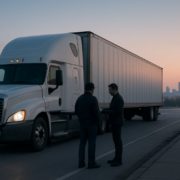
A crash involving a tractor-trailer can leave an injured person looking at a truck door, trailer, or cargo box and wondering which company is responsible. The name displayed on the vehicle may identify a carrier, owner, lessee, broker, or another business in the transportation chain. It may not tell the whole story.
For anyone researching Chicago truck accident independent contractor liability, the central question is often whether the trucking company exercised enough control over the driver, vehicle, or shipment to share legal responsibility. The answer can depend on contracts, dispatch communications, payment records, safety practices, and what happened before the collision. Chicago carrier liability for independent contractors is therefore more fact-specific than a simple label on a contract.
Dinizulu Law Group helps Chicago-area readers understand these issues in plain language. This article explains how independent-contractor classifications, leases, operational control, direct negligence, brokers, and insurance coverage may affect a claim, along with practical information an injured person may preserve after a crash.
Why Chicago Truck Accident Independent Contractor Liability Is Fact-Specific
A trucking company may argue that it is not responsible because the driver operated as an independent contractor. That classification can matter, but it is not necessarily conclusive. In Illinois, responsibility may depend on the relationship between the parties and the conduct that contributed to the collision. Laws and legal standards can vary by jurisdiction and may change over time.
The contract is important, but it is not the only evidence
A written lease or contractor agreement may describe the driver as an independent business. Investigators may also examine how the relationship worked in practice, including whether the company:
- Assigned routes, loads, schedules, or delivery deadlines;
- Required the driver to follow company policies or procedures;
- Controlled vehicle maintenance, inspections, or repairs;
- Paid the driver by mileage, load, percentage, or another method;
- Required company branding, equipment, uniforms, or communications; or
- Had authority to discipline, replace, or remove the driver from work.
These facts may help show whether a carrier had operational control or whether the driver and carrier functioned as separate businesses. A lease can also identify who had possession and control of the tractor or trailer, which may be significant in a leased truck accident liability Illinois analysis.
Branding may identify only one part of the relationship
The company name on a truck can be useful, but it may not identify every potentially relevant entity. A vehicle may be owned by an owner-operator, leased to a motor carrier, dispatched by another business, or pulling a trailer belonging to a different company. The visible branding should be preserved rather than treated as the final answer.
What May Create Liability Beyond the Independent-Contractor Label?
A carrier’s potential responsibility may arise from more than an argument that the driver was acting on its behalf. Depending on the facts, a claim may involve direct negligence by the company, responsibility connected to its control of the vehicle or work, or the conduct of another business involved in arranging transportation.
Direct negligence by a trucking company
A company may face a separate inquiry about whether it acted reasonably in selecting, training, supervising, or retaining the driver. Relevant issues can include licensing, qualifications, prior safety information, required training, drug and alcohol testing, complaints, and disciplinary records. This does not mean that any prior record automatically proves liability; the facts must be evaluated in context.
Readers can review Chicago negligent hiring evidence after a truck crash for a more focused discussion. In many cases, an injured person will not have access to personnel or safety files without formal investigation or legal process. The records that help assess a trucking company’s hiring decisions may include applications, qualification materials, training records, inspection information, and company communications.
Brokers, shippers, and other contracting parties
A transportation broker may arrange a shipment without operating the truck. A motor carrier generally has a different role because it may select the driver, provide dispatch instructions, manage equipment, or assume transportation duties. Still, the difference between a broker and carrier depends on the actual contracts and conduct, not merely a business description. Communications about carrier selection, safety requirements, and dispatch may be relevant to determining when a Chicago transport broker may share crash liability.
In Chicago, Illinois, these relationships can be complicated by interstate shipments, multiple corporate entities, and separate owners of the tractor, trailer, and cargo. Identifying each participant early can help prevent an investigation from focusing only on the person who was driving.
What Evidence Should an Injured Person Preserve After a Chicago Truck Crash?
Evidence can disappear quickly. Vehicles may be repaired, electronic data may be overwritten, and companies may use different legal names from the branding shown at the scene. A person who can do so safely may preserve basic information without attempting to investigate the crash independently.
Useful information may include:
- Photographs or video of the truck, trailer, damage, license plate, company markings, and surrounding roadway conditions.
- The driver’s name, employer, contact information, and statements about who dispatched or paid the driver, if voluntarily provided.
- USDOT or MC identification, carrier information, trailer numbers, bills of lading, and insurance details appearing in available documents.
- Names and contact information for witnesses, responding officers, emergency personnel, and nearby businesses with possible video.
- Medical records and expense information, maintained through appropriate providers and advisors, that document treatment and claimed losses.
Do not enter a restricted area, confront a driver, or attempt to obtain private records. Depending on the circumstances, an attorney may seek preservation of electronic logging data, dash-camera footage, telematics, dispatch messages, maintenance files, inspection records, and onboard event data. The vehicle’s owner, lessee, carrier, and insurer may each hold different information.
Insurance can also be layered. A tractor policy, motor-carrier policy, trailer coverage, cargo-related coverage, and excess policy may involve different entities and terms. Preserving the company names and vehicle details can assist with identifying insurance policies that may apply after a Chicago truck crash.
A person involved in a crash in Chicago, Illinois should also be aware that Illinois deadlines and procedural requirements may apply. Those rules can depend on the parties, the type of claim, and other facts, so a licensed attorney can explain how they may affect a particular situation.
Frequently Asked Questions
Does an independent-contractor agreement automatically protect the trucking company from liability?
No. An agreement may be relevant, but it does not necessarily settle every liability question. The parties’ actual conduct, the carrier’s control over routes and work, ownership or leasing of the equipment, and any independent negligence may also matter. A court or other decision-maker may evaluate the full relationship under applicable Illinois law rather than relying only on one label in a contract.
Can an owner-operator and a trucking company both be involved in a claim?
Potentially. An owner-operator may own or lease the tractor, while a motor carrier may arrange loads, provide dispatch, display branding, or assume other transportation duties. The answer depends on the contracts, conduct, insurance, and facts surrounding the collision. Identifying all relevant entities can be important because the person or company visible on the truck may not be the only participant.
What if the truck’s company name is difficult to read after the crash?
Other sources may help identify the vehicle and carrier. These can include photographs, license-plate information, trailer numbers, witness accounts, police or crash reports, nearby surveillance, dispatch records, and information from insurers. A person should preserve what is available and avoid guessing about the company’s identity. An attorney may be able to investigate additional sources through appropriate legal procedures.
Does a broker always avoid responsibility for a truck crash?
Not necessarily, but a broker’s role differs from that of a motor carrier. A broker may arrange transportation without directly operating the vehicle, while a carrier may control transportation operations. Contracts, communications, carrier-selection practices, and the conduct of each business can affect the analysis. Whether a broker may share responsibility requires a fact-specific review under the law that applies to the claim.
How Dinizulu Law Group Can Help
Dinizulu Law Group is dedicated to helping injured people understand the businesses and insurance relationships that may be involved in a Chicago truck crash. The firm can evaluate available information about the driver, carrier, lease, trailer, dispatch arrangements, hiring practices, and potential coverage. Its team is committed to fighting for clients’ rights while explaining the legal process in clear terms and without assuming that a vehicle’s branding provides the complete answer.
If you or a family member has been injured in a truck collision, contact Dinizulu Law Group for a free consultation or case evaluation. The firm is ready to evaluate your situation and discuss potential legal options.
The information in this article is for educational purposes only and does not constitute legal advice. Contact a qualified attorney licensed in Chicago, Illinois for advice specific to your situation.