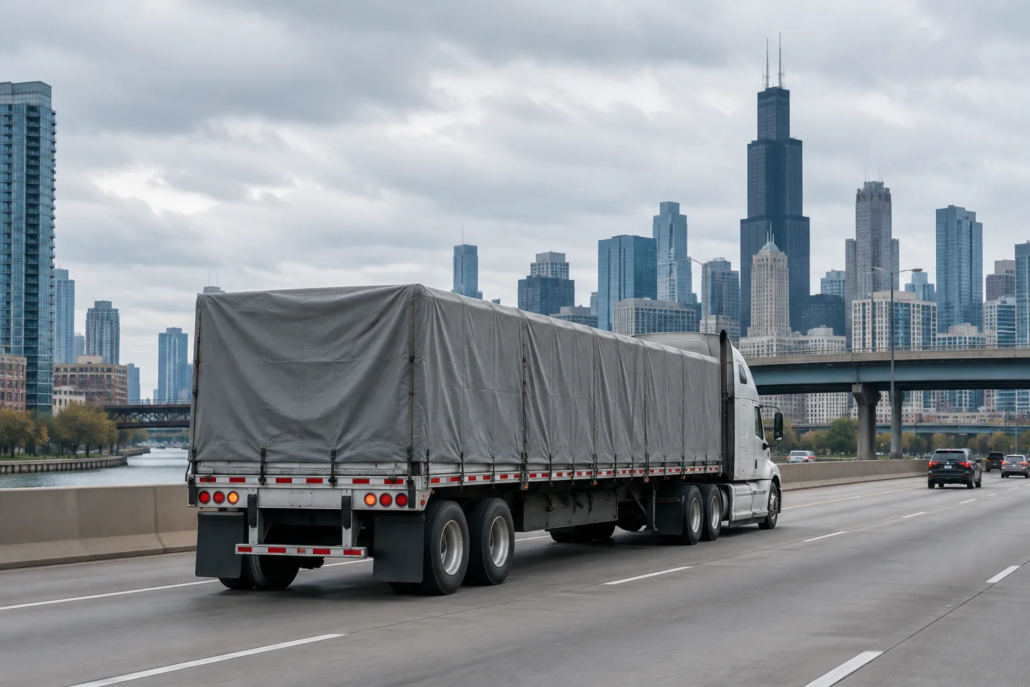
What Roles Affect Fault After Chicago Truck Cargo Shifts?
A truck’s load may look stable from outside, but cargo can move when a vehicle brakes, turns, or changes lanes. In Chicago, a shifting load may affect the truck’s balance, lead to a rollover, or spill into traffic and cause another driver to swerve or collide. Chicago truck cargo shift accident liability can depend on who controlled each part of loading, securement, inspection, and transport. Dinizulu Law Group helps injured people understand the issues that may arise after a serious truck crash. This article explains how cargo movement can contribute to a collision, which parties may be involved, and what incident details may help clarify how the load was handled. No single party is automatically responsible simply because cargo shifted; the facts and applicable law matter.
How Cargo Movement Can Affect a Truck’s Stability
A load that shifts can change how a truck responds to braking, cornering, or a sudden maneuver. If freight moves to one side, it may affect balance and increase rollover risk. That does not establish the cause of any particular crash: speed, road conditions, vehicle design, and the driver’s actions may also matter. For more on this distinct risk, see how shifting cargo can contribute to a truck rollover.
Cargo may also fall or spill from a trailer. Other motorists may strike the freight or make an abrupt maneuver to avoid it. A chain of events can then involve several vehicles, and the relevant questions include where the cargo came from, how it was restrained, and whether the truck’s movement or another factor caused the spill. Learn more about injuries caused by a truck freight spill.
Why the load’s movement matters
The size, weight, and placement of freight can affect what happens when a truck turns or stops. Loads that are unevenly distributed, insufficiently restrained, or not checked during a trip may move under ordinary driving forces. In Chicago, these issues can arise on city streets as well as on routes connecting the city with regional highways. A collision’s location alone does not identify who was responsible; the load’s condition and handling history need closer examination.
Who May Be Responsible for Securing the Load?
Responsibility may depend on who performed each task and what that party knew or reasonably should have known. A truck driver may have duties related to checking a load before or during a trip, depending on the circumstances and applicable requirements. A motor carrier may be involved if its practices, instructions, equipment, or inspection procedures contributed to unsafe transport. These roles are not interchangeable, and a driver’s or carrier’s involvement does not by itself prove fault.
A shipper or loader may be relevant if it selected the way freight was arranged, distributed, or restrained. A separate cargo securement provider may also be involved if it undertook that work. The details of cargo securement duties across the trucking chain can help explain why more than one party’s conduct may need review. The central question is what each party actually did, agreed to do, and could reasonably control.
When could a shipper, broker, or other business be involved?
A freight broker is distinct from a shipper or loader. A broker generally arranges transportation; that role alone does not mean it loaded or secured the freight. Depending on the facts, a broker’s carrier-selection conduct or other actions may be relevant, but responsibility is not automatic. Read about a freight broker’s potential role in truck accident liability for that separate issue.
In Chicago-area cases, the investigation may involve records held by businesses in different locations. The parties’ contracts and working arrangements may help identify who handled the load, but the labels in a contract do not necessarily answer every question about what happened in practice.
What Evidence Can Help Explain Why the Cargo Shifted?
Evidence may help show the load’s condition before the trip, how it was secured, and what happened during the collision. Useful information can include:
- Photographs or video of the truck, trailer, cargo, roadway, and damaged securement equipment.
- The cargo’s type, weight, placement, and condition after the crash, where documented.
- Load plans, shipping papers, loading records, inspection checklists, and communications about the freight.
- Records identifying who loaded, inspected, or secured the cargo, and what equipment was used.
- Vehicle data, available camera footage, witness accounts, and crash-scene documentation that may help explain the truck’s movements.
No single item necessarily proves fault. For example, a broken strap could be relevant, but investigators may also need to determine whether it failed before impact, during the crash, or while the scene was being cleared. Likewise, a load’s final position may not show exactly where it was placed at the start of the trip. These physical and documentary clues of improper truck cargo securement may help build a more complete account.
In Chicago, records may come from responding agencies, the trucking company, a shipper, a loader, or other businesses. Which agency responded can depend on where and how the collision occurred. A careful review may also compare accounts with physical evidence and available electronic records. Because evidence can be held by different parties, determining what exists and how it relates to the collision can be an important part of evaluating a claim.
Frequently Asked Questions
Is the truck driver always liable when cargo shifts?
No. A driver’s actions may be relevant, including whether the load was checked as required in the circumstances, but cargo may have been loaded or secured by someone else. A carrier, shipper, loader, or securement provider may also warrant review. Responsibility depends on the available evidence, each party’s role, and applicable Illinois law; a shifting load alone does not establish who caused the crash.
Can more than one party share responsibility for a cargo-shift crash?
Yes, depending on the facts. For example, one party may have arranged or loaded the freight while another handled inspections or transport. A driver’s conduct may also be a separate issue. Illinois fault-allocation rules can affect how responsibility is assessed, but the result depends on the evidence and circumstances. An attorney can evaluate which parties and legal issues may be relevant to a particular collision.
What evidence may show how a truck’s cargo was loaded or secured?
Photographs, video, load plans, shipping and loading records, inspection documents, communications, and the condition of straps or other securement equipment may provide useful information. Witness accounts and available vehicle or camera data may help establish what happened on the road. Evidence should be considered together; a single damaged item or record may not reveal when or why the cargo moved.
What if the cargo spilled and another vehicle hit it?
A spill can create a hazard even when a vehicle does not first collide with the truck. An investigation may examine what caused the freight to leave the truck, whether the spill contributed to the later impact, and what actions followed. Multiple events and parties may be involved. The circumstances, evidence, and applicable Illinois law determine whether a claim may be available and against whom.
How Dinizulu Law Group Can Help
Dinizulu Law Group is dedicated to helping injured people understand the questions that can arise after a truck crash involving shifting cargo. The firm can evaluate the available information, consider the possible roles of the driver and other businesses, and explain legal options based on the circumstances. A review may include load-handling records, physical evidence, and the sequence of events, without assuming in advance who is at fault. If you were injured in a Chicago truck crash, contact Dinizulu Law Group to request a free consultation or case evaluation.
The information in this article is for educational purposes only and does not constitute legal advice. Laws vary by location and may change; contact an attorney licensed to practice in Illinois for advice specific to your situation.


Leave a Reply
Want to join the discussion?Feel free to contribute!