Where Can a Chicago Truck Lawyer Find Hit-and-Run Proof?
A commercial truck can leave a collision scene before an injured person knows the company name, license plate, or even the exact type of trailer involved. In that situation, who may be responsible when a Chicago truck leaves the crash scene? A Chicago truck hit and run accident lawyer may investigate the driver, motor carrier, trailer owner, employer, or insurer through physical evidence and local records.
If you are able, start with what to do after a Chicago truck accident, including calling 911, seeking appropriate medical attention, and documenting the scene without chasing or confronting the departing vehicle. Dinizulu Law Group can serve as a knowledgeable guide while the identity of the truck remains uncertain. This article explains what details matter, where identifying evidence may be found, and how responsibility can be evaluated after the truck is located.
What a Chicago Truck Hit-and-Run Accident Lawyer Investigates First
The first challenge is often identification, not proving who was at fault. A partial plate, a few letters or colors on the cab, a trailer number, a distinctive load, or the direction of travel may help narrow the search. Even details that seem incomplete can become useful when combined with photographs, witness accounts, traffic-camera footage, and nearby business records.
Preserve physical details before they disappear
Write down what you remember as soon as reasonably possible. Consider recording:
- The truck’s color, cab style, trailer shape, and any visible company or equipment markings
- A partial license plate, state, unit number, trailer number, or unusual damage
- The truck’s approximate route, nearby intersection, and direction of travel
- Debris, paint transfer, broken lights, mirror pieces, or cargo-related material left at the scene
- Names and contact information for witnesses who saw the truck or its markings
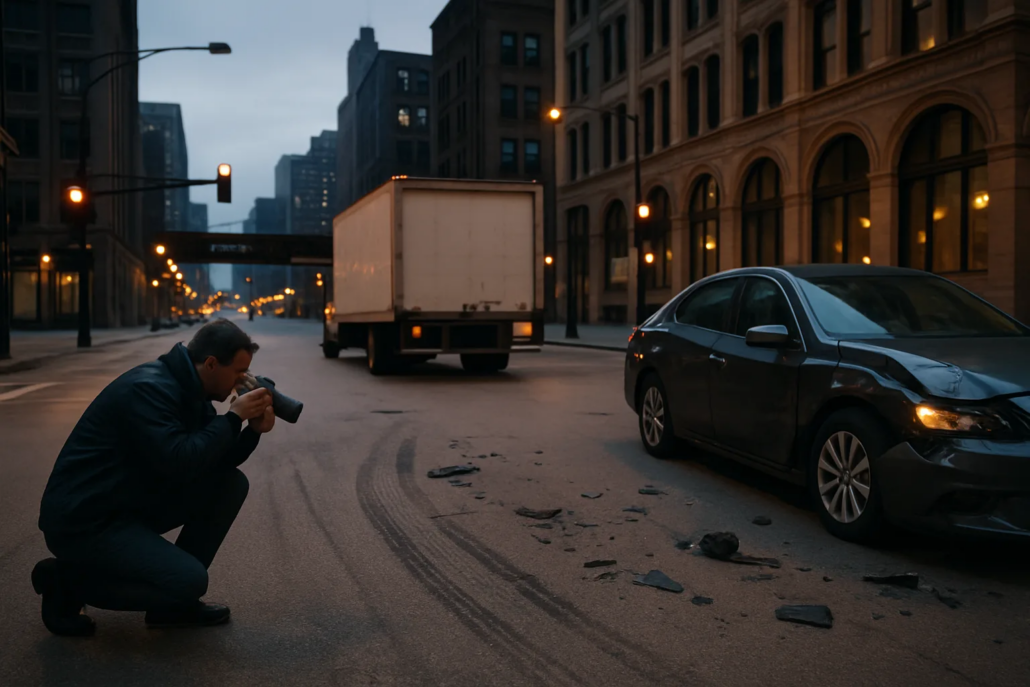
Photographs should show the overall scene and close details. Do not put yourself in danger to retrieve debris or follow the truck. In Chicago, Illinois, weather, traffic, street cleaning, and ordinary repairs can quickly alter the scene, so prompt documentation may matter.
The police report may contain witness statements, responding officers’ observations, descriptions of the vehicle, and information about nearby cameras. It is not necessarily a final determination of civil responsibility, but it may provide an important starting point for further investigation.
How Chicago Records and Surveillance Can Identify the Truck
A commercial truck left scene in Chicago may pass several potential evidence sources within minutes. The exact location and time can help an investigator determine which businesses, residences, traffic systems, or delivery facilities may have captured the vehicle. Surveillance footage is often subject to short retention periods, and access may require a formal request or legal process.
Useful sources can include:
- Storefront, apartment, parking-lot, warehouse, or loading-dock cameras near the collision
- Dash-camera footage from passing motorists or nearby delivery vehicles
- Witness descriptions collected by police or provided directly to investigators
- Delivery schedules, dispatch records, and loading-zone information that place a truck in the area
- Photos from the scene showing company colors, trailer markings, or damage patterns
Evidence from Chicago delivery-truck crash scenes may be especially important in alleys, loading zones, residential streets, and commercial corridors. A truck may have been making a delivery, collecting freight, or traveling between facilities even if no business name is immediately visible.
Chicago-area records may also help establish where a vehicle was assigned or operating. Depending on the facts, investigators may examine police reports, roadway footage, business video, shipping documents, toll or facility records, and information obtained from potential carriers. The availability and use of these records can depend on privacy rules, retention policies, and the circumstances of the investigation.
Why a logo may not identify the responsible company
A tractor and trailer can display different business names. The visible name may belong to a shipper, logistics company, trailer owner, motor carrier, or another business rather than the driver’s employer. Reviewing Illinois contractor and owner-operator truck crash liability can help explain why ownership, leasing, contracting, and employment relationships may need separate analysis.
Who May Be Responsible After the Truck Is Located?
Once investigators identify a likely vehicle, they may compare its damage, markings, route, and records with the available crash evidence. Responsibility is fact-specific. Identifying a truck does not automatically establish liability, and the most visible company name is not necessarily the legally responsible party.
Potentially relevant parties may include:
- The driver, if careless driving, distraction, unsafe maneuvering, or another act contributed to the collision
- The motor carrier or employer, depending on the driver’s work relationship and the facts surrounding the trip
- A vehicle or trailer owner, particularly when maintenance, leasing, or control issues are relevant
- A maintenance provider, if a mechanical problem may have contributed to the crash
- A contracting or logistics company, if its role and conduct support a recognized legal theory
- An insurer, whose policy may apply depending on ownership, employment, and coverage terms
Readers can review the parties who may be responsible for a truck accident for a broader explanation of how these relationships can affect a claim. A lawyer may also investigate whether the carrier had relevant hiring, qualification, supervision, or training issues. Such a theory requires supporting facts; the fact that a truck left the scene alone does not prove negligent hiring or training. Information about potential negligent hiring and training claims against a trucking company may help explain this separate line of inquiry.
Preserve electronic and vehicle records
If a likely truck or carrier is found, prompt preservation may be important. Depending on the vehicle and business, relevant material could include GPS or telematics data, electronic logging information, onboard event data, dash-camera footage, dispatch messages, inspection records, and maintenance files. These systems can have different retention practices, and some information may be overwritten or deleted in the ordinary course of business.
An attorney may send preservation requests and pursue records through appropriate legal procedures. Electronic truck data that may help identify a vehicle can sometimes help compare the truck’s route, timing, braking, or impact-related information with witness accounts and physical evidence. These records are not automatically conclusive, and their meaning may require technical review.
Frequently Asked Questions
What if I only remember the truck’s color and trailer type?
That information may still be useful. Investigators can compare color, cab and trailer configuration, visible damage, route, time, and nearby video with carrier or vehicle records. Ask witnesses whether they noticed additional details, but avoid guessing or adding facts that are uncertain. In Chicago, Illinois, a lawyer may evaluate whether businesses, traffic cameras, delivery facilities, or police records could help narrow the vehicle’s identity.
Can a police report identify a truck that left the scene?
It may provide a starting point, especially if officers recorded witness descriptions, debris, vehicle damage, or nearby video sources. However, a police report may not identify the truck immediately and is not always a final decision about civil liability. Depending on the circumstances, additional investigation may involve surveillance, business records, vehicle databases, and formal evidence-preservation requests.
Does finding the truck automatically mean its company is liable?
No. Finding the vehicle can support further investigation, but liability depends on evidence about the collision, the driver’s conduct, ownership, employment or contracting relationships, maintenance, and applicable insurance. A company logo may identify only one participant in a commercial arrangement. An attorney can assess which parties and legal theories may be relevant under Illinois law.
What should I do if surveillance footage may exist?
Record the exact location, approximate time, direction of travel, and names of nearby businesses or buildings as soon as possible. Do not assume footage will be kept indefinitely or that a business can release it informally. Preserve your own photos, messages, and witness information. Answers to common commercial-truck accident questions may provide additional general background while a case-specific review is arranged.
How Dinizulu Law Group Can Help
Dinizulu Law Group is dedicated to helping injured people understand the investigation that may follow a commercial truck hit-and-run. The firm can evaluate available photographs, debris information, witness accounts, police materials, surveillance leads, and potential carrier records without assuming that the responsible company is known from the beginning.
The team is committed to fighting for clients’ rights and may help coordinate evidence preservation, insurance communications, and an assessment of potentially responsible parties. Contact Dinizulu Law Group for a free consultation or case evaluation to discuss what happened and explore your legal options.
The information in this article is for educational purposes only and does not constitute legal advice. Contact a qualified attorney licensed in Chicago, Illinois for advice specific to your situation.


Leave a Reply
Want to join the discussion?Feel free to contribute!