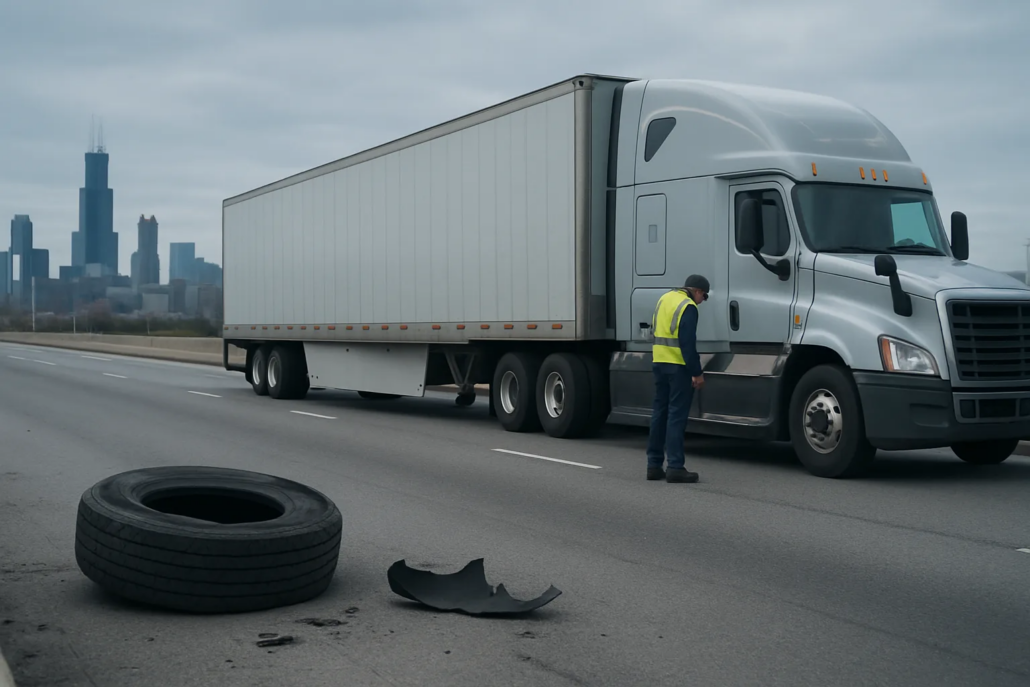
Who Can a Chicago Truck Tire Blowout Lawyer Hold Liable?
A tire blowout can happen in seconds. For someone traveling beside a tractor-trailer on an expressway in Chicago, Illinois, the event may look like a sudden loss of control caused by driver error. But could a Chicago truck tire blowout lawyer trace the crash to maintenance, loading, retread work, a defective tire, or a dangerous roadway instead?
That question matters because commercial trucks place unusual demands on tires. A tire may fail after long use, underinflation, excessive heat, overloading, impact damage, tread separation, or another problem that was not obvious to the people nearby. Responsibility may involve more than the person behind the wheel.
Dinizulu Law Group helps injured people understand the evidence that can clarify a truck collision. This article explains possible causes of tire-related crashes, the parties who may need to be examined, and practical steps for preserving evidence. It also discusses how Illinois claims may be evaluated and why early documentation can be important.
Why a Chicago Truck Tire Blowout May Involve More Than Driver Error
A blowout does not, by itself, establish who is legally responsible. Investigators generally need to determine what caused the tire to fail and whether a person or business had a reasonable opportunity to prevent the problem. A driver may have acted appropriately and still been unable to control a truck after a sudden mechanical failure.
Maintenance and inspection questions
Commercial carriers typically have duties related to the safe operation and maintenance of their vehicles. Depending on the facts, an investigation may examine whether the tire was inspected, whether air pressure and tread condition were monitored, and whether a known defect or damaged tire remained in service. Records can be more informative than assumptions formed at the crash scene.
Potential evidence may include:
- Driver vehicle inspection reports and defect reports
- Fleet maintenance schedules and repair invoices
- Tire purchase, rotation, replacement, and warranty records
- Service-provider notes concerning inflation, balancing, or alignment
- Electronic or telematics data that helps establish speed, braking, and vehicle movement
Loading, retreads, and tire condition
A tire can be stressed by an improperly distributed or excessive load. Retreaded tires may also require careful inspection and proper application. Tread separation, sidewall damage, heat-related deterioration, or an earlier impact may provide important clues. These issues do not automatically prove negligence or a product defect, but they can shape the investigation.
Who May Share Responsibility for a Truck Tire Failure in Illinois?
Truck tire failure liability in Illinois depends on the facts, the available evidence, and the legal relationship among the parties. A claim may involve one responsible party or several. In some cases, a carrier may be responsible for its own maintenance decisions; in others, a separate company may have performed tire service or supplied a component.
Possible sources of responsibility include:
- The truck driver. A driver may be examined for pre-trip inspection, response to warnings, speed, following distance, or conduct after noticing a tire problem. A sudden failure alone does not answer these questions.
- The motor carrier. The trucking company may have relevant maintenance policies, inspection systems, dispatch practices, and records showing how the vehicle was kept in service.
- A maintenance or tire service provider. A business that mounted, repaired, balanced, inspected, or replaced a tire may need to explain its work and records.
- A tire seller, retreader, or manufacturer. Depending on the defect and the applicable legal theory, a product-related claim may be considered when a tire or component was defective or improperly handled.
- A public or private roadway authority. Debris, a severe pavement defect, or an unsafe roadway condition may be relevant if it contributed to the failure or crash. Liability questions involving public entities can have special procedures and notice requirements.
In Chicago, Illinois, evidence may eventually be relevant to a claim filed in the Circuit Court of Cook County, although the correct forum and parties depend on the circumstances. Illinois law governs many state-law claims, but laws and procedures can vary by location and may change over time. A licensed attorney can assess which legal theories and deadlines may apply.
What Evidence Should Be Preserved After a Chicago Truck Tire Crash?
The condition of the vehicles and roadway can change quickly after a collision. Repairs, towing, tire disposal, weather, traffic, and ordinary cleanup may remove evidence that could help explain what happened. Injured people may be focused on medical care, so a lawyer or another trusted person may assist with documentation when appropriate.
Important items may include:
- Tire fragments: Do not discard or authorize disposal of loose tread, sidewall pieces, wheel parts, or other debris before their significance is evaluated. Handle them safely and preserve where they were found when possible.
- Photographs and video: Images should capture the tire, wheel, truck, roadway, vehicle damage, debris pattern, lane positions, weather, lighting, and nearby surroundings. Dash-camera footage or nearby business video may also matter.
- Vehicle damage: Preserve the damaged passenger vehicle and avoid repairs that could destroy useful evidence before an inspection, unless repairs are necessary for safety or transportation.
- Tow records: Keep towing invoices, storage information, photographs taken by the tow company, and communications about where the truck or vehicle was moved.
- Witness information: Record names and contact details for drivers, passengers, pedestrians, first responders, and other witnesses. A brief account of what each person observed may help locate them later.
A Chicago truck tire blowout lawyer may also send preservation requests to a carrier, maintenance company, insurer, manufacturer, or roadway entity. Such a request does not guarantee that evidence will be produced, but it can identify the materials that should be retained while responsibility is evaluated.
Common mistakes include posting detailed theories about fault online, agreeing to a vehicle inspection without understanding its scope, or assuming the first police report explains the mechanical cause. A police report can be useful, but it may not include a forensic tire examination or complete commercial-truck records.
Frequently Asked Questions
Can a tire blowout prove that a truck driver was negligent?
No. A blowout may raise questions, but it does not by itself prove negligence by the driver. The investigation may need to consider whether the driver had warning of a problem, whether an inspection was reasonable, how quickly the failure occurred, and whether the driver’s response was appropriate. Maintenance, product, loading, and roadway evidence may also affect the analysis under Illinois law.
What if the truck tire was discarded after the crash?
The loss of a tire does not automatically end a potential claim, although it can make the mechanical investigation more difficult. Photographs, fragments, repair records, inspection reports, witness accounts, vehicle data, tow documentation, and expert analysis may provide other information. Depending on the circumstances, an attorney may evaluate whether preservation concerns affect the case and what evidence remains available.
Can a trucking company be involved if another business serviced the tire?
Possibly. The answer depends on the service agreement, the work performed, the carrier’s inspection practices, and the facts connecting the service to the crash. A carrier may still have relevant responsibilities even when it uses an outside maintenance provider. A separate service provider, retreader, seller, or manufacturer may also need to be examined if the evidence supports a claim.
Does a roadway defect matter in a truck tire accident claim?
It can. Road debris, a substantial pavement defect, construction condition, or another roadway hazard may have contributed to tire damage or the resulting collision. Claims involving government entities can involve special rules, notice provisions, and procedural requirements in Illinois. Whether a roadway condition is legally significant depends on evidence about its nature, location, notice, and connection to the crash.
How Dinizulu Law Group Can Help
Dinizulu Law Group is dedicated to helping injured drivers and passengers examine the facts behind serious truck collisions. The firm can evaluate available photographs, vehicle damage, tire and maintenance evidence, tow records, witness information, and other materials that may clarify whether responsibility extends beyond driver conduct.
The team is committed to fighting for the rights of people affected by commercial truck crashes while explaining the process in understandable terms. If you or a family member was injured in a tire-related truck collision, contact Dinizulu Law Group for a free consultation or case evaluation.
The information in this article is for educational purposes only and does not constitute legal advice. Contact a qualified attorney licensed in Chicago, Illinois for advice specific to your situation.


Leave a Reply
Want to join the discussion?Feel free to contribute!