Preserving Evidence: Chicago Underride Truck Accident Lawyer
A passenger vehicle can become trapped beneath a tractor-trailer in seconds. Because the trailer may override the passenger compartment, an underride collision can create severe consequences even when the initial impact appears limited from a distance. Families in Chicago may also face urgent questions about medical records, funeral expenses, vehicle damage, and who controlled the truck’s equipment and operation.
For that reason, Chicago Underride Truck Accident Lawyer searches often reflect more than a desire to file a lawsuit. They reflect a need to understand what happened and whether evidence could be lost or altered. Dinizulu Law Group can help families evaluate these issues as they consider their legal options. This article discusses trailer guards and visibility, driver and carrier responsibility, early evidence preservation, and practical claim concerns in Chicago, Illinois.
How Chicago Underride Truck Accident Claims Examine Trailer Equipment
An underride investigation generally begins with the vehicles themselves. Investigators may examine the trailer’s rear impact guard, its attachment points, lighting, reflective markings, tires, brakes, and overall condition. Federal motor carrier safety standards may apply to commercial vehicles, but whether a particular guard or component complied with an applicable requirement depends on the vehicle, its manufacture, maintenance history, and the facts of the crash.
Trailer guards and crash compatibility
A rear underride guard is intended to reduce the risk that a following passenger vehicle will slide beneath the trailer during certain rear impacts. It is not a guarantee that an underride will not occur. The guard’s design, height, width, mounting, damage, and interaction with the passenger vehicle may all matter in a semi trailer guard accident in Chicago.
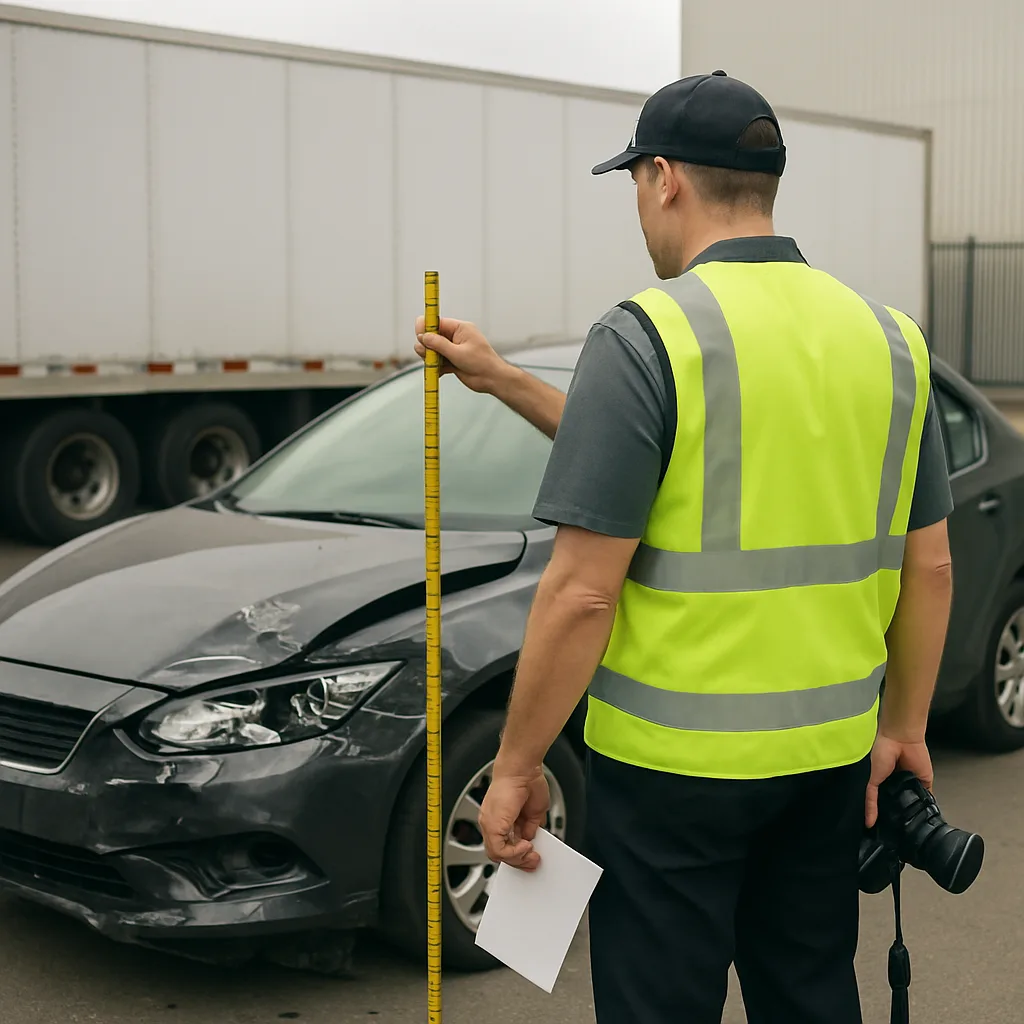
A vehicle’s post-crash condition can change if it is repaired, salvaged, moved, or dismantled. Depending on the circumstances, an attorney or investigator may seek photographs, inspection records, maintenance documents, electronic data, and an opportunity to inspect the truck and trailer. The passenger vehicle should also be documented before its condition changes whenever reasonably possible.
Visibility and lane positioning
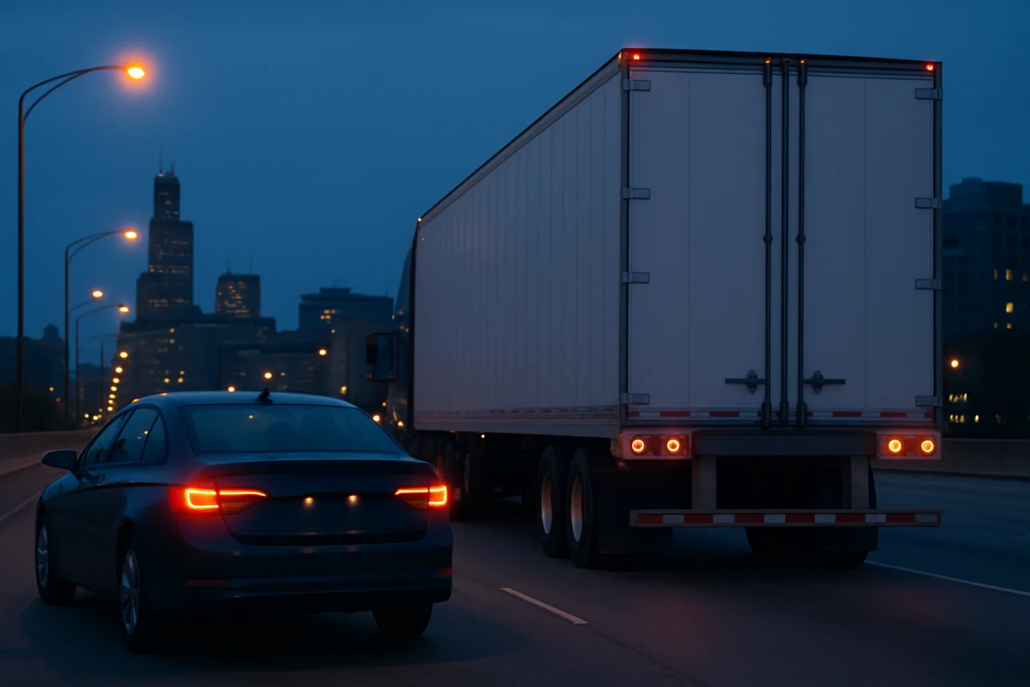
Lighting, reflective material, weather, roadway design, and the trailer’s position can affect how visible it was to other road users. A trailer stopped or moving slowly in a travel lane may raise different factual questions from one involved in a moving rear-end collision. A careful review should consider the roadway, lighting, traffic flow, and available photographs rather than assuming responsibility from the damage pattern alone.
Driver and Carrier Responsibility After an Underride Collision
Equipment is only one part of potential underride crash liability in Illinois. A driver’s actions may also be examined, including speed, following distance, lane changes, fatigue, distraction, lookout, and compliance with traffic controls. The available evidence could include police reports, scene photographs, nearby camera footage, telematics, driver qualification materials, dispatch communications, and witness accounts.
The motor carrier may have separate responsibilities. Depending on the relationship and facts, a carrier may be evaluated for hiring, training, supervision, inspection, maintenance, scheduling, and policies affecting the truck’s operation. A carrier’s responsibility is not automatic simply because it owns or operates the vehicle. The legal analysis may depend on employment relationships, contracts, agency principles, company records, and the conduct connected to the collision.
What an early investigation may clarify
In Chicago, Illinois, the Chicago Police Department, Illinois State Police, or another agency may investigate depending on where and how the crash occurred. A report can be important, but it may not answer every question about trailer maintenance, guard design, driver activity, or carrier policies. A civil claim may require additional evidence obtained through records requests, inspections, witness interviews, or formal discovery in the Circuit Court of Cook County.
Families may want to preserve or gather information such as:
- Medical bills, treatment records, discharge materials, and insurance correspondence;
- Funeral, burial, cremation, transportation, and related expense records in a fatal crash;
- Photographs or videos of the scene, vehicles, roadway, lighting, and weather;
- Names and contact information for witnesses, passengers, responding personnel, or nearby businesses;
- Employment, income, household contribution, and other records relevant to damages; and
- The vehicle, personal property, and any available vehicle data, without repairing or disposing of them before considering preservation needs.
These materials do not by themselves establish liability. They can, however, help an attorney understand the timeline, identify missing evidence, and assess which parties may need to be notified about preserving relevant records.
Building a Truck Rear Underride Collision Claim in Chicago
A potential claim usually requires more than showing that a passenger vehicle went beneath a trailer. The investigation may need to connect a particular act or equipment condition to the injuries or death, while also addressing defenses and competing explanations. Accident reconstruction, engineering review, medical documentation, and economic evidence may each have a role depending on the facts.
Common evidence and process concerns
Families sometimes face practical problems before they know a claim may exist. A damaged vehicle can be towed to a facility with limited storage. A trailer may return to service. Video systems can overwrite recordings, and witnesses may become difficult to locate. Communications with insurers may begin before the family understands the significance of the evidence.
Generally speaking, an attorney evaluating a truck rear underride collision may consider:
- Scene and vehicle evidence: Measurements, photographs, impact locations, guard components, lighting, roadway conditions, and vehicle damage.
- Driver evidence: Hours-of-service information where applicable, inspection materials, training records, cell-phone or telematics data, and statements.
- Carrier evidence: Maintenance and inspection records, dispatch information, policies, ownership documents, and preservation of electronic materials.
- Loss documentation: Medical care and expenses, funeral costs, lost income, household services, and the effects of a fatal loss on surviving family members.
Illinois filing deadlines can restrict a person’s ability to bring a personal injury or wrongful death claim, and the applicable period may depend on the parties, the claim, and other circumstances. Governmental defendants or vehicles can involve additional notice or deadline rules. Because laws and procedures vary by location and may change, a Chicago attorney can assess the facts and identify time-sensitive concerns without assuming that one deadline applies to every case.
Frequently Asked Questions
What makes an underride collision different from another truck crash?
In an underride collision, a passenger vehicle may slide beneath a truck trailer, creating distinct questions about the trailer’s rear guard, lighting, visibility, roadway position, and the angle and speed of impact. The vehicle damage may also require specialized reconstruction. These cases can involve equipment, driver, and carrier issues at the same time. The legal significance depends on the evidence and the circumstances of the specific crash.
Who may be responsible for a fatal underride truck accident claim in Illinois?
Potentially responsible parties can include a truck driver, motor carrier, trailer owner, maintenance provider, manufacturer, or another entity, depending on the facts. Responsibility is not automatic and may require proof connecting a person or company’s conduct or equipment to the death. Illinois wrongful death and survival claims can also involve different damages and procedural considerations, so a case-specific evaluation is important.
Should the damaged passenger vehicle or trailer be repaired immediately?
Repairs, disposal, or return of a trailer to service can affect evidence that may be relevant to an investigation. Families often have limited control over commercial equipment, while a passenger vehicle may be held by a tow yard or insurer. Generally, preserving photographs, storage information, and inspection opportunities can be important. An attorney can explain preservation options based on the vehicle’s location and condition.
Can family members recover medical or funeral-related expenses?
Medical and funeral expenses may be relevant forms of loss, but what can be pursued depends on the type of claim, available insurance, the evidence, and Illinois law applicable to the circumstances. Families should keep itemized bills, receipts, provider information, and insurance communications. Those records can help an attorney evaluate damages without assuming that every expense will be legally recoverable.
How Dinizulu Law Group Can Help
Dinizulu Law Group is dedicated to helping Chicago families understand the issues that can arise after a serious truck collision. The firm can evaluate available crash evidence, vehicle and trailer preservation concerns, medical or funeral documentation, witness information, and potential claims involving the driver or carrier.
The team is committed to fighting for clients’ rights while providing a careful, fact-based review of the circumstances. If your family is dealing with an underride collision in Chicago, Illinois, contact Dinizulu Law Group for a free consultation or case evaluation and to discuss your legal options.
The information in this article is for educational purposes only and does not constitute legal advice. Contact a qualified attorney licensed in Chicago, Illinois for advice specific to your situation.


Leave a Reply
Want to join the discussion?Feel free to contribute!