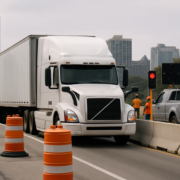
Which Proof Helps a Chicago Work-Zone Truck Crash Lawyer?
A lane shift can change a familiar roadway in a matter of minutes. Barriers may narrow the available space, temporary signals may replace permanent ones, and a commercial truck may be traveling beside passenger vehicles with little room to correct a mistake. For anyone searching for a Chicago work zone truck accident lawyer, understanding what to document after a crash can be an important first step. Dinizulu Law Group provides educational guidance on the construction companies’ duty to keep drivers safe while recognizing that responsibility depends on the facts.
A crash in Chicago, Illinois, may involve more than the truck driver. The roadway contractor, traffic-control provider, trucking company, vehicle owner, cargo interests, and public entities may all need to be identified. This guide explains what drivers and injured workers should look for: temporary traffic controls, lane markings, barriers, vehicle positions, witnesses, injuries, electronic evidence, and the companies present at the site.
What Should Drivers Document After a Chicago Work Zone Truck Crash?
Work zones create changing conditions. A construction zone truck crash in Illinois may happen near a narrowed lane, a merge point, a temporary signal, a flagger, or a queue of stopped traffic. These details can disappear quickly when crews move equipment or reopen a lane.
Photograph the traffic pattern, not only the damage
When it is safe, photographs should show the broader roadway and the vehicle damage. Useful images may include:
- The truck, trailer, cab, and license plate area, without altering or touching the vehicles.
- Lane markings, arrows, cones, drums, barriers, temporary signals, lighting, and warning devices.
- The location of flaggers, construction vehicles, entrances, exits, and merge points.
- Sight lines, shadows, weather conditions, and whether barriers restricted escape space.
- Contractor names, equipment markings, permit boards, and truck-door information, photographed without assuming that a visible name proves legal responsibility.
Notes can supplement photographs. Record the direction of travel, approximate lane positions, traffic speed, what the signal or flagger indicated, and whether the truck crossed a line, entered a shift, or struck a barrier. Avoid placing yourself in traffic or interfering with emergency personnel.
Preserve witness and injury information
Witnesses may have seen the traffic setup before vehicles were moved. If someone offers contact information, preserve it rather than relying on memory. Keep photographs of visible injuries and damaged personal property, and retain medical paperwork and wage-related records. Medical professionals should handle diagnosis and treatment decisions; an attorney can explain how injury documentation may relate to an injury claim.
How Do Lane Shifts and Work-Zone Controls Affect Truck Crash Evidence?
A truck lane shift accident in Chicago often requires an investigation into how the temporary roadway was designed and used. A driver may be navigating a narrow path beside a tractor-trailer, while the truck operator faces limited sight distance, changing signals, or an unexpected queue. The relevant question is not automatically who received a citation or who was closest to the impact. Investigators may need to examine the complete traffic pattern.
Important evidence can include:
- The temporary layout: photographs, traffic-control plans, inspection records, and information about when the pattern changed.
- The truck’s movement: vehicle positions, turn signals, braking, speed, stopping distance, mirror visibility, and damage locations.
- The roadway environment: lighting, pavement markings, barriers, cones, signs, flagger placement, and visibility around curves or ramps.
- The people and entities involved: the driver, carrier, owner, hauling company, general contractor, subcontractors, traffic-control personnel, and any public agency connected with the roadway.
In Chicago, Illinois, a work-zone investigation may involve records held by private businesses or government agencies. The Illinois Department of Transportation, a municipality, or another roadway authority may have relevant information depending on the location. Public-entity claims can involve special procedures and deadlines, so jurisdiction should be confirmed rather than assumed.
For a related discussion of narrow lanes, blind spots, and merging, review Chicago truck blind-spot and lane-change risks. The point is not to presume fault, but to preserve facts before the temporary setup changes.
Which Companies and Records Matter in a Work-Zone Truck Injury Claim?
A work zone may contain several businesses operating under different contracts. The truck could be owned by one company, leased by another, driven by an employee or contractor, and hauling materials for a construction project. A road construction truck injury claim may therefore require more than the driver’s name and insurance card.
Identify every entity present
When safe and permitted, note or photograph:
- The trucking carrier, owner, and trailer information.
- Names on truck doors, equipment, uniforms, or contractor vehicles, using images that preserve the original scene.
- Construction companies, subcontractors, hauling companies, and traffic-control providers.
- Police, fire, ambulance, and work-zone personnel who responded.
- Witness names and contact information, along with the location where each person was standing.
A related resource explains the importance of identifying the companies behind an Illinois contractor truck. Ownership or a contractual relationship alone does not establish liability. The investigation may need to determine who controlled the driver, truck, traffic pattern, barriers, or safety decisions.
Consider vehicle and company records
Photographs of tires, lights, brakes, trailer damage, cargo, and the truck’s final position may help preserve issues that later become harder to evaluate. Maintenance, inspection, repair, hiring, training, supervision, dispatch, and route records may also matter depending on the alleged cause.
If a truck entered a temporary lane or failed to stop before a signal, barrier, or traffic queue, counsel may evaluate the need to preserve electronic control-module or other event data. Dinizulu Law Group discusses preserving a truck’s electronic crash data. That information is not automatically available or conclusive, and it may be overwritten, lost, or affected by later repairs.
A broader review may include trucking-company hiring and training records and commercial truck brake and maintenance evidence. These issues do not prove negligence by themselves, but they can help define what questions an investigation should address.
What Common Mistakes Can Complicate a Chicago Work-Zone Truck Case?
People involved in a collision may be shaken, injured, or focused on moving out of danger. Some evidence may be lost simply because no one realizes how quickly a work-zone scene changes. Common problems include:
- Photographing only the damaged bumper instead of the lane shift, barriers, and surrounding roadway.
- Assuming the police report contains every relevant detail about the temporary traffic controls.
- Discussing fault at the scene or giving a recorded statement before understanding what information is being requested.
- Failing to identify the carrier, trailer, contractor, witnesses, and traffic-control personnel.
- Posting photographs or comments publicly that omit important context.
- Delaying attention to medical concerns or failing to keep records of appointments and restrictions.
- Repairing or discarding a vehicle, helmet, work equipment, or other physical evidence before it can be documented.
After a collision, safety comes first. Call emergency services when appropriate, follow directions from responders, and avoid entering live traffic to collect evidence. For general guidance about what to do after an Illinois truck accident, readers can review Dinizulu Law Group’s related resource.
Illinois deadlines and claim procedures can vary based on the parties involved, the type of claim, and whether a public entity is implicated. A Chicago, Illinois, attorney can assess those issues in light of the specific facts rather than relying on a general online timeline.
Frequently Asked Questions
Does a work-zone truck crash always make the construction company responsible?
No. A construction company may be one entity to investigate, but responsibility depends on evidence about control, warnings, barriers, traffic patterns, contracts, and conduct. The truck driver, carrier, vehicle owner, traffic-control provider, or public roadway authority may also have relevant roles. A visible construction project does not by itself establish liability. In Illinois, an attorney may review the facts and applicable law before identifying potential claims.
What if the truck left the scene before I could photograph it?
Try to preserve what you remember without guessing. Write down the truck’s color, type, direction, trailer features, company markings, location, time, and any partial plate information. Ask witnesses whether they saw the vehicle and provide their contact details to law enforcement. Nearby businesses or roadway agencies may have cameras, but footage can be retained for limited periods. An attorney may help evaluate preservation requests.
Can a worker pursue a claim after being struck in a work zone?
Potential remedies can depend on the worker’s employer, the identities of other businesses, the circumstances of the collision, and applicable Illinois law. Workers’ compensation issues and claims against third parties may involve different rules. A worker should avoid assuming that one type of claim excludes another. A licensed attorney can explain how employment status, safety duties, and the evidence may affect available options.
How long should I keep photographs and crash records?
Keep original photographs, videos, messages, insurance information, medical records, repair estimates, wage documentation, and witness details in more than one secure location. Do not edit the original files. The appropriate retention period depends on the claim and applicable deadlines, which can vary in Illinois, especially when public entities or minors are involved. Legal counsel can provide guidance specific to the circumstances.
How Dinizulu Law Group Can Help
Dinizulu Law Group is dedicated to helping injured motorists and workers understand the evidence surrounding commercial-truck and work-zone collisions. The firm can evaluate issues such as temporary traffic controls, lane shifts, vehicle positions, electronic records, injuries, and the companies connected to the project. Its approach is committed to fighting for clients’ rights while recognizing that each claim depends on its facts, applicable Illinois law, and available proof. Contact Dinizulu Law Group for a free consultation or case evaluation about your Chicago work-zone truck crash.
The information in this article is for educational purposes only and does not constitute legal advice. Contact a qualified attorney licensed in Chicago, Illinois for advice specific to your situation.


