How to Document Nursing Neglect Effectively
A sudden bedsore, unexplained bruising, missed medication, or a sharp decline in hygiene can leave families with painful questions. Learning how to document nursing neglect gives you a clear record of what you observed, when it happened, and how the facility responded. That record may help protect your loved one, support a formal complaint, and preserve evidence if legal action becomes necessary.
Documentation is not about creating conflict with staff. It is about protecting a resident’s dignity and ensuring that concerns are taken seriously. Nursing homes have a duty to provide appropriate care, supervision, nutrition, hygiene, and medical attention. When that duty is ignored, families have every right to ask questions and demand accountability.
Start a Detailed Timeline Immediately
Memory fades quickly, especially during a crisis. Begin a written timeline as soon as you notice a concern. Use a notebook, a notes app, or a document that automatically records dates and times. The format matters less than being consistent and specific.
For each incident, write the date, approximate time, location, and names of anyone involved or present. Describe only what you saw, heard, or were told. For example, instead of writing that staff did not care, write that your mother was left in a wet brief at 2:00 p.m., that you notified a nurse at 2:10 p.m., and that she was not changed until 3:05 p.m.
Include changes in your loved one’s condition. Note new wounds, weight loss, dehydration, confusion, infections, falls, poor hygiene, untreated pain, or emotional withdrawal. If your family member can communicate, record their own words as accurately as possible. Put statements in quotation marks only when you are confident they are exact.
A strong timeline also tracks the facility’s response. Did someone assess the resident? Did staff offer an explanation? Was a physician called? Did the facility promise a care-plan change? Write down what happened next, not simply what was promised.
Take Clear, Dated Photographs When Appropriate
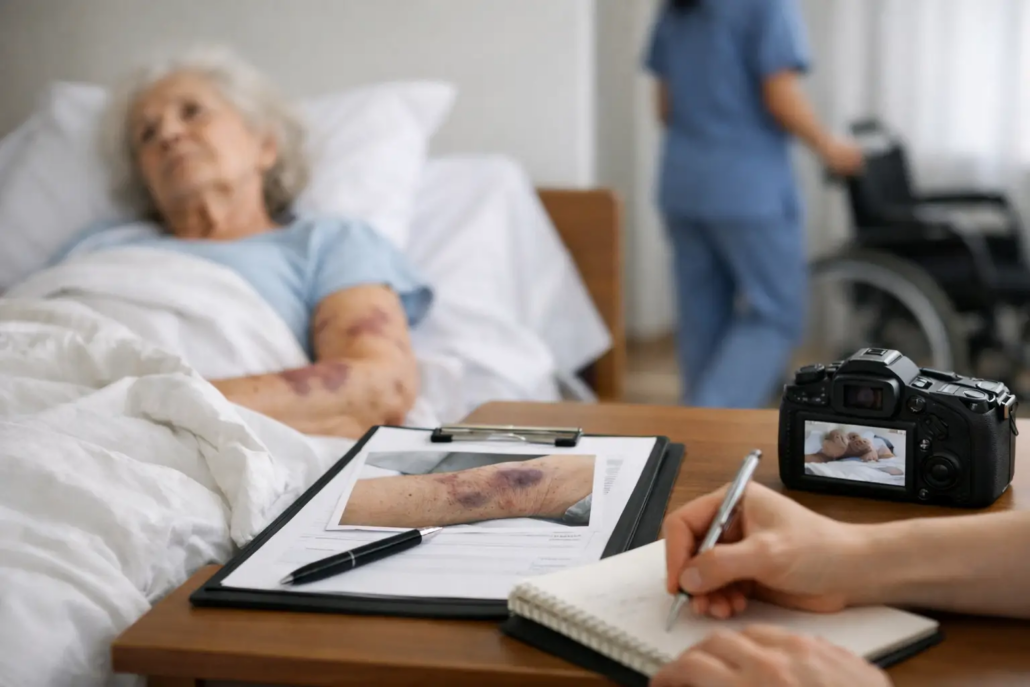
Photographs can provide powerful evidence of visible injuries and conditions, including pressure ulcers, bruises, cuts, swelling, soiled clothing, poor hygiene, or unsafe living conditions. Take well-lit pictures from more than one angle. A wider photo can show where an injury is located on the body, while a closer image can show its size and severity.
Keep the original image files whenever possible. Avoid filters, editing, screenshots, or markings that could lead someone to question whether the image was altered. Most phones preserve the date and time in the file information, but you should also note the date in your written timeline.
Be thoughtful about privacy. Photograph your loved one and the conditions affecting them, but avoid capturing other residents whenever possible. If you are unsure about a facility policy or a resident’s ability to consent, focus on documenting the condition through written notes and seek guidance before taking additional images.
Photos do not tell the entire story. Pair each photograph with a note explaining what it shows, when you observed it, whether staff had been notified, and whether the condition changed over time.
Request and Preserve Medical and Facility Records
The nursing home’s records may reveal whether staff followed the care plan, completed required assessments, administered medication, repositioned a resident, responded to a fall, or notified a physician and family member. Request records in writing and keep a copy of every request you make.
Depending on the circumstances, useful records can include care plans, medication administration records, nursing notes, wound-care records, physician orders, incident reports, hospital discharge paperwork, therapy notes, weight records, meal and fluid intake logs, and staffing information. If a resident is transferred to a hospital, request records from the hospital as well. An emergency room physician’s observations can be especially significant when an injury or infection is discovered after a nursing home stay.
Keep documents in their original form. Save emails, letters, portal messages, billing statements, voicemails, and text messages. If you speak by phone with a nurse, administrator, physician, or social worker, follow up with a brief email confirming what was discussed. A calm message stating, “This email confirms our conversation today regarding…” can create an important written record.
Document Every Report You Make
Families should not have to prove harm alone. Report urgent concerns to the charge nurse, director of nursing, administrator, or treating physician. If your loved one is in immediate danger or needs medical attention, call 911 or seek emergency care first.
When you report a concern, document who received it, the time and date, what you communicated, and the response. Ask for the person’s full name and title. Request that the facility investigate and provide a written response.
It can also be appropriate to report suspected neglect to state agencies responsible for long-term care oversight. In Illinois, concerns involving nursing home residents may be reported to the Illinois Department of Public Health. An ombudsman program may also help residents and families raise concerns about care and resident rights.
A report can prompt an investigation, but it does not necessarily secure compensation or preserve every piece of evidence needed for a legal claim. Facilities may characterize an incident differently than a family does. That is why your own records matter.
Keep a Record of Witnesses and Conversations
Other people may have observed the same problem. This could include relatives, visitors, roommates, former staff members, medical transport personnel, or hospital providers. Write down each potential witness’s name, contact information, and what they personally observed.
Do not pressure anyone to take sides or speculate. Ask open, factual questions. If another family member saw a bruise, noticed missed meals, or heard a resident ask repeatedly for help, their independent account may later help establish a pattern.
Also document conversations with your loved one. Nursing home residents are sometimes dismissed because of dementia, communication limitations, or disability. Their account still matters. Record their words respectfully, along with their condition and ability to communicate at the time. A resident’s report may be one piece of a larger pattern supported by photos, medical records, witness observations, and facility documentation.
Watch for Patterns, Not Just One Event
Some injuries happen despite appropriate care. A single fall, for example, does not automatically prove neglect. The key question is whether the facility took reasonable steps based on the resident’s known needs and risks.
Patterns can be more revealing than a single incident. Repeated unexplained injuries, frequent infections, worsening bedsores, missed medications, chronic dehydration, unattended call lights, or sudden weight loss may point to inadequate supervision, poor staffing, or a failure to follow a care plan. Compare what the resident needed with what records and observations show they actually received.
Continue updating your timeline after medical appointments, care-plan meetings, and facility conversations. If the nursing home corrects the problem, note that too. Accurate documentation is more credible when it is fair and complete.
Avoid Mistakes That Can Weaken Your Record
Strong documentation is factual, organized, and preserved. Avoid confronting staff in a way that prevents you from getting information or access to your loved one. Do not alter photos, overwrite messages, or discard handwritten notes after transferring them to a computer.
Be careful with recordings. Laws and facility rules can affect whether and how conversations may be recorded. Rather than assuming a recording is permitted, write down the details of the conversation and consider getting legal guidance about your options.
Do not wait for the facility to hand over every answer. Nursing home records can be incomplete, and delays can make it harder to identify witnesses and preserve relevant evidence. If an injury is serious, unexplained, or part of a continuing pattern, speak with an attorney promptly.
When Legal Guidance Can Help
A nursing home neglect claim may involve complicated questions about medical standards, staffing, corporate ownership, insurance coverage, and the cause of an injury. An attorney can help evaluate records, seek additional evidence, consult qualified medical experts, and determine whether the facility or another party failed in its duty of care.
Dinizulu Law Group represents families who believe a nursing home failed to treat a resident with the care and dignity they deserve. A careful review can help a family understand what happened without allowing an institution to control the narrative.
Your loved one deserves to be safe, heard, and treated as a person, not a task on a shift report. Preserve what you can, seek medical help when needed, and trust your instincts when something does not feel right.


