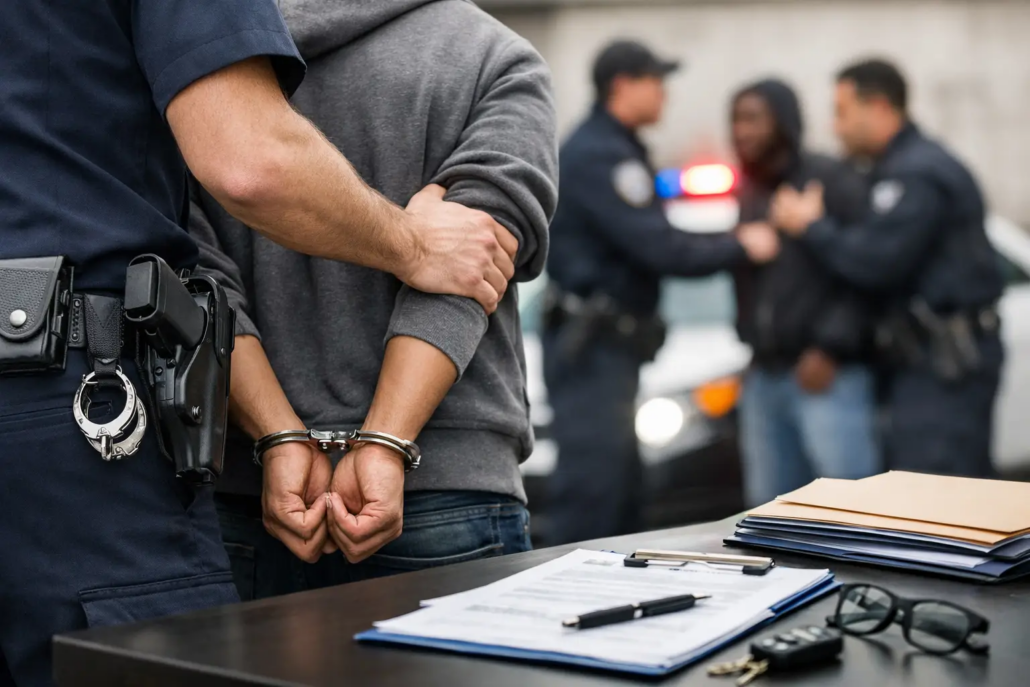
Police Misconduct Case Examples That Matter
A traffic stop that turns violent. A false arrest that costs someone a job. A jail death that leaves a family with more questions than answers. Police misconduct case examples matter because these are not abstract legal problems. They are life-changing events that can lead to physical injury, trauma, lost income, public humiliation, and, in the worst cases, wrongful death.
For many people, the hardest part is knowing whether what happened was simply aggressive policing or something unlawful. That distinction matters. Officers have authority, but they do not have unlimited power. When law enforcement crosses the line, civil rights law can provide a path to accountability.
What counts as police misconduct?
Police misconduct is a broad term. It can include excessive force, false arrest, malicious prosecution, unlawful search and seizure, racial profiling, sexual misconduct, coerced confessions, denial of medical care in custody, and retaliation against someone for asserting their rights.
Not every bad interaction with police becomes a legal claim. Officers are often given wide discretion in tense situations, and the facts matter. A case may turn on body camera footage, witness statements, medical records, dispatch logs, or whether the officer had legal justification at each stage of the encounter. That is why real-world examples are useful. They show how misconduct appears in practice, not just in legal definitions.
Police misconduct case examples in real life
Excessive force during a stop or arrest
One of the most common police misconduct case examples involves force that is not justified by the situation. Imagine an unarmed person pulled over for a minor traffic issue. The driver is confused, asks questions, and is ordered out of the car. Within seconds, the encounter escalates. The person is slammed to the ground, punched, tased, or kneed in the back even though there is little or no real threat.
In an excessive force case, the central question is usually whether the force was objectively reasonable under the circumstances. Courts often look at the severity of the suspected offense, whether the person posed an immediate threat, and whether they were actively resisting or trying to flee. The officer’s version is not the only version that matters. Video evidence, medical findings, and bystander testimony can expose a major gap between the official report and what actually happened.
False arrest without probable cause
Another common example is an arrest that should never have happened. A person may be handcuffed, booked, and jailed based on a weak accusation, mistaken identity, or facts that do not add up to probable cause. The damage can be immediate. Missing work, losing child care, spending money on bond, and carrying the stigma of arrest can disrupt every part of life.
False arrest cases often depend on what the officer knew at the time and whether a reasonable officer would have believed a crime had been committed. If officers ignored exculpatory facts, relied on clearly unreliable statements, or made an arrest to justify an unlawful stop, that can support a civil rights claim. Some cases also lead to malicious prosecution claims when charges are pushed forward without a proper basis.
Unlawful search of a person, car, or home
The Fourth Amendment protects people against unreasonable searches and seizures, but violations still happen. Officers may search a car without consent or probable cause. They may enter a home without a warrant and without a true emergency. They may detain someone for too long while fishing for evidence.
These cases can feel technical, but the harm is real. An unlawful search can lead to arrest, prosecution, property damage, and serious emotional distress. It can also become part of a larger pattern of targeting people in certain neighborhoods or communities based on race, class, or assumptions rather than facts.
Police brutality causing catastrophic injury
Some of the most severe police misconduct cases involve broken bones, traumatic brain injuries, spinal injuries, internal bleeding, or permanent disability. These are not just civil rights claims. They are catastrophic injury cases with long-term medical, financial, and emotional consequences.
In these matters, damages may include emergency treatment, surgery, rehabilitation, future medical care, lost wages, and pain and suffering. The legal issues can become more complex when multiple officers were involved, supervisors failed to intervene, or a department ignored a known pattern of dangerous conduct.
Death in custody or after restraint
A death after restraint, transport, or detention is among the most devastating forms of police misconduct. Families are often told very little in the first days. Records may be incomplete. Video may not be released right away. Agencies may close ranks before key facts are known.
Wrongful death claims can arise from excessive force, positional asphyxia, denial of medical care, delayed emergency response, or unsafe jail conditions. These cases require a careful review of autopsy findings, medical timelines, training records, incident reports, and video evidence. They also require sensitivity. Families deserve truth, not a rehearsed explanation.
Sexual misconduct by law enforcement
Sexual misconduct by an officer is a profound abuse of power. It can happen during a stop, while someone is in custody, or through coercion tied to an officer’s authority. Victims are often afraid they will not be believed, especially when the officer tries to frame the encounter as consensual.
But consent is deeply compromised when one person holds the power to detain, arrest, or charge the other. These cases can involve both civil rights violations and intentional tort claims. They also demand trauma-informed representation. The legal strategy matters, but so does the client’s sense of safety and dignity throughout the process.
Why patterns matter in police misconduct cases
One incident may support a claim, but patterns can make a case much stronger. If an officer has repeated complaints for excessive force, dishonesty, unlawful searches, or bias, that history may matter. If a department failed to train officers properly, ignored warning signs, or tolerated unconstitutional practices, institutional accountability may come into focus.
That does not mean every case becomes a broad policy challenge. Sometimes the strongest path is a claim centered on one officer’s actions and one person’s harm. Other times, the facts show a wider failure in supervision or department culture. It depends on the evidence.
What victims often need to prove
Most people do not call a lawyer because they know the elements of a federal civil rights claim. They call because something happened that felt wrong, frightening, and damaging. Even so, certain forms of proof tend to matter again and again.
A strong case may involve body camera footage, dash camera footage, 911 calls, dispatch records, surveillance video, photographs, hospital records, witness statements, disciplinary records, or prior complaints against the officer. Timing matters too. Bruises fade. videos can be overwritten. Witnesses move or forget details. Early documentation can make a major difference.
There is also a practical reality here. A valid claim is not always an easy claim. Defendants may argue the force was necessary, the arrest was justified, or the officer acted in a split-second situation. That is why these cases require careful preparation and a willingness to challenge official narratives with evidence.
Police misconduct case examples and the question of damages
People sometimes assume a case is only about punishing bad behavior. Accountability is part of it, but civil claims are also about the harm done to the victim and family. Damages may include medical bills, mental health treatment, lost income, reduced earning capacity, pain and suffering, disability, and loss of normal life. In wrongful death matters, surviving family members may also have claims tied to grief, loss of companionship, and financial support.
The value of a case depends on many factors, including the severity of injury, the clarity of liability, the quality of available evidence, and whether the misconduct was part of a larger pattern. A smaller physical injury can still be a serious civil rights violation. A severe injury with disputed facts may still be hard fought. Justice is rarely automatic.
When to speak with a civil rights lawyer
If you believe you were harmed by police misconduct, waiting can create problems. Deadlines apply. Evidence can disappear. Agencies often start building their defense immediately.
An experienced civil rights lawyer can evaluate what happened, identify possible claims, preserve critical evidence, and explain the difference between an internal complaint, a criminal investigation, and a civil lawsuit. Those are not the same process, and one does not guarantee the other. What matters most is whether the facts support a legal claim for the harm you suffered.
For individuals and families in Chicago and across Illinois, these cases are about more than legal procedure. They are about being heard, protecting dignity, and refusing to let abuse of power go unanswered. Firms such as Dinizulu Law Group represent people facing exactly these moments – when the system feels intimidating, the damage is real, and accountability cannot wait.
If something happened to you or someone you love, trust your instincts, preserve what you can, and ask questions early. The right case is not just about what an officer did. It is about what that conduct took from a person, and what it will take to make that harm count.


