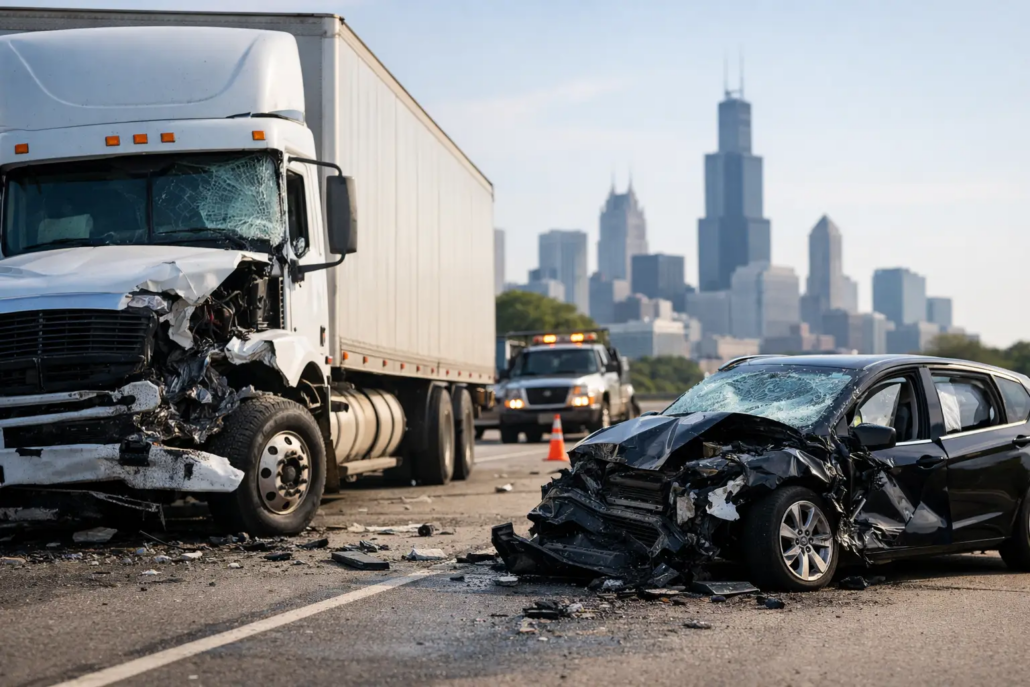
Truck Accident Claims in Illinois
A collision with a commercial truck changes the stakes instantly. The injuries are often more severe, the insurance issues are more aggressive, and the company behind the truck may begin protecting itself within hours. That is why truck accident claims demand fast action, careful investigation, and a legal strategy built for serious harm.
For many injured people, the hardest part is not just physical recovery. It is trying to make sense of what happens next while medical bills grow, income stops, and insurance adjusters start calling. Families may also be dealing with permanent disability, traumatic brain injury, spinal damage, or the loss of someone they love. In those moments, clear answers matter.
Why truck accident claims are different
A truck crash is not handled like an ordinary car accident. In a passenger vehicle case, the dispute may focus mainly on which driver made a mistake. In truck accident claims, the facts are usually broader and more complicated.
A commercial truck driver may be one part of the story, but not the only one. The trucking company, a maintenance contractor, a cargo loading company, a manufacturer, or another business may share responsibility. Federal trucking rules, driver hour limits, inspection requirements, black box data, and company safety records can all become relevant. That complexity is one reason these cases often require deeper investigation from the start.
There is also a practical reality. Trucking companies and their insurers frequently move quickly to limit exposure. They may send investigators to the scene, review records immediately, and begin shaping the narrative before an injured person has had time to leave the hospital. If critical evidence is not preserved early, it can become harder to prove what really happened.
What must be proven in truck accident claims?
At the core, truck accident claims still turn on negligence. The injured person must show that someone owed a duty of care, breached that duty, and caused harm. In plain terms, that means proving that a driver, company, or other responsible party acted carelessly or violated safety obligations and that the conduct led to the crash and resulting injuries.
That sounds simple, but the evidence often tells a much more detailed story. A driver may have been speeding, fatigued, distracted, impaired, or following too closely. A company may have hired an unqualified driver, ignored prior safety violations, pressured unrealistic delivery schedules, or failed to inspect brakes and tires. In some cases, a trailer was overloaded or cargo was secured improperly, making the truck unstable or harder to stop.
The strongest claims are built on facts, not assumptions. Police reports matter, but they are only one part of the picture. Medical records, eyewitness accounts, crash reconstruction, electronic logging device data, maintenance logs, employment files, and onboard recording systems can all help establish what happened.
Who may be liable after a truck crash?
One of the most important questions in truck accident claims is who should be held accountable. Sometimes liability is straightforward. Sometimes it is shared.
The driver may be responsible for negligent driving. The trucking company may be liable if it failed to train, supervise, or monitor that driver properly, or if it put a dangerous vehicle on the road. If a parts failure contributed to the collision, the manufacturer or distributor may be involved. If cargo shifted because of poor loading practices, the company responsible for loading may also face liability.
This matters because identifying all responsible parties can affect the full value of the claim. Serious truck crashes often lead to extensive medical treatment, long-term rehabilitation, lost earning capacity, and profound pain and suffering. A narrow investigation can miss critical sources of accountability and compensation.
Evidence can make or break truck accident claims
Trucking cases often rise or fall based on how quickly evidence is secured. Some of the most valuable proof is controlled by the trucking company or its insurers, not by the injured person.
That can include driver qualification files, dispatch records, inspection reports, maintenance histories, event data recorder information, cellphone records, dash camera footage, and hours-of-service logs. In some cases, there may also be shipping records that reveal scheduling pressure or loading problems. Surveillance from nearby businesses or traffic cameras can also help, but it may not be kept for long.
This is one of the clearest trade-offs in a truck case. Waiting may feel easier when you are recovering, but delay can weaken the claim. Acting early gives your legal team a better chance to preserve records and challenge any effort to shift blame unfairly.
Damages available in Illinois truck accident claims
Truck accident claims can include more than current medical bills. Under Illinois law, compensation may be available for the full impact of the crash, both now and in the future.
That can include emergency care, hospitalization, surgery, rehabilitation, medication, and ongoing treatment. It may also include lost wages, reduced future income, and the cost of adapting to long-term disability. Non-economic damages matter too. Pain, emotional distress, disfigurement, loss of normal life, and the strain a catastrophic injury places on daily living are real harms, and the law recognizes that.
In fatal truck crashes, surviving family members may have the right to pursue a wrongful death claim and a related estate claim. These cases can involve funeral expenses, loss of financial support, loss of companionship, and the suffering experienced before death. No legal claim can undo that loss, but accountability still matters.
Insurance companies are not neutral
After a serious crash, an insurer may sound helpful at first. That does not mean its interests align with yours. Insurance companies are businesses, and in high-value truck accident claims, they often look for ways to reduce or deny payouts.
They may argue that your injuries were preexisting, that you were partly at fault, or that your treatment was excessive. They may push for a quick recorded statement before the full scope of your injuries is clear. They may also offer an early settlement that sounds substantial until you realize it does not come close to covering future care or lost income.
This is where legal representation changes the balance. A strong claim is not just about filing paperwork. It is about valuing the case correctly, anticipating defense tactics, and building evidence that can withstand scrutiny in settlement talks or at trial.
What to do after a truck crash
The first priority is always medical care. Even if you think you can manage the pain, truck crashes commonly cause internal injuries, head trauma, and other conditions that are not obvious right away. Prompt treatment also creates a medical record that connects your injuries to the collision.
If you are able, preserve what you can. Photos of the scene, vehicle damage, visible injuries, and road conditions may help later. Keep medical records, bills, and proof of missed work. Avoid discussing fault casually with insurers before you understand your rights. And if a loved one was badly injured or killed, do not assume the company will voluntarily produce what your family needs to prove the case.
How a lawyer helps with truck accident claims
The right lawyer does more than negotiate. In truck accident claims, counsel should investigate quickly, identify all liable parties, preserve evidence, coordinate with experts when necessary, and present the full human impact of the injury.
That includes looking beyond the crash itself. Was the driver over hours? Was there a history of safety violations? Did the company skip inspections? Were profits placed ahead of public safety? Those questions often reveal whether the collision was a one-time mistake or the predictable result of deeper misconduct.
For injured people and grieving families, there is another benefit that matters just as much. Good representation creates room to breathe. You should not have to battle a trucking company, decode insurance tactics, and manage a catastrophic injury all at once. A client-centered firm takes that burden seriously.
At Dinizulu Law Group, this kind of work is about more than case value. It is about standing beside people whose lives have been disrupted by negligence and making sure they are treated with dignity while pursuing the accountability they deserve.
Time matters in Illinois
Illinois law limits how long you have to file certain claims, and deadlines can vary depending on the facts. Waiting too long can put your case at risk, even when the harm is severe and the liability seems clear.
Just as important, delay can affect evidence. Witness memories fade. Records disappear. Vehicles are repaired or destroyed. The best time to protect a truck accident claim is usually much earlier than most people expect.
If a truck crash has left you injured, overwhelmed, or grieving, you do not need to have every answer before asking for help. What matters is taking the next step while the facts can still be preserved and your voice can still be heard.


