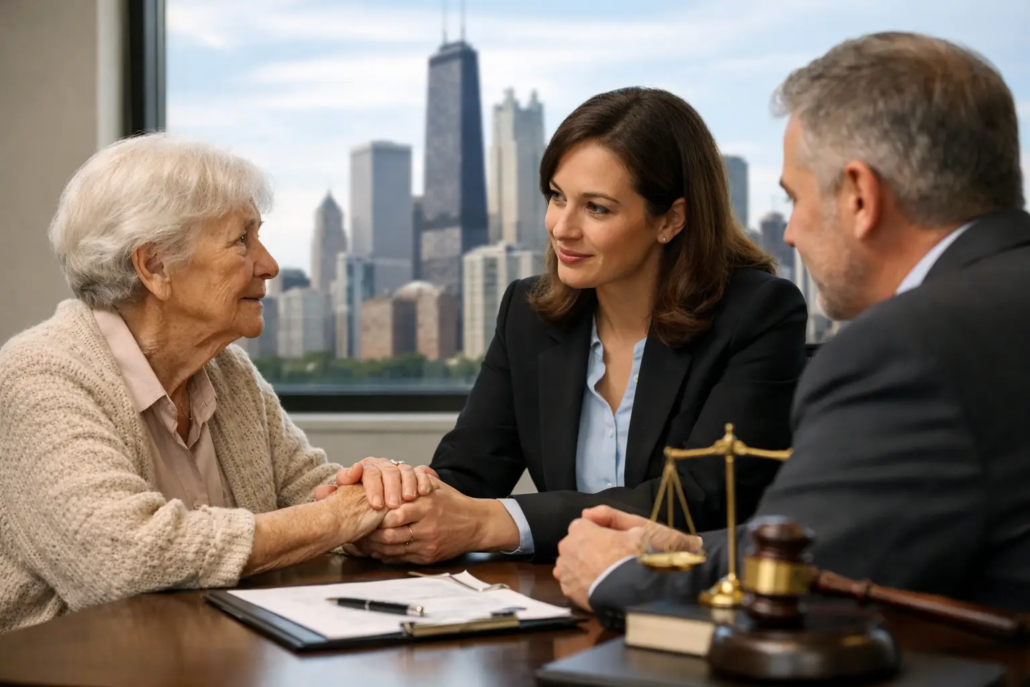
Nursing Home Abuse Lawyers in Chicago Can Help
A loved one can lose weight, become fearful, develop unexplained bruises, or suddenly stop speaking freely long before a facility admits that something is wrong. Families should not have to accept these changes as an unavoidable part of aging. Nursing home abuse lawyers in Chicago help families investigate signs of mistreatment, protect residents from further harm, and pursue accountability when a facility, staff member, or healthcare provider fails in its duty of care.
Nursing home cases are personal. They often involve a parent, grandparent, spouse, or relative who depended on others for daily care and safety. The legal process cannot erase what happened, but it can expose dangerous practices, secure resources for a resident’s care, and demand answers from those responsible.
When a Nursing Home Problem May Be Abuse or Neglect
Not every injury proves abuse. Older adults may bruise easily, fall despite reasonable precautions, or experience health complications that arise quickly. But facilities cannot hide behind a resident’s age or medical condition when poor care caused preventable harm.
Abuse can be physical, emotional, sexual, or financial. It may include hitting, rough handling, intimidation, humiliation, unwanted sexual contact, or taking a resident’s money or belongings. Neglect is also serious. It occurs when a resident’s basic needs are not met, whether because staff ignored the resident, lacked adequate training, or the facility chose to operate without enough qualified personnel.
Warning signs deserve prompt attention, especially when staff cannot give a clear and consistent explanation. These can include unexplained bruises, cuts, fractures, repeated falls, bedsores, dehydration, malnutrition, medication errors, poor hygiene, infections, sudden confusion, or unusual withdrawal. A resident who becomes anxious when a particular caregiver enters the room may be communicating something important, even if they cannot explain it directly.
Trust your instincts, but document what you see. Take dated photographs when appropriate, write down changes in your loved one’s condition, and keep notes of conversations with nurses, administrators, and doctors. If there is immediate danger, seek emergency medical care and contact the appropriate authorities.
What Nursing Home Abuse Lawyers in Chicago Investigate
A nursing home case is rarely limited to one upsetting incident. A careful investigation asks whether the harm was part of a larger pattern of unsafe care. One caregiver may have acted abusively, but the facility may also bear responsibility for failing to hire, train, supervise, or discipline staff appropriately.
Chicago nursing home abuse lawyers may review medical charts, care plans, medication administration records, staffing schedules, incident reports, inspection history, billing information, photographs, witness accounts, and communications between the facility and family. These records can reveal whether staff followed the resident’s care plan, responded to changes in condition, or tried to minimize a serious event after it occurred.
Staffing is often central to a neglect claim. When a facility does not have enough trained workers, residents may wait too long for meals, hydration, repositioning, toileting assistance, medication, or help getting out of bed safely. Understaffing does not excuse harm. If management placed profits, convenience, or poor operations ahead of resident safety, that decision should be examined.
Medical records matter, but they are not the only evidence. Family members can offer critical observations about a resident’s personality, mobility, appetite, pain level, and daily functioning before and after the suspected mistreatment. A resident’s dignity is not a footnote in a chart. Their lived experience belongs at the center of the case.
Illinois Law Gives Residents Important Protections
Illinois nursing home residents have legal rights to humane care, privacy, respect, participation in care decisions, and freedom from abuse and neglect. A facility must provide care that meets professional standards and responds to each resident’s assessed needs. That includes reasonable measures to prevent avoidable injuries, infections, pressure ulcers, medication mistakes, and other foreseeable dangers.
The legal path depends on the facts. A claim may involve violations of nursing home residents’ rights, medical negligence, ordinary negligence, wrongful death, or claims against an individual abuser. Some cases involve more than one theory of liability. For example, an avoidable pressure sore may raise questions about repositioning, nutrition, wound monitoring, staffing levels, physician orders, and whether the facility accurately documented care.
Deadlines can apply, and the correct deadline may vary based on the type of claim and the parties involved. Waiting can also make a case harder to prove. Video may be overwritten, staffing records may become more difficult to obtain, witnesses may leave, and memories can fade. Speaking with an attorney early helps preserve evidence while families focus on their loved one’s immediate safety.
What Families Can Do After Suspected Mistreatment
The first priority is protecting the resident. If there is an urgent medical concern, call 911 or get the resident evaluated by an independent medical professional. If moving your loved one is necessary for safety, do not let fear of upsetting the facility prevent you from acting. Still, when possible, obtain copies of records and photograph visible conditions before a transfer.
Families should ask the facility for a direct explanation and request relevant records in writing. Avoid signing releases, arbitration documents, or settlement paperwork without understanding the consequences. Facilities and insurers may frame an incident as unavoidable before the full facts are known.
It can also help to create a timeline. Record the date and time of each event, the names of staff members present, what was said, medical treatment provided, and any changes in your loved one’s condition. Keep voicemails, emails, care updates, bills, and photographs together. This is not about turning a family crisis into paperwork. It is about making sure the truth is not lost.
Compensation Is About Care, Loss, and Accountability
Compensation in a nursing home abuse or neglect case depends on the evidence and the harm suffered. It may include medical expenses, rehabilitation or transfer costs, pain and suffering, emotional distress, disability, disfigurement, and other losses recognized under Illinois law. When neglect or abuse causes a resident’s death, surviving family members may have a wrongful death claim.
No ethical lawyer should promise a particular result. The value of a case can depend on the resident’s injuries, prognosis, medical history, available evidence, insurance coverage, the facility’s conduct, and whether the case goes to trial. Yet a resident’s age does not make their suffering less meaningful. Every person in a nursing home is entitled to safety, respect, and care that honors their humanity.
A strong claim can also do more than address one family’s losses. It can pressure an institution to correct unsafe staffing practices, improve training, and take complaints seriously. Accountability matters because other residents may be facing the same risks behind closed doors.
Choosing a Lawyer for a Nursing Home Abuse Claim
Families need more than a lawyer who recognizes the phrase “nursing home neglect.” They need counsel prepared to investigate institutional failures, work with medical experts when necessary, challenge inaccurate narratives, and take the case to court if a fair resolution is not offered.
Look for clear communication and a respectful approach. You should understand what information the legal team needs, what the investigation may involve, how fees work, and what decisions remain yours to make. A contingency-fee arrangement generally means attorney fees are paid from a recovery rather than upfront, but families should ask for a clear explanation of the agreement and case costs.
At Dinizulu Law Group, Ltd, families are treated as people first, not case numbers. The firm approaches nursing home abuse claims with compassion for what families are carrying and the trial-focused determination needed to hold powerful institutions accountable. If you see signs that a Chicago nursing home is failing your loved one, preserve what you can, seek medical attention when needed, and get informed guidance before important evidence disappears.


