Tag Archive for: Civil Rights Law

Posts

Hate Crimes Are Rising Fast. What Can You Do?


The FBI just released that 2016 was the second year in a row that hate crimes have gone up nationwide. 2017 may be the third.

In Chicago, Illinois, there have been 39 hate crimes just in the first half of 2017. The Police Department has been keeping electronic records of hate crimes since 2012. Since then, Chicago’s on the pace to hit a record high of hate crimes by the end of 2017. This shouldn’t be the pattern the nation or our city should be facing. Want to know how you can fight this disturbing trend? Watch the video to learn more.

Illinois citizens are protected under the state’s hate crime act which states:

Hate crime occurs whether the person who commits it does so by reason of the actual or perceived race, color, creed, religion, ancestry, gender, sexual orientation, physical or mental disability, or national origin of another individual or group of individuals.

Effective of Jan 1, 2016 transgendered people are also protected under this law. Gender identity is now a protected provision under sexual orientation. The new law also extends protections to institutions who may be targeted because of sexual orientation or gender identity status.

Because of these protections, I was able to help a lesbian woman Danielle, who was assaulted by an apartment building security guard. The assault took place on the common grounds of Danielle’s girlfriend’s apartment complex. The security guard had continuously harassed the couple because of their lesbian status.

One night while Danielle was sitting on the steps saw alone talking on the phone, the security officer standing over six feet tall and weighing almost 285 pounds approached Danielle who stood 5’1, and weighed a mere 110 pounds.  After Danielle asked the security officer to remove the light from her eyes, he turned it off and struck Danielle on her temple with the flashlight, while uttering a gay slur at her.

He later offered a defense that Danielle looked like a boy.  Our civil right attorneys in Chicago identified other witnesses who came forward to support this animus the security guard had towards the lesbian community. As a result, this case settled with significant compensation for Danielle.

As hate crime and violent lashing out has become increasingly common, know that there are remedies and legal protections for such wrongful behavior, both criminal and civil.  Many times, people don’t come forward because they are not sure whether what happened to them is a hate crime, or people aren’t sure if the law will guarantee them protection. But it always helps to discuss these matters with a professional and experienced civil rights trial attorney.

The Dinizulu Law Group, Ltd. has won over seven figures for cases involving discrimination & civil rights cases.  If you are watching this video because you have your own questions or concerns about hate crime, civil rights or discrimination, call us at 1-312-384-1920 or 1-800-693-1LAW. Our Chicago-based civil rights lawyers are here for you.

I Was Assaulted While Celebrating My Engagement


Pamela Dixon was celebrating her engagement in a public park when suddenly she was assaulted by the park’s security guard.  Left injured and confused, she didn’t know what to do.  When she contacted the employer of the security guard about the assault, it was as if the incident didn’t happen, and that she didn’t matter.

Pamela wanted justice and wanted the truth to be told.  She trusted her friend Attorney Yao Dinizulu to get her the results she deserved.  The Dinizulu Law Group, Ltd. investigated and uncovered that this security guard had a pattern of violent behavior. Yet scenario after scenario, she wasn’t terminated.

Before this case, Pamela had also never given a deposition.  A deposition is something that’s intimidating for many clients because they have to give a sworn and recorded statement to the opposing counsel who are trying to catch the client say something they can later use against them in the course of trial.  The Dinizulu Law Group, Ltd. helped Pamela understand the types of questions that would be asked during a deposition, and prepared her thoroughly for the challenge ahead.

As a result, Pam was able to receive compensation for her pain suffering, medical bills, and most importantly get a closure to the emotional distress that this incident caused. She didn’t want others to go through what she had gone through.  The Dinizulu Law Group, Ltd. helped Pamela tell her story and seek justice.  That meant something.

Hate crime and violent lashing out has sadly gotten increasingly common.  However, there are laws to remedy these wrongs and punish those who violate our nation’s laws.  If you believe your civil rights have been infringed upon, contact the Dinizulu Law Group, Ltd. at 1-312-384-1920 or 1-800-693-1LAW or by email. We are here to help. You will also find other stories like Pam’s and more discussions on civil rights and other legal topics on our media page.


Civil Rights Law & Your Privacy: When Biometrics Use Goes Too Far

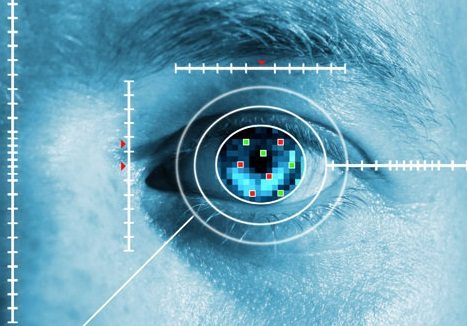
biometrics-3In 2007, Illinois passed the Biometric Information Privacy Act. Biometrics, as you may already know, pertain to unique physical characteristics, such as fingerprints, iris scans, DNA and face geometry, that help identify an individual. Facial recognition technologies have made the collection of biometrics simpler, speedier, and easily accessible.

As a result, various companies can now use biometric identifiers to access one’s finances or other sensitive information. In the case of identity theft, you can change your social security number. Biometrics, on the other hand, are biologically unique to the individual; thus, once it is compromised, the affected person remains at a heightened risk for identity theft. Moreover, companies’ unauthorized use of people’s biometrics can potentially threaten basic aspects of our privacy and civil rights law. This concern spawned the following Act.

Illinois Biometric Information Privacy Act

Per the Illinois Biometric Information Privacy Act (“BIPA”) 2007 Ill. SB 2400, private companies may not obtain and/or possess a person’s biometrics unless the company:

  1. Informs that individual, in writing, that biometric identifiers or information will be collected or stored;
  2. Informs that individual, in writing, of the particular purpose and length of term for which such biometric identifiers or biometric information is being collected, stored and used;
  3. Receives a written release from the individual for the collection of his or her biometric identifiers or information; and
  4. Publicly publishes available written retention schedules as well as guidelines for permanently destroying biometric identifiers and biometric information.

Tech Giants Violate Biometric Information Privacy Act

Unfortunately, tech companies like Google are in violation of each of the above requirements. Google has created, gathered and stored, in connection with its “Google Photos” cloud-based software, millions of “face templates.” These face-templates are highly detailed geometric maps of the face, gathered from millions of Illinois residents. Thousands of these residents are not even enrolled in the Google Photos service. Google created these templates by using sophisticated facial recognition technology that extracts and analyzes data from photos taken on Google Droid devices and uploaded to the cloud-based Google Photos.

Violating BIPA, Google failed to properly inform individuals, in writing, that their biometric identifiers were being collected or stored on Google Photos. Nor did Google inform the affected individuals, in writing, of the particular purpose and length of term for which their biometric identifiers were being “collected, stored and used” as required by the above statute.

But it’s not only Google. Shutterfly is also in blatant violation of BIPA. Shutterfly, like Google, acted illegally in its collecting, storing and utilizing its users biometric information without first obtaining their informed written consent. Specifically, Shutterfly created, collected and stored millions of “face templates” from millions of individuals, many thousands of whom are non Shutterfly users living in Illinois.

Facebook, too, is in violation of BIPA. A recent lawsuit was filed in effort to stop Facebook’s collection, use, and storage of users’ and the Class’s sensitive biometric data. In short, Facebook launched a program in 2010 called Tag Suggestions. Said feature operates by scanning uploaded user photographs and then identifying faces that appear in those photographs. If Tag Suggestions recognizes and identifies one of the faces appearing in the photograph, Facebook will suggest that individual’s name or automatically tag them.

In violation of BIPA, Facebook conceals that Tag Suggestions uses proprietary facial recognition software to extract unique biometric identifiers to identify people’s faces. Facebook does not disclose its biometrics data collection to its users, nor does it even ask users to acknowledge, let alone consent to, these practices. Through these practices, Facebook not only disregards its users’ privacy rights; it also violates the BIPA.

Our Philosophy

Dinizulu Law Group, Ltd. is a practice of experienced civil rights lawyers and we support the protections guaranteed by BIPA. No company, no matter how big or small, has the right to bypass this statute. We hope similar laws will be enacted across other states to protect residents nationwide. Our civil rights law firm works to advance action for such consumer protection issues. Our civil rights attorneys have been recognized both locally and nationally for championing social and civil rights causes.

Translate »