Tag Archive for: nursing home abuse attorney Chicago Il

Posts

Family Sues 87th St. Symphony Beverly Nursing Home for Catastrophic Falls

CHICAGO, IL – The Dinizulu Law Group, Ltd. filed a lawsuit in Chicago on behalf of a Chicago family against Symphony Beverly nursing home, a chain nursing home operating in Illinois, Indiana, Michigan, and Wisconsin. Symphony Beverly is located at 2940 W. 87th St. in Chicago, IL. In the complaint, the family alleges that Symphony nursing home ignored the warning signs and allowed a wheelchair bound mom to fall twice, resulting in her becoming quadriplegic.

According to the nursing homes own clinical evaluation admission note, it was known Yvette required extensive assistance with limited mobility. It was specifically noted that she could not bear her own weight and must be assisted into a chair, bed, or wheelchair. Yvette made frequent slight jerking motions that changed her body positions. The defendant recognized that Yvette maintained relatively good position in a chair or bed “most of the time,” but occasionally slid down. In other words, Yvette was known as a fall risk. In addition to having a history of falls, Yvette was a high fall risk because the medication she was on induced muscle weakness, numbness, dizziness and drowsiness. These complicated her ability to fully control her body. In addition, she was also on blood thinners which put her at a high risk for hemorrhage if a fall occurred, especially involving her head.

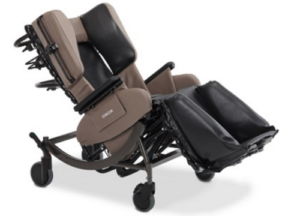
According to Yao Dinizulu, a partner at the Dinizulu Law Group, “When a nursing home takes in a patient, they are saying they are accepting the responsibility for the care of your loved one. In this case, they knew Yvette was a substantial fall risk that could not stay steady in a wheelchair. Despite all of these warning signs, they failed to place her in a wheelchair that fit her condition. The standard of care required that a Broda wheelchair in order to ensure that she did not fall, slip out, or unsettle the wheelchair that would allow her to hurt herself.”


Broda wheelchair

On August 14, 2017, Yvette was placed in a wheelchair that was not non-skid resistant that could allow a non-stable patient like Yvette to fall. As a result, on August 14, she tragically fell resulting in an admission to Christ Hospital and was diagnosed with acute-subacute flaccid paralysis with spinal cord changes and increased intensity for cord compression. While still recovering from her first fall at Symphony Beverly, a CNA attempted to move Yvette alone from her bed despite company policy that mandated two staff members must assist in moving and repositioning her. This resulted in Yvette falling again from her bed, worsening her previous fall. After these falls, her conditions progressively worsened until she passed away six months later.


Some States Begin to Allow Nursing Home Visitation

CHICAGO, IL – For millions of American families, the COVID-19 pandemic has restricted families from visiting their loved ones in nursing homes and assisted living centers. Now, as many states begin to roll back strict policies initially put in place when the pandemic began, some families finally have the opportunity to see their loved ones in person.

With new guidance from the Centers for Medicare and Medicaid Services (CMS) and the Centers for Disease Control and Prevention (CDC), nursing homes are allowed to use more creative measures to allow visits from family members.

What States Allow Nursing Home Visitation?

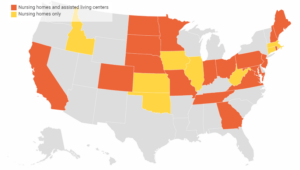
So far, 26 states are starting to allow nursing home visitation, while 18 others are planning similar visitation guidelines for assisted living facilities.

Nursing homes are allowing visitors; however, visitors will have to follow specific guidelines. These guidelines include:

  • Families must schedule an appointment to visit residents in advance
  • Visitors must undergo a temperature check and answer a COVID-19 screening questionnaire
  • Only 1 or 2 visitors can visit at a time
  • Visits must take place outside on a patio or garden area
  • No physical contact such as hugs are allowed
  • All visits will be supervised by a staff member
  • Visitors must practice social distancing by remaining 6 feet away from residents and staff

If a resident or staff member develops COVID-19, then the facility will ban all nursing home visitations. State officials may also implement a no-visitation policy if state officials note a significant rise in COVID-19 cases.

Understanding the Risks of Allowing Nursing Home Visitation

After nearly four months in isolation, many families feel relief knowing they can once again visit their loved ones. Between being isolated and COVID-19, the pandemic has taken a serious toll on the physical and mental health of residents nationwide. Residents have very limited interaction with other residents and staff and are confined to being in their rooms most of the time.

It’s important to understand that while this is step in the right direction, there’s also many risks to visiting your loved one in a nursing facility. Nursing home residents are the most vulnerable to contract COVID-19. Nearly 45 percent of COVID-19 deaths have occurred in long-term facilities.

Many families have expressed their concern over their loved one being neglected or abused during the lockdown. Without their involvement and oversight, families are worried their loved one has not received adequate care.

Learn More about Nursing Home Residents Rights

The COVID-19 pandemic has changed the way everything operates, especially nursing homes; however, nursing home residents still have rights. They have the right to quality care that ensures a safe and healthy life.

If you have concerns regarding the quality of care your loved one is receiving in a nursing home, please contact the experienced attorneys at the Dinizulu Law Group, Ltd. Our legal team will help you understand the rights of nursing home residents and ensure that your loved one gets the care he or she deserves. Even during a pandemic, we want you to know your loved one’s legal rights and know that you are not alone.

If you have any questions, please call our office at (312) 384-1920 for a free consultation or visit our website for more information.

Hyundai, Kia Agree to $758 Million Engine Fire Class Action Settlement

CHICAGO, IL – Hyundai and Kia have reached a $758 million settlement with car owners who claim that their vehicles suffer from premature engine failure which has caused cars to burst into flames. The class action lawsuits allege that the car companies were aware of the defect but did not disclose this information to customers. The settlement includes nearly 4.1 million car owners who bought a number affected vehicles.

According to the motion for approval of the class action settlement, the vehicles that are part of this Class include: “all 2011-2018 and certain 2019 model year Hyundai Sonata vehicles, all 2013-2018 and certain 2019 Hyundai Santa Fe Sport vehicles, all 2014-2015, 2018, and certain 2019 Hyundai Tucson vehicles, all 2011-2018 and certain 2019 Kia Optima vehicles, all 2011-2018 and certain 2019 Kia Sorento vehicles, and all 2011-2018 and 2019 Kia Sportage vehicles originally equipped with or replaced with a genuine Theta II 2.0 liter or 2.4 liter gasoline direct injection engine within OEM specifications.”

Due to defects highlight in the settlement agreement, Hyundai and Kia cars reportedly caught fire, resulting in personal injury claims such as property damage and/or physical injury. In extreme circumstances, the defects resulted in houses and/or garages being burned down.

Holding auto manufacturers liable for defective vehicles is never a simple task.  At the law office of the Dinizulu Law Group, Ltd., we take on tough cases against large corporations, and we know how to fight for your right as a consumer. Call (312) 384-1920 or contact us on our website for a free consultation with a Chicago personal injury attorney.

The Severity of Medication Errors

CHICAGO, IL – Medication errors are one of the most prevalent problems in the healthcare industry. Experts estimate that more than 7 million Americans experience a medication error each year. In the study, it stated mistakes have cost more than $21 billion – which are all preventable. Some individuals are able to handle the unintentional consequences of improper medication administration, but for seniors and young children, this can be life threatening.

Medication errors are particularly found in nursing homes due to under-staffing. Many say that errors are common and not life-threatening; however, there are errors that are likely to be under-reported which the medical coding system makes easy to cover up error-related deaths. The Centers for Disease Control and Prevention (CDC) argues medication errors are the third most common cause of death among nursing home patients.

So what does this say about nursing homes? Extensive investigations have taken place and research has shown as many as 95 percent of nursing homes in the United States are understaffed, causing neglect to most patients. Nursing home staff is expected to work longer hours and care for double, or even triple, the amount of residents they are normally expected to care for.

Types of Errors

The Nursing Home Law Center requires skilled nursing facilities to keep errors within a 5 percent margin. Although this margin is broadly defined, it includes errors such as not mixing medication as directed, giving medications at improper times, or not dosing the last small portion of medication.

Errors within this 5 percent margin do not impact licensing because these types of administration errors are likely to be made at home when self-administering, as well. More serious errors can lead to tremor, coma, or even death – resulting in legal action against nursing facilities.

Prevention Process

Nursing homes must begin to increase staffing levels exponentially and invest in better prevention practices to help prevent nursing home abuse. Nursing facilities are chronically understaffed due to the notorious low-paid and poor management resulting in high turnover rates. High turnover rates cause staff to be unfamiliar with patients needs and care regiments, and are more likely to make mistakes.

Nursing homes need to implement a medication reconciliation program that evaluates a complete list of medications used by each patient. These programs are critical as many patients will not be able to independently which is used to verify their course of treatment.

Finally, nursing homes need to minimize high-risk behaviors, such as disposing of discontinued medications or medications from discharged patients, improperly transporting medications, or administering medications without a full review of the label directions.

As a society, we must come together to protect nursing home residents who are some of the most vulnerable members of our society. They deserve to be treated fairly and just with careful and appropriate treatment. This is critical on management as they will need to be client-focused and to implement changes immediately by taking responsibilities more serious.

The Alarming Reality

For one family, their loss of a loved one was tragic and very much preventable. A recently widowed 71-year-old female was hospitalized for uncontrolled hypertension and acute kidney injury. Her past medical history was significant for coronary heart disease with hypertension, persevered ejection fraction, and type 2 diabetes. The patient had a history of being a cigarette smoker and was under significant stress due to the death of her husband.

During her stay of hospitalization, she clinically improved after receiving temporary hemodialysis and her anti-hypertensive medications were adjusted. At the time of discharge, her prescription medications included amlodipine (Norvasc) 10mg twice daily with two refills allowed, metoprolol 50mg twice daily, doxazosin 2mg daily, and torsemide 10mg daily.

Over the course of 3 months, she experienced worsening fatigue, personality changes, became lethargic, and slower movements – all of which was noted in medical records. Her blood pressure was no longer controlled, and she was re-hospitalized for chest pain and underwent angioplasty. When admitted to the hospital, she saw multiple specialists and ancillary staff. As an outpatient, she was seen by her family physician twice. After several weeks had passed, she was eventually diagnosed with anxiety and depression, and prescribed citalopram and alprazolam.

The patient then entered the emergency room for a third time after a fall. She demonstrated several side effects of the multiple medications she was prescribed to take. Lab work was conducted and was noted for elevated creatinine and a CT of the head and brain revealed no acute abnormalities. Admission medication reconciliation (MED REC) revealed she was taking metoprolol, doxazosin, alprazolam, citalopram, and thiothixene (Navane) 10 mg twice daily.

Upon review of her pill bottles, it was found that her outpatient pharmacy accidentally dispensed Navane, an anti-psychotic, instead of Norvasc, and she took this medication religiously for 3 months. A diagnosis of thiothixene-related drug-induced Parkinsonism was made.

Errors were made at a multitude of care levels, including prescribing, initial pharmacy dispensation hospitalization, and subsequent outpatient follow-up. Adverse drug events account for more than 3.5 million physician office visits and nearly 1 million emergency department visits per year that affects patients, providers, and the economy.

Despite the countless opportunities for intervention, multiple health care providers overlooked her symptoms. Our population is continually growing with a longer life-expectancy, the frequent occurrence of medication errors and polypharamacy will likely increase. Efforts must be made to improve overall physician communication and transition of care to decrease preventable errors.

What to do if Your Loved One has been Neglected or Abused in a Nursing Home

It’s important to reach out to an experienced nursing home abuse attorney immediately to begin reviewing the facts of your case. In the case discussed, the woman is entitled to legal action against the hospital, providers, and specific staff members who neglected her, among others. Due to the statue of limitations, an attorney must begin to work on your case immediately.

Do not wait to hear what the facility is going to do going forward to address this issue – contact an attorney right away. The attorney’s at Dinizulu Law Group specialize in nursing home abuse and neglect and use their experience with a dynamic and honest approach so appropriate parties are held accountable for the abuse your loved one has endured. Please call our office to schedule a free consultation. For additional information, please visit our website.

Contact Information:

(312) 384-1920

221 N. LaSalle St., Suite 1100
Chicago, IL 60601

Translate »