Tag Archive for: Truck Accident Lawyer

Posts

The Dangers of Truck Accidents in Illinois

CHICAGO, IL (May 23, 2019)– As more licensed drivers and motor vehicles enter the roadway, it’s no surprise the number of traffic fatalities and injuries will steadily increase over time. The Illinois Department of Transportation reported that tractor-trailers contribute to roughly 11,000 accidents, including 106 accidents being fatalities (2016). Large trucks contribute to a staggering 13 percent of car accidents that occur within Illinois.

Commercial trucks include tractor-trailers hauling freight, construction vehicles, delivery trucks, emergency service vehicles and so forth. As the demand and use of trucks increases, it is important to note that smaller passenger vehicles are simply outweighed by heavy-weighted trucks. Nearly 80 percent of crashes involving trucks take place during the day in clear weather.

Trucks pose an inherent danger to other drivers on the road; in fact, there are specific laws and regulations in place at the federal and state level to ensure truck drivers are properly trained and meet certain standards that qualify them to drive a tractor trailer. Some basic standards all drivers must meet include being tested for drug and alcohol use, how often drivers are driving per day, passing a DOT physical that tests your eyes, ears, overall well-being. Other basic standards include obtaining a valid Commercial Driver License (CDL), all drivers must pass an endorsement test depending on the type of CMV that will be driven, and the truck must pass an air brakes test (Federal Motor Carrier Safety Administration, 2019).

Due to the pressures to meet company deadlines, trucking companies and drivers violate the safety rules and regulations put in place to protect us all from harm. A study conducted by the FMCSA found that over 66 percent of crashes involving trucks involved regulatory, brake, or marking violations. A trucking company could also be held accountable for “negligently hiring” an unfit driver who was not properly trained or a had bad driving history and caused a crash.

In the event that a loved one is killed in a trucking accident, family members may pursue a wrongful death claim. The Wrongful Death Act (740 ILCS 180/0.01) states whenever the death of a person shall be caused as a wrongful act, neglect or default of others, a person can pursue the negligent party at fault to recover any loss or damages due to their loved one’s death. Personal injury lawsuits following a truck collision intend to compensate the victim or their loved ones for harm resulting from the negligent acts of the trucking company providing damage of death, disfigurement, paralysis, burns, loss wages, medical costs and pain and suffering.

The statute of limitations limit how long you have to file a lawsuit. As such, it is important that you inquire with an experienced attorney immediately to preserve your legal rights. Our, experienced truck accident attorneys at Dinizulu Law Group, Ltd. will identify the help you need. With more than 50 years of combined experience, our legal team has protected and brought justice to victims and their families throughout Chicago and Illinois. Due to limitations and regulations, trucking accidents differ from car accidents and our attorneys will need to begin working on the case right away. Reach out to us online or by calling 312-384-1920 to further discuss your legal options.

Truck Freight Tonnage Highest in 2018 – What It Means for Highway Safety & Truck Accidents

In 2018, the amount of cargo carried by the for-hire trucking industry rose 6.6 percent from 2017. This gain is the largest year-by-gain in freight tonnage since 1998.

As the trucking industry continues to transport larger loads of cargo, it is important to be mindful of the safety standards that come into play. Because a heavier and larger vehicle will take longer to stop, it is important that truck drivers and the trucking industry are properly following these rules put in place by the Federal Motor Carrier Safety Administration (FMCSA). These rules are:

  • Cargo loads must be properly secured following the respective industry standards.
  • A cargo load must not exceed the weight requirements for the particular truck the cargo is being loaded onto.
  • The truck driver, as a part of his shift, is required to inspect the cargo load, and make sure it’s securely loaded prior to driving that truck. Remember, truck drivers are required to undergo cargo safety training as part of their truck driver training in order to obtain a CDL license.

That being said, many trucking companies choose to bypass regulations for personal gain. These companies may take on more deliveries than they can safely complete. Or they may overload a truck beyond its maximum weight capacity.

When the trucking industry engages in such reckless practices, they are endangering the lives of their employees as well as everyone who shares the roads with trucks. When these companies make deliberate choices that compromise the safety of their truck drivers and others on the roadways, these companies must be held accountable before the law.

Imagine not being able to work or send your child to college due to an accident injury that’s caused by someone else’s negligence. No one who has suffered harm through no fault of their own should have to go through this. Our Chicago truck accident attorneys are here for you. Contact us at 1 (312) 384-1920, or 1 (800) 693-1LAW, or by email for more information. With over 50 years of combined experience, we will fight for your full and fair compensation.

FMCSA Exempts Truckers From California Meal & Rest Break Rule


In 2011, California passed a law requiring truck companies to provide their truck driving employees a “duty-free” 30-minute meal break for drivers who worked more than five hours a day, as well as a second “duty-free” 30-minute meal break for drivers who worked more than 10 hours a day.

The Federal Motor Carrier Safety Administration (FMCSA) just recently on Dec. 21, 2018 announced that California’s meal-and-rest break rules are preempted by federal hours-of-service regulations. The push for this ruling came from the American Trucking Association (ATA), a lobbyist group that represents the interest of trucking companies.

By attacking this regulation, the ATA wants to prevent similar measures from being enacted across other states. Asking for a meal break for truck drivers in not an unreasonable request. As workers, most of us are guaranteed meal breaks due to federal, state, and local labor laws. It’s only fair that truck drivers also have this right.

Not only does this rule create a better working environment for truck drivers, but it ensures safer driving on our highways. Due to the long hours they work, most truck drivers are forced to eat while driving. As their focus shifts off driving, crashes become more likely. An FMCSA study found that distracted driving was the leading factor in crashes. The study found that nearly 80 percent of crashes involved some form of distracted driving in the 3 seconds before the crash.

Distracted truck drivers cause injuries to themselves as well as to those who share the roads with them. When the trucking industry pushes for these types of rulings, they are showing zero concerns for their employees, the truck drivers,  who may face life-threatening injuries as a result of these policies.

But you should know that you have options if you or your loved one was injured by a distracted truck driver. The Dinizulu Law Group, Ltd. has helped thousands of families arrive at a place of security and stability. The verdicts & settlements our Chicago truck accident attorneys have achieved on behalf of injured clients have helped many in their time of need.  An injury caused by the fault of others shouldn’t be a blueprint for how you and your family live out the rest of your lives. To get help, schedule a free initial consultation with one of our Chicago IL truck accident lawyers by calling 1 (312) 384-1920 or 1 (800) 693-1LAW or reach us by email. Contact us today for more information.

Is Driver Safety in Jeopardy? A Push Towards Increased Cargo Weight in Trucks


The federal government, through the Department of Transportation (DOT) and Federal Motor Carrier Safety Administration (FMCSA) requires that the trucks that operate on our roadways carry loads weighing no more than 80,000 lbs. While a few exceptions and higher weight limits apply to certain vehicles, most trucks must follow this 80,000-lb. cargo limit.

But over the course of the past few years, interest groups for the trucking industry have repeatedly lobbied Congress for increased weight limits. Their demands include raising the cargo limit to 91,000 or even 97,000 lbs.

If Congress were to pass legislation enacting such a measure, it would be a disaster for highway safety and our declining infrastructure. Each year, approximately 44,000 accidents occur due to sleep loss. According to the CDC, many of these accidents are truck accidents caused by sleep loss. When you increase the load carried by trucks, the more serious these accidents become and there are greater fatalities on our roadways. And this is without taking into account the state of our infrastructure.

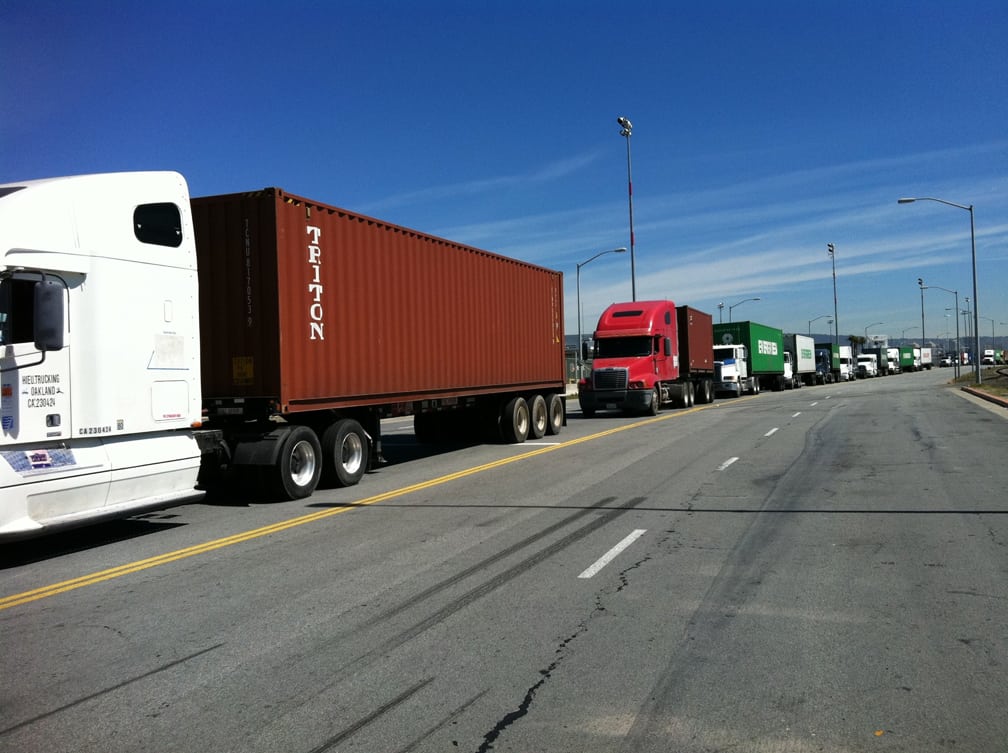
truck cargo weight accident

A 2017 report by the American Society of Civil Engineers grades our infrastructure at D+. Engineers estimate that a fully loaded truck—a five-axle rig weighing 80,000 pounds, the interstate maximum—causes more damage to a highway than 5,000 cars.

Some road planners say that this damage is even higher, that it would take close to 10,000 cars to equal the damage caused by one heavy truck. When the trucks are overloaded, as many of them are, the damage is exponentially worse. Increasing a truck’s weight to 90,000 pounds creates a 42% increase in road wear.

And this road wear is already happening. Enforcement for the current 80,000 lb. cargo limit is already lacking. There are far fewer cargo weighing stations than what’s needed to enforce trucks to comply with the existing weight limit. Furthermore, many weighing stations are operational only part-time, whereas trucks are on the roads all hours of the day.

As a result, often times trucking companies try to bypass regulations and transport overloaded cargo. When this happens, it is our community members that suffer. As drivers, passengers, bikers, or pedestrians, we share the road with trucks every day. When overloaded trucks cause accidents and injury to us or our loved ones, know that you’re not alone. The Dinizulu Law Group, Ltd. will fight for you.

With over 50 years of combined experience, our truck accident attorneys in Chicago are committed to getting you results. Whether it’s a large chain trucking company or a small independent carrier that caused you harm, we will get you the justice and compensation you deserve. Check out our recent verdicts and settlements, or call us at 1 (312) 384-1920 or 1 (800) 693-1LAW, or reach us by email.

Intoxicated Motorcyclist Hospitalized After Slamming into Semi Truck on Rte. 59

Accidents are happening all around us. During the early morning hours and even late at night, drivers are getting involved in preventable accidents that result in them suffering from life-threatening injuries that have the potential to affect them for weeks, months, and even years. But, with drivers engaging in behavior that is both distracting and dangerous, we can only expect to see the number of roadway accidents continue to rise, that is unless drivers begin implementing safety measures that will help keep them safe and avoid an accident. Read more

25 Congress Members Endorse Tearing Apart ELD Road Safety Rule


The ELD mandate that went effective Dec. 18, 2017 requires truckers and commercial carriers to input their worked hours on ELDs, or electronic logging devices. An exception to this new ELD rule allows truck drivers to track their hours on AOBRDs, or automatic on-board recording devices, until Dec. 16, 2019 if they are purchased before Dec. 18, 2017. A few other exceptions also apply to select truckers.

What can be praised about this rule is that it helps prevent tampering with work logs and helps ensure trucking companies are not forcing their employees to work longer than the legal limit. This law helps keep both truck drivers safe and protects other car drivers, cyclists, and pedestrians who must share the road with truckers.

But now the law is facing pushback. The Owner-Operator Independent Drivers Association (OOIDA), a lobbying arm of the trucking industry has filed a request with the Federal Motor Carrier Safety Administration (FMCSA) to encourage the agency to exempt small transportation trucking businesses from the ELD mandate for five years.

The key fact here is that most trucking companies would qualify as small transportation trucking business. If OOIDA’s request is granted, it would gut the long-settled electronic logging device rule by allowing nearly all trucking companies to delay compliance for another five years.

What’s even more worrisome is that 25 Congress members have endorsed OOIDA’s request, calling it “responsibly constructed” in a letter to FMCSA’s Deputy Administrator.

Common sense safety regulations should never take a backseat to the trucking industry’s financial interests. When people’s lives are concerned, safety should always be the first priority. When there are no repercussions against the trucking industry for creating an environment of overworked, fatigued drivers, it is our community members that pay the ultimate price. As truck accident injury attorneys, we get to see firsthand the devastating results when a tired, overworked driver is behind the wheel of a truck.

If you were hurt in an accident involving a fatigued truck driver, know that it’s not your fault. The Dinizulu Law Group, Ltd. offers help for the injured and holds the companies responsible for negligent behavior. Call us at 1-312-384-1920 or 1-800-693-1LAW or reach us by email to schedule a free initial consultation with an experienced Chicago truck accident lawyer.

Commercial Truck Accidents are Among the Deadliest Types of Automobile Accidents

A tragic truck accident occurred just a few weeks back leaving three people dead and one critically injured. The accident involved a semi tractor-trailer and a 2012 Chevrolet passenger car. The occupants who didn’t survive the accident were 19-year-old Julius J. Green, Precious M. Horace, 19, and Monteene D. Taylor, 21. The last passenger, who managed to survive the collision, was said to be in critical condition at Advocate Christ Medical Center. According to the Chicago Tribune, the occupants of the Chevrolet were not wearing their seatbelts and one person was partially ejected from the vehicle.

Read more

18-Year-Olds Now Allowed to Drive 18-Wheelers

Last year, the Federal Motor Carrier Safety Administration, which monitors safety regulations for the trucking industry introduced a three-year pilot program to allow 18-21 year-old drivers haul large trucks and tractor trailers across state lines. Why is this considered a good idea?

According to the CDC, teen drivers are already disproportionately prone to fatalities when driving cars, and 18 to 21-year-olds are already allowed to drive trucks, but not across state lines. This law based on state line restrictions is an arbitrary way to control how long a teen truck driver can be on the road. For example, a drive from Chicago to Southern Illinois may well be over 300 miles, while a much shorter drive from Chicago to Gary, Indiana is about 30 miles. The latter of these two drives is not allowed for teen truck drivers because they would be crossing state lines. However, it is just as risky, if not more so, when teenagers are allowed to haul large vehicles for the longest of distances within their states. Therefore, it would be safer for everyone if teen truck drivers would be limited to driving a set number of miles rather than being restricted on crossing state borders.

The new pilot program limits truck drivers under 21 to drive 100 miles into neighboring states, but this policy still has its flaws. This pilot program begs the question for how long would these teen drivers be driving in total? If a teen truck driver is traveling 100 miles in the neighboring state, this is in addition to what distance driven from the home state to get to the neighboring state?

Furthermore, the pilot program is using a very selective sample as a generality for the average teen truck driver. The 18 to 21-year-olds selected for the pilot program are military veterans who drove trucks as part of their service. The problem with using this sample group is that most of these veterans would be 21 or closer to 21, because the military starts to admit recruits at 18 years of age.

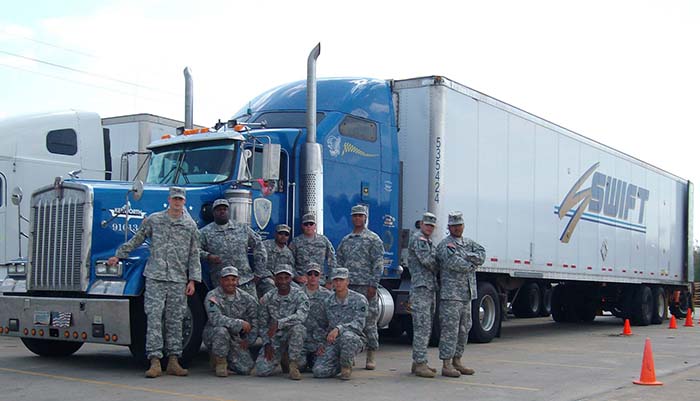
teenage truck driver

Another problem is that it’s very different working for the nation’s security as opposed to a for-profit trucking company that’s looking out for its bottom line. When rushed by their customers and bosses, young truck drivers are more likely to make deadly mistakes. Eric Penucci, a veteran truck driver interviewed by NPR said, “There’s a lot of stress in the trucking business. All customers are in a hurry to get their stuff. Traffic causes delays. Truck drivers need to be experienced, calm under pressure, and able to make good decisions.”

The trucking industry is facing a shortage of drivers, which may only get worse. Older and experienced drivers are retiring or leaving the industry altogether. Future truck drivers may be overworked, underage, and less-knowledgeable on roadway safety. These factors create fatalities on our highways that will only grow unless safer policies are put in place.

I am a truck accident lawyer in Chicago and often times I am dealing with the tragedy these accidents bring to families and communities. If you or your loved one was injured in an accident involving a truck you shouldn’t feel alone. Get the help and legal representation that will help you or your loved one move forward. Committed to your needs, our truck accident attorneys understand what you may be going through. The Dinizulu Law Group, Ltd. is available to answer all your questions and help you navigate through this difficult time. Our number is 312-384-1920 and 1-800-693-1LAW, or reach us by email at info@dinizululawgroup.com.

Cars Have Gotten Safer. Have Trucks?


The Insurance Institute for Highway Safety has reported that over the past few decades cars have gotten safer and fatalities have gone down. This trend can be linked to advances in safety features, such as airbags, electronic stability control, and anti-lock brakes, among other technical advances.

While this same technology is also available for trucks and trailers, the trucking industry hasn’t implemented such safety equipment. In United States, only about 3% of the Class 8 trucks—the heaviest ones which includes most tractor-trailers—are equipped with any collision-avoidance technology. In Europe, most such heavy trucks are sold with this technology.

These large trucks are disproportionately involved in fatal accidents. According to the New York Times, these heavy trucks are involved in 1 out of 8 of all fatal accidents and 25% of all fatalities in construction-zone accidents.

The trucking industry claims the cost of these safety technologies hurt their bottom line. The trucking industry, through its chief trade group, the American Trucking Association, continues to lobby Congress against safety laws, claiming expenditures on safety technology will raise rates for shippers and consumers.

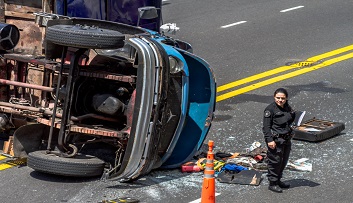
Policewoman directs traffic after a truck accident

But what the trucking industry has failed to notice is that stronger safety measures prevent higher insurance rates and also prevent millions of dollars from being spent in resolving injury claims. The Centers for Disease Control and Prevention also estimates $99 billion  to be the annual cost to the economy for truck and large vehicle crashes.

Many of these expenditures can be avoided if Congress were to pass a common-sense safety bill that addresses the concerns of car drivers, truck drivers, and creates a trucking industry that is safer and more profitable in the long run.

At the Dinizulu Law Group, Ltd., we are safety advocates. Those who injure others through their careless actions must be held accountable for their wrongdoing. That is why our team of truck accident lawyers in Chicago has your back. With over 50 years of combined experience, we know the strategies the defense will use to discredit your injuries. But we bring commitment and expertise to each case and help you get results. Set up a free initial consultation with one of our truck accident attorneys in Chicago. Call 1 (312) 384-1920 or 1 (800) 693-1LAW, or reach us by email.

What Are Punitive Damages?


When it comes to personal injury lawsuit in Illinois, there are two typical types of damages that can be given in a verdict: compensatory damages and punitive damages. The main purpose of compensatory damages is to try and make a victim whole. It’s to fix what can fixed or make up for what could not be fixed. An injured victim may be facing debilitating injuries and disability.  In addition to these significant physical and emotional injuries, they may have lost wages, medical bills, and much more. Such injuries and costs fall under compensatory damages.

However, punitive damages are different. Punitive damages are meant to stop a wrong doer from continuing to do wrong. If a person or a business shows through their own actions that they are devaluing the sanctity of life and limb, Illinois law has offered the community a remedy that can be used to stop this dangerous conduct before it harms us all.

The dangerous conduct may have only harmed one person superficially, but this damage is intended to stop the wrong conduct before it worsens. Punitive damages are meant to be a deterrent to the defendant and other similar wrongdoers for their reckless behavior. Unfortunately, many wrongdoers are encouraged to rectify their conduct only through a punitive monetary verdict. It’s these punitive damages that force them to take preventative measures before they harm more people in our community.

At the Dinizulu Law Group, Ltd., we understand that even one injury is too many. During trial, we often seek punitive damages so our communities are safer and our citizens are protected from the reckless behavior of others. With over 60 years of combined experience, our Chicago personal injury attorneys are known for their expertise and tough litigation. Contact us by email or call us at 312-384-1920 to schedule a consultation with one of our personal injury trial attorneys practicing law throughout Illinois.

Translate »