Archive for category: Car accident injury law

Truck Freight Tonnage Highest in 2018 – What It Means for Highway Safety & Truck Accidents

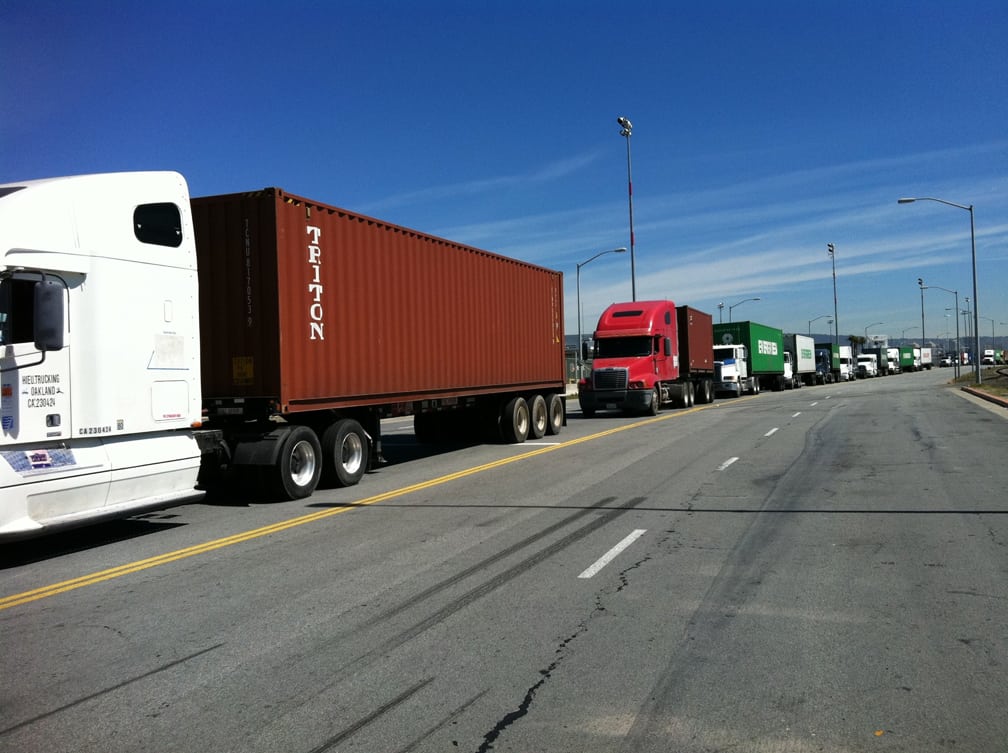
In 2018, the amount of cargo carried by the for-hire trucking industry rose 6.6 percent from 2017. This gain is the largest year-by-gain in freight tonnage since 1998.

As the trucking industry continues to transport larger loads of cargo, it is important to be mindful of the safety standards that come into play. Because a heavier and larger vehicle will take longer to stop, it is important that truck drivers and the trucking industry are properly following these rules put in place by the Federal Motor Carrier Safety Administration (FMCSA). These rules are:

  • Cargo loads must be properly secured following the respective industry standards.
  • A cargo load must not exceed the weight requirements for the particular truck the cargo is being loaded onto.
  • The truck driver, as a part of his shift, is required to inspect the cargo load, and make sure it’s securely loaded prior to driving that truck. Remember, truck drivers are required to undergo cargo safety training as part of their truck driver training in order to obtain a CDL license.

That being said, many trucking companies choose to bypass regulations for personal gain. These companies may take on more deliveries than they can safely complete. Or they may overload a truck beyond its maximum weight capacity.

When the trucking industry engages in such reckless practices, they are endangering the lives of their employees as well as everyone who shares the roads with trucks. When these companies make deliberate choices that compromise the safety of their truck drivers and others on the roadways, these companies must be held accountable before the law.

Imagine not being able to work or send your child to college due to an accident injury that’s caused by someone else’s negligence. No one who has suffered harm through no fault of their own should have to go through this. Our Chicago truck accident attorneys are here for you. Contact us at 1 (312) 384-1920, or 1 (800) 693-1LAW, or by email for more information. With over 50 years of combined experience, we will fight for your full and fair compensation.


Truck Accidents Often Turn Deadly Due to “Underriding”


There were close to 4,000 fatal truck accidents in 2016, according to the Insurance Institute for Highway Safety. This number has been on the rise since 2009, and is expected to continue rising unless safety rules and other preventive measure are put in place.

Most truck crash fatalities result in the death of a passenger car driver, a motorcyclist, a bicyclist or a pedestrian. Many times, these fatalities are due to a car or a smaller vehicle underriding the truck from the side. While rear guards are mandated on trailers, this law hasn’t been update since 1998.

It was in April 2014 that the National Transportation Safety Board (NTSB) issued a recommendation to the National Highway Traffic Safety Administration (NHTSA) that all new trailers have side protection systems. Nothing has changed since then until now.

Last December, Congress members introduced The Stop Underrides Act of 2017, a bipartisan bill requiring all large trucks, trailers, and semi-trailers to have side guard protectors. The bill would further update rear guard protection requirements to also apply to all large trucks, trailers, and semi-trailers. The bill was introduced by Sen. Kirsten Gillibrand (D-NY) and Sen. Marco Rubio (R-FL) and Sen. Bill Nelson (D-FL). Along with the Senate, an identical bill was also introduced in the House, by Rep. Steve Cohen (D-TN) and Rep. Mark DeSaulnier (D-CA). Since then the bill has been sitting in committees who have so far refused to take any further action on this safety issue.

The American Trucking Association (ATA), the lobbying arm of the trucking industry is expected to obstruct this bill as it would require the trucking industry to spend money on updating safety equipment. The ATA’s agenda is to have as few safety rules and regulations in place as possible to grow the trucking industry’s profits. They seem least concerned about fatalities they can help prevent. As a result, it’s our community members and their loved ones who must suffer from the consequences from tragic accidents again and again.

The ATA will look for reasons to block this bill. Their efforts include large donations to members of Congress who will support their agenda. Average families and our community members who lose the most from these tragedies often don’t have the funds to promote their own safety. Therefore, it is important that we raise our voices and remain engaged in these issues. Not only should we vote, but we should know our politicians’ position on safety rules. What does their voting record say about safety rules? Would this candidate help ensure my loved one can be safer? Awareness and engagement is what offers solutions and improves our communities.

Raise your voice if you or a loved one has been hurt in a truck accident. The Dinizulu Law Group, Ltd. is here to help injured victims and their families at their time of need. Our truck accident lawyers have helped thousands of families arrive at a place of financial security and stability after a devastating injury. We can be reached at 1 (312) 384-1920 or 1 (800) 693-1LAW, or by email.

Highway Construction Companies Must Keep Drivers Safe


Our client was a passenger of a vehicle being driven through a poorly lighted construction site. It was extremely dark, and the placement of the construction barrels appeared to create a lane of traffic. As a result, the driver of the vehicle struck the exposed end of a median wall. Starting only with the Smart Crash Traffic Report, our attorneys began our own investigation. Watch the video to learn what happened.

From one line in the accident crash report we learned that the Crash Reconstruction officer had determined that the configuration of the orange construction barrels, suggested that there were three lanes of travel instead of two, leading the driver into a concrete crash barrier for an underpass.

We filed a lawsuit and learned that this road used to have four lanes and was currently under construction lead by the general contractor K-Five construction whose subcontractors were Highway Safety, the subcontractor responsible for temporary safety control devices, and Midwest Fence, the subcontractor responsible for the selection and implementation of the crash cushions.

A crash cushion typically is those big yellow barrels with black tops that are placed on the highways when you are getting off a highway. Those crash cushions are created to soften the blows when drivers don’t see the concrete walls, especially when dark.

According to the design plans designed by Graef-USA, for the Illinois Department of Transportation– K-Five construction was to implement this construction site following the Federal and State Highway Construction Rules of the Road – which were being done to expressly address a history of crashes in to the concrete barrier wall at that overpass.

We learned that the Highway construction rules mandated, a flashing arrow board was supposed to be placed in front of this third lane — the driver went down, type III barricades  were to line the lane along with orange construction barrels for 100 yards and finally they were mandated to have  crash cushions for any new construction sites.   None were present on the day of the crash. The only traffic devices that remained on the roadway were a few random barrels, which were not properly placed.

Had K-Five construction chosen to follow the rules they were required by IDOT– by maintaining proper traffic control devices our client would be alive today to care for his family.  This case settled for a significant amount.

If you have questions about roadway construction accidents, call 1-312-384-1920 or 1-800-693-1LAW or reach us by email. With over 50 years of combined experience and millions recovered in verdicts and settlements, let our experienced car and truck accident attorneys in Chicago help you. Visit our firm’s media page, where you can view more videos and media content from the Dinizulu Law Group, Ltd.

Dinizulu Law Group, Ltd.
221 North LaSalle
Suite 1100
Chicago, IL 60601
1-800-693-1LAW
1-312-384-1920
info@dinizululawgroup.com

Is Driver Safety in Jeopardy? A Push Towards Increased Cargo Weight in Trucks


The federal government, through the Department of Transportation (DOT) and Federal Motor Carrier Safety Administration (FMCSA) requires that the trucks that operate on our roadways carry loads weighing no more than 80,000 lbs. While a few exceptions and higher weight limits apply to certain vehicles, most trucks must follow this 80,000-lb. cargo limit.

But over the course of the past few years, interest groups for the trucking industry have repeatedly lobbied Congress for increased weight limits. Their demands include raising the cargo limit to 91,000 or even 97,000 lbs.

If Congress were to pass legislation enacting such a measure, it would be a disaster for highway safety and our declining infrastructure. Each year, approximately 44,000 accidents occur due to sleep loss. According to the CDC, many of these accidents are truck accidents caused by sleep loss. When you increase the load carried by trucks, the more serious these accidents become and there are greater fatalities on our roadways. And this is without taking into account the state of our infrastructure.

truck cargo weight accident

A 2017 report by the American Society of Civil Engineers grades our infrastructure at D+. Engineers estimate that a fully loaded truck—a five-axle rig weighing 80,000 pounds, the interstate maximum—causes more damage to a highway than 5,000 cars.

Some road planners say that this damage is even higher, that it would take close to 10,000 cars to equal the damage caused by one heavy truck. When the trucks are overloaded, as many of them are, the damage is exponentially worse. Increasing a truck’s weight to 90,000 pounds creates a 42% increase in road wear.

And this road wear is already happening. Enforcement for the current 80,000 lb. cargo limit is already lacking. There are far fewer cargo weighing stations than what’s needed to enforce trucks to comply with the existing weight limit. Furthermore, many weighing stations are operational only part-time, whereas trucks are on the roads all hours of the day.

As a result, often times trucking companies try to bypass regulations and transport overloaded cargo. When this happens, it is our community members that suffer. As drivers, passengers, bikers, or pedestrians, we share the road with trucks every day. When overloaded trucks cause accidents and injury to us or our loved ones, know that you’re not alone. The Dinizulu Law Group, Ltd. will fight for you.

With over 50 years of combined experience, our truck accident attorneys in Chicago are committed to getting you results. Whether it’s a large chain trucking company or a small independent carrier that caused you harm, we will get you the justice and compensation you deserve. Check out our recent verdicts and settlements, or call us at 1 (312) 384-1920 or 1 (800) 693-1LAW, or reach us by email.

25 Congress Members Endorse Tearing Apart ELD Road Safety Rule


The ELD mandate that went effective Dec. 18, 2017 requires truckers and commercial carriers to input their worked hours on ELDs, or electronic logging devices. An exception to this new ELD rule allows truck drivers to track their hours on AOBRDs, or automatic on-board recording devices, until Dec. 16, 2019 if they are purchased before Dec. 18, 2017. A few other exceptions also apply to select truckers.

What can be praised about this rule is that it helps prevent tampering with work logs and helps ensure trucking companies are not forcing their employees to work longer than the legal limit. This law helps keep both truck drivers safe and protects other car drivers, cyclists, and pedestrians who must share the road with truckers.

But now the law is facing pushback. The Owner-Operator Independent Drivers Association (OOIDA), a lobbying arm of the trucking industry has filed a request with the Federal Motor Carrier Safety Administration (FMCSA) to encourage the agency to exempt small transportation trucking businesses from the ELD mandate for five years.

The key fact here is that most trucking companies would qualify as small transportation trucking business. If OOIDA’s request is granted, it would gut the long-settled electronic logging device rule by allowing nearly all trucking companies to delay compliance for another five years.

What’s even more worrisome is that 25 Congress members have endorsed OOIDA’s request, calling it “responsibly constructed” in a letter to FMCSA’s Deputy Administrator.

Common sense safety regulations should never take a backseat to the trucking industry’s financial interests. When people’s lives are concerned, safety should always be the first priority. When there are no repercussions against the trucking industry for creating an environment of overworked, fatigued drivers, it is our community members that pay the ultimate price. As truck accident injury attorneys, we get to see firsthand the devastating results when a tired, overworked driver is behind the wheel of a truck.

If you were hurt in an accident involving a fatigued truck driver, know that it’s not your fault. The Dinizulu Law Group, Ltd. offers help for the injured and holds the companies responsible for negligent behavior. Call us at 1-312-384-1920 or 1-800-693-1LAW or reach us by email to schedule a free initial consultation with an experienced Chicago truck accident lawyer.

Who is Responsible for a Truck Accident?


If you were hit by a truck on the road, you might simply think that it was the truck driver who lost control and hit you and your vehicle. But the cause of your accident may be more complex and there may be much to uncover. Watch the video to learn more.

When a truck crash happens, a knowledgeable truck accident attorney will examine the many factors involved that resulted in the injury to you. The right attorney will ask you and the other parties certain questions to make sure that no stone is left unturned.

The proper attorney may involve the truck driver: Remember, the truck driver may have made an individual driving decision that was dangerous. Your injury could have been caused by distracted driving or speeding by the truck driver.

The attorney may involve the trucking company. The company who owns the truck and employs or contracts a driver must have proper hiring and training protocols in place. An attorney may uncover gaps in the truck company’s hiring and/or training practices, or may find that a trucking company is pressuring its drivers to work beyond their regulated hours. The attorney is also able to uncover whether a company is properly inspecting and maintaining its trucks.

Suppose the truck driver and trucking company did everything they could to ensure safety of those on the roadways. The crash could still have been caused by faulty parts. Defects in manufacturing or maintenance of brakes or chassis pins can sometimes be detected during a driver’s pre-truck inspection, but that’s not always the case. In that case, your attorney may involve the entities responsible for manufacturing the truck or its parts, or those responsible for maintaining the truck in your suit.

Furthermore, cargo companies are often responsible for securing a truck load. If an accident happens due to shifting cargo, your attorney can investigate if the cargo was secured based on industry practices.

To get to the root cause of your accident injury, your attorney must fully understand all the tools that are at his or her disposal during a case investigation. A knowledgeable and experienced attorney will be able to identify all the causes leading to your injuries.  Your full recovery is easier to accomplish when you are using attorneys who fully understand all the steps of litigation and arbitration.

At the Dinizulu Law Group, Ltd. our trucking accident trial attorneys have over 50 years of combined experience that we put to test every day. Call us at 1 (312) 384-1920 or 1 (800) 693-1LAW with your questions and concerns, or reach us by email. Our verdicts and settlements have helped many clients facing an uncertain time in their lives arrive at a place of relief and stability.

The Do’s and Don’ts Everyone Should Be Aware of After Engaging in an Accident on the Highway

Being involved in an accident on the highway can be a pretty scary experience.  With cars flying past at highspeeds you may be unsure about what you should and shouldn’t do in the aftermath of an accident. The Chicago truck accident lawyers at Dinizulu Law Group, Ltd. care for your safety. That’s why we are offering advice on do’s and don’ts to follow in the case of a highway accident.

Read more

What is the Number One Cause of Truck Accidents?


Driver fatigue is an extremely common problem in the trucking industry. A study done by the Federal Motor Carrier Safety Administration found fatigued drivers are the #1 cause of truck collisions.

When these tired and overworked truck drivers cause accidents, as you may know, these are not minor accidents. Car drivers and passengers who are in a collision with a truck are very likely to suffer serious life-long injuries or even death.

There are rules in place to prevent these deadly accidents. The Federal Motor Carrier Safety Administration regulates the hours truck drivers can spend on the road per day and per week. Watch the video to learn more.

The law is that truck drivers can work:

  • A maximum of 70 hrs. in 8 days if their employer operates every single day of the week.  If the employer is closed any day of the week, then truck drivers can work up to 60 hrs. in 7 days.
  • Within these 60 or 70 hrs in about a week, truck drivers must only work a maximum of 14 hrs. per day. Only 11 of these 14 hrs. can be behind the wheel. After a truck driver has driven the maximum of 11 hrs., they must rest for 10 hrs. straight before starting work again.
  • After working for 8 days or 7 days as per the limit of days that applies to them, truck drivers can only restart work after resting for 34 hrs.

These safety rules were created based on many studies that examined the needs of truck drivers so that they can be alert on the road. They are safety rules that every trucking company should live by to protect us all from danger and mayhem. But many companies force their drivers to skirt these safety rules. Truck companies oftentimes push their drivers to work past the set driving limits in an effort to take shortcuts. This undermines the safety of us all. It creates an environment of fatigued and stressed drivers who are high risks on the road. These exhausted drivers end up injuring not just themselves, but our community members who will suffer more severe and oftentimes irreversible injuries or death.

Truck driver fatigue continues to harm individuals and their families. If you are watching this video because you have your own questions or have a loved one injured due to a fatigued truck driver, you shouldn’t feel alone. Contact the Dinizulu Law Group, Ltd. at 1-312-384-1920 or 1-800-693-1LAW. We are here to answer all your questions and help you navigate through this difficult time.

Four Tips on How to Make Your Next Drive a Safer One

Looking for ways to be a better driver in the city of Chicago? Do you have a teen who just received their license and is in need of some additional tips they can implement as they now spend more of their time out on the roadways? If so, the Chicago truck accident lawyers at Dinizulu Law Group, Ltd have a few helpful ones you can begin implementing immediately.

Read more

18-Year-Olds Now Allowed to Drive 18-Wheelers

Last year, the Federal Motor Carrier Safety Administration, which monitors safety regulations for the trucking industry introduced a three-year pilot program to allow 18-21 year-old drivers haul large trucks and tractor trailers across state lines. Why is this considered a good idea?

According to the CDC, teen drivers are already disproportionately prone to fatalities when driving cars, and 18 to 21-year-olds are already allowed to drive trucks, but not across state lines. This law based on state line restrictions is an arbitrary way to control how long a teen truck driver can be on the road. For example, a drive from Chicago to Southern Illinois may well be over 300 miles, while a much shorter drive from Chicago to Gary, Indiana is about 30 miles. The latter of these two drives is not allowed for teen truck drivers because they would be crossing state lines. However, it is just as risky, if not more so, when teenagers are allowed to haul large vehicles for the longest of distances within their states. Therefore, it would be safer for everyone if teen truck drivers would be limited to driving a set number of miles rather than being restricted on crossing state borders.

The new pilot program limits truck drivers under 21 to drive 100 miles into neighboring states, but this policy still has its flaws. This pilot program begs the question for how long would these teen drivers be driving in total? If a teen truck driver is traveling 100 miles in the neighboring state, this is in addition to what distance driven from the home state to get to the neighboring state?

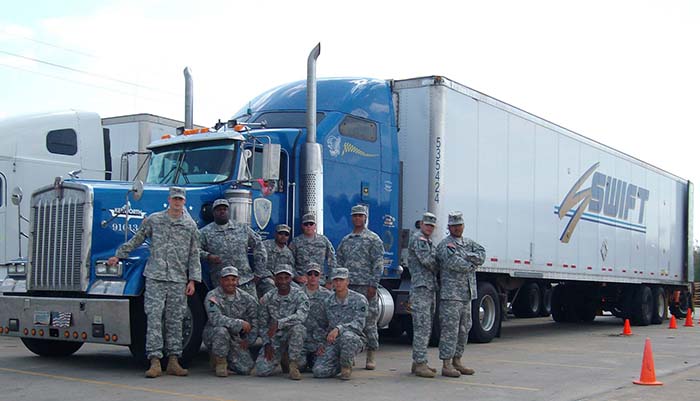
Furthermore, the pilot program is using a very selective sample as a generality for the average teen truck driver. The 18 to 21-year-olds selected for the pilot program are military veterans who drove trucks as part of their service. The problem with using this sample group is that most of these veterans would be 21 or closer to 21, because the military starts to admit recruits at 18 years of age.

teenage truck driver

Another problem is that it’s very different working for the nation’s security as opposed to a for-profit trucking company that’s looking out for its bottom line. When rushed by their customers and bosses, young truck drivers are more likely to make deadly mistakes. Eric Penucci, a veteran truck driver interviewed by NPR said, “There’s a lot of stress in the trucking business. All customers are in a hurry to get their stuff. Traffic causes delays. Truck drivers need to be experienced, calm under pressure, and able to make good decisions.”

The trucking industry is facing a shortage of drivers, which may only get worse. Older and experienced drivers are retiring or leaving the industry altogether. Future truck drivers may be overworked, underage, and less-knowledgeable on roadway safety. These factors create fatalities on our highways that will only grow unless safer policies are put in place.

I am a truck accident lawyer in Chicago and often times I am dealing with the tragedy these accidents bring to families and communities. If you or your loved one was injured in an accident involving a truck you shouldn’t feel alone. Get the help and legal representation that will help you or your loved one move forward. Committed to your needs, our truck accident attorneys understand what you may be going through. The Dinizulu Law Group, Ltd. is available to answer all your questions and help you navigate through this difficult time. Our number is 312-384-1920 and 1-800-693-1LAW, or reach us by email at info@dinizululawgroup.com.

Translate »