Archive for category: nursing home neglect

How Payroll Records Can Help Prevent Nursing Home Neglect

The Centers for Medicare & Medicaid Services (CMS) is now doing more to crack down on understaffing in nursing homes. By passing a payroll records submission requirement for nursing homes that went into effect in April of last year, CMS now has a better method to judge which facilities are truly understaffed. Prior to this rule, CMS simply asked nursing homes to check a box when asked about their staffing levels.

By requesting payroll records, CMS is forcing nursing homes to provide evidence-based documentation to show staffing levels. CMS has a rule that requires nursing homes to have a registered nurse on site for at least eight hours every day. When these payroll records were analyzed, there were serious gaps in skilled nursing facility staffing in comparison with what was reported in previous years. As a result of their findings, CMS hit almost 1,400 facilities with one-star ratings for staffing coverage. Ratings for nursing homes you may be considering can be found at Nursing Home Compare.

There is a direct link between understaffing and the quality of care residents receive at a nursing home. Nursing home neglect is often found in understaffed facilities. While this new directive instructs inspectors to more thoroughly evaluate staffing at facilities CMS flags, the quality of care at many facilities won’t change overnight, nor will there be a flurry of unannounced inspections. Instead, Medicare wants heightened focus on nursing homes from inspectors when they come in for their routine reviews, which are scheduled roughly once a year for most facilities.

If you or your loved one is suffering in a nursing home, today you don’t need to wait for CMS to act. If your mom or dad is at an understaffed nursing home that didn’t properly care for your loved one and caused them injury, know that there are options for you and your family. The Dinizulu Law Group, Ltd. can represent you and help you collect full and fair compensation from those who have harmed your loved one. Our verdicts and settlements have helped many get the needed medical treatment and arrive at a place of relief and stability. Our Chicago nursing home neglect attorneys are here to help. Contact us at 1(312) 384-1920 or 1 (800) 693-1LAW.


Sedating Residents Suffering From Dementia is Nursing Home Abuse

A study by the Human Right Watch finds that 179,000 nursing home residents are being given antipsychotic drugs, even though these residents don’t have schizophrenia, bipolar disorder, or other serious mental illness these drugs are designed to treat.

What’s troubling is that these drugs are being given to residents with dementia. These antipsychotic medications come with a black box warning from the FDA, specifically stating these drugs shouldn’t be given to dementia patients. This black box warning is because antipsychotic drugs have been shown to increase the risk of death in patients with dementia.

Yet this is exactly the type of residents nursing homes are targeting with these medications. Almost 300,000 nursing home residents get these drugs. Rather than taking proper measures, such as investing in training programs, developing care plans that address behavior linked with dementia, or hiring staff qualified to work with dementia patients, many nursing homes are instead sedating patients to make them docile. In understaffed nursing homes, this practice is even more common.

Such nursing homes are essentially willing to play dice with their residents’ lives rather than providing quality care and hiring adequate staff. Undermining the entire service of their profession—which is to care for their residents—such nursing home are succumbing to awful practices to essentially control their residents.

Elderly-woman_ nursing home abuse

If you or your loved one in a nursing home is injured due to a medication you believe was unnecessary or wrongfully given, know that there are options for you. Our Chicago nursing home abuse attorneys have helped over thousands of wronged victims get the justice they deserve. With over 50 years of combined experience, our verdicts and settlements have reached have helped many get peace of mind and arrive at a place of security. Call the Dinizulu Law Group, Ltd. at 1 (312) 384-1920 or 1 (800) 693-1LAW to schedule a free, initial consultation.

Will Medicare’s New Payment System Prevent Nursing Home Neglect?


In 2016, nearly 11 percent of nursing home residents were sent to hospitals for conditions that might have been averted with better medical and staff oversight. This fiscal year, which runs October 2018 to September 2019, Medicare will implement a new system of accountability for nursing homes. To avoid hospital re-admissions of nursing home patients, medical will switch to a system of bonuses and penalties.

Through this fiscal year, the best-performing homes will receive 1.6 percent more for each Medicare patient than they would have otherwise. The worst-performing homes will lose nearly 2 percent of each payment. This move is intended to target nursing homes’ bottom lines.

Shifting financial incentives from the number of patients they house to the quality of care, Medicare is able to expand on its efforts to improve nursing homes.

Most nursing homes are for-profit and operate primarily on a basis of financial incentives. Therefore, it’s not uncommon to see nursing homes understaff their facilities and not provide care givers with the necessary tools and training to do their jobs.

Nursing home resident

The Dinizulu Law Group, Ltd. praises Medicare’s efforts to hold under-performing nursing homes accountable. We hope this strategy is successful in improving care for our elderly loved ones.

However, at the same time, we also need to address what will happen once under-performing facilities receive further budget cuts. After further Medicare cuts, will such facilities be even less motivated to hire or train adequate staff? And thus, will residents’ care in such facilities worsen?

While we won’t know these answers until we see the full effects of this Medicare policy, know that you can do something today if you or your loved one is suffering harm in a nursing home. There are legal options available right now that will hold the wrongful facility accountable and get the needed care for mom or dad. Schedule your free, initial consultation with the Dinizulu Law Group, Ltd. today. Our Chicago nursing home neglect attorneys have over 50 years of combined experience that we put to the test everyday fighting for injured victims. Contact us at 1 (312) 384-1920 or 1 (800) 693-1LAW, or by email.

Sepsis Caused By Nursing Home Neglect – A New Treatment Offers Hope


A new vitamin treatment made of vitamin C, thiamine, and steroids is offering new hope for patients suffering from sepsis. Sepsis, is a blood infection that can turn lethal in many cases and very quickly. CDC reports that one-third patient deaths in hospital is caused by sepsis.

Clinical trials have already started to test the treatment. One particular clinical trial called VICTAS (Vitamin C, Thiamine and Steroids in Sepsis) is leading the way. The hope is that the treatment will improve patient outcomes by at least 10%. 10% may not sound like much, but it has the potential to save tens of thousands of lives in the U.S. every year, reports NPR.

One of the main causes of sepsis is an untreated wound or infection. In American nursing homes, bed sores that should never occur are happening and then left untreated. This factor raises the risk of sepsis and death from the disease.

While there’s hope for this new treatment, preventing sepsis in many cases is not difficult. For example, in nursing homes, when employers properly train their staff and enforce all the needed protocols for wound care and prevention, sepsis is less likely to occur in these facilities.

Elderly-woman nursing home neglect

As a nursing home abuse trial attorney, I get to see firsthand the devastating results when nursing homes have gaps in the care they provide to their residents. Your mom and dad shouldn’t suffer due to a nursing home’s negligence.

Contact the Dinizulu Law Group, Ltd. to get help. Our nursing home neglect attorneys have over 50 years of combined experience. Our verdicts & settlements have helped many arrive at a place of security and peace of mind. We can be reached at 1 (312) 384-1920, 1 (800) 693-1LAW, or by email. Schedule your free initial consultation now.

How to Find the Right Nursing Home for Your Loved One?


There are many factors to keep in mind when choosing the right nursing home for your loved one. Should you find one that’s located near your parent’s residence or near yours? Is my mom still independent or does she need nursing home care? As questions like these and many other come to mind a good place to start is by evaluating the quality of care in nursing homes you may be considering.

Many nursing homes participate in Medicaid and Medicare programs that are responsible for funding these nursing home care facilities in Chicago and nationwide.

Medicare has a 5-star rating system that evaluates nursing homes based on the quality of care they provide. Factors like inspection results and staffing levels and many others come into play to rank nursing homes accordingly. Anyone who is considering a nursing home for themselves or for a loved one should first look at how the nursing home in their chosen area ranks.

Problems such as understaffing can be revealed through these Medicare rankings. Know that understaffing is one of the major causes of nursing home neglect. Kaiser Health News recently reported 1400 nursing homes received lower rating due to shortages in staffing.

Gaps in understaffing have caused malnutrition or dehydration for elderly residents to the point where families have lost loved ones. Understaffing is also linked several other signs of neglect. Residents who have limited mobility are at a higher risk to develop bedsores and other infections that are likely to go untreated and turn into life-threatening conditions in understaffed facilities. Elderly residents are already at a higher risk to recover from common illnesses. Add a nursing home that doesn’t provide adequate care and serious harm can happen to a loved one.

While many caregivers mean well, they cannot realistically provide all the needed care for all residents if it’s their employer that’s cutting corners. Nursing homes make a deliberate choice to save expenses by not hiring the needed staff.  When the staff-to-resident ratio is unbalanced, nursing home neglect in a Chicago facility or elsewhere becomes inevitable.

While we encourage everyone to stay informed about the nursing home facilities in Chicago or elsewhere where you and your loved one may get the best care, nursing home neglect can happen in any facility. If you or your loved one is hurt in a nursing home due to lacking care, know that there are options for you. Contact the Chicago nursing home neglect attorneys of Dinizulu Law Group, Ltd. With over 50 years of combined experience, we have helped thousands of injured victims get justice and full and fair compensation at the time when they needed it the most. Reach our nursing home neglect lawyers in Chicago at 1-312-384-1920 or 1-800-693-1LAW, or by email.

Verbal Threats Are Still Nursing Home Abuse

When we think of nursing home abuse, we often think of elderly residents being hurt physically when care is lacking in a nursing home facility. Issues that often come to mind are:

  • Bed sores
  • Dehydration or malnutrition
  • Soiled clothes or linens
  • Bruises
  • Untreated infections

These physical forms of abuse can be investigated by the skilled and knowledgeable nursing home attorneys at the Dinizulu Law Group, Ltd. But it’s important to know that verbal and mental abuse is also common in nursing home facilities. In such cases, the law still guarantees you or your loved one protections. Verbal or mental abuses include threatening a resident by:

  • Yelling
  • Intimidation
  • Humiliation
  • Blame

Such examples include threatening to withhold food, intimidating the elder from socializing with visiting family members, or demeaning the elderly person for certain behavior. This type of emotional abuse can be silent as well, and this usually happens when a caregiver ignores the elder’s requests and needs.

While the physical signs of such abuse may not be immediately visible, the emotional and psychological impact of this abuse is damaging, and does ultimately have physical effects. Therefore, it is important to get help right away for your loved one. Know that Illinois law entitles you or your loved one to full and fair compensation if you or your family member has been affected by verbal or mental abuse.

At the Dinizulu Law Group, Ltd. our nursing home abuse attorneys in Chicago are dedicated, knowledgeable, and have over 50 years of combined experience. We hold those liable who have brought harm to you or your loved ones. Our verdicts & settlements have helped many families get answers and arrive at a place of security. Call our Chicago nursing home abuse lawyers at 1 (312) 384-1920 or 1 (800) 693-1LAW or reach us by email to get more info.

When Forced Feeding is Nursing Home Abuse


As our loved ones age, their appetites may diminish or they may have health conditions that cause difficulty in eating and swallowing food. When this happens it’s important that our loved ones are not malnourished or dehydrated due to a reduced nutrient intake.

Long-term residential facilities like nursing homes are required to provide around-the-clock care for their residents. This includes not just feeding residents, but also monitoring their daily calorie and nutrient intake.

Residents with health conditions like dysphagia have trouble swallowing food and are more likely to aspirate, meaning getting food or liquid breathed into the airway, which may lead to pneumonia. But even in these instances, a feeding tube should only be used as a last resort to prevent malnutrition or dehydration. Initial steps can be taken to help a resident get adequate nutrition. Such steps include:

  1. Providing a resident with physical therapy to help with swallowing or using utensils
  2. Providing utensils that are easier to hold and use
  3. Sitting with the resident and manually feeding the resident

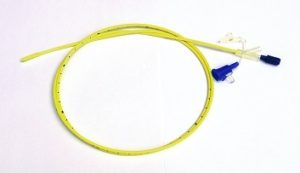
feeding tube nursing home neglect

If any of the preliminary steps work and help a resident get the daily calorie intake they need, there is no reason to put a resident on a feeding tube. But many nursing homes, for their own convenience and in order to save on staff expenses, will put residents on feeding tubes even when it’s not absolutely necessary. Remember, a nursing home cannot order the use of a feeding tube without the consent of the resident or the resident’s authorized representative unless other options have been exhausted.

Feeding tubes can be live savers, but they can cause complications which are easily avoidable for residents who can eat well through other means. If your loved one is put on a feeding tube you believe is unnecessary, this may be a form of nursing home abuse. Our Chicago nursing home abuse attorneys are here to help if you or your loved one is in harm’s way. Contact the Dinizulu Law Group, Ltd. at 1 (312) 384-1920 or 1 (800) 693-1LAW or by email.

Quality Care Harder to Find for Residents with Mental Health Issues


Our elderly loved ones often need care in a nursing home if they face a mental condition like Alzheimer’s disease or other forms of dementia. This study performed by the University of Rochester School of Medicine and Dentistry in New York found that nursing homes with the highest Medicare rating are the ones least likely to admit patients with mental health conditions.

Even manageable conditions like depression and anxiety lower a resident’s chance of acceptance in the best facilities by 8%. With bipolar disorder, patients were 11% less likely to go to a five-star facility; the odds were 28% lower with schizophrenia, 27% lower with a substance abuse problem, and 32% lower with personality disorders.

Even after excluding dementia and Alzheimer’s disease, which are among the most common causes of nursing home admissions, people with other mental health conditions account for about 50% of all nursing home residents. Knowing these figures, we can only conclude that most five-star facilities are not accessible to the patients most in need.

As a result, what happens is patients with the most needs, such as those who need help with basic daily activities, such as bathing, dressing, and eating, end up in one-star facilities. These facilities receive low ratings due to violations in the quality of care. Meaning, these facilities are already not meeting their existing obligations to all their residents. Add a resident with many physical or mental needs to such a facility and the problem becomes worse.

When a resident with Alzheimer’s or another mental health condition has limited residency options and ends up in a one-star facility, that resident becomes more prone to nursing home neglect. One-star facilities have low ratings because they do not hire adequate staff, have poor training protocols, and may not even be well-versed in dealing with residents with mental health needs, even though many such residents are ending up in these facilities.

At the same time, we should all know that nursing home neglect can happen in any facility. The rate of nursing home neglect has been rising in Chicago and nationwide. Our Chicago nursing home neglect attorneys are here to help if you or your loved one has been harmed in a nursing home. With over 50 years of combined experience, we have recovered millions in verdicts and settlements. Our nursing home neglect lawyers are here for you. Call us at 1 (312) 384-1920 or 1(800) 693-1LAW, or reach us by email.

What Measures Should Nursing Homes Take to Prevent Infections?


Because of the number of patients they house, large residential facilities such as nursing homes are more prone to infections and contagious diseases. But there are precautions and safety measures nursing homes are expected to know and follow that prevent the spread of disease, and can prevent an individual resident’s condition from turning into a large-scale outbreak.

Only four pathogens—influenza virus, norovirus, salmonella and S pyogenes—make up more than 50% of all infectious agents involved. These common viruses and bacteria are easy to tackle if a nursing home has a proper system of infection control and prevention. While many of us have caught and easily recovered from these illnesses, for the elderly they can cause serious health complications, and may even lead to death.

elderly man on wheelchair in nursing home

Influenza Virus
All seniors over 65 are recommended by the CDC to take a flu shot every year around fall. In a nursing home especially, the doctors, nurses, and staff must remain aware of this recommendation and communicate it on patient charts and medical records. Furthermore, all nursing home staff members need to understand the protocols of disease prevention and control. Basics such as changing gloves and washing hands, need to be known and fully followed by staff. Unfortunately, these factors get overlooked in understaffed nursing homes. Employees get overwhelmed by the number of residents they must care for, and they start bypassing even the most basics steps in infection control.

Norovirus
Caregivers, if infected, can easily spread norovirus to residents by having close contact, such as by caring for, or preparing food for them. These are the main duties of caregivers at a nursing home. The dietary department is responsible for preparing residents’ meals, and nurses and other caregivers interact with residents daily. Imagine how many residents could get sick from a sick staffer who prepares their food. Nursing homes should not only have policies that encourage their staff to stay home when they are sick, but also invest in educating all staffers regarding how they can prevent the spread of disease.

Salmonella
Knowledge of food preparation and safety must be known to nursing home staffers, especially those responsible for handling food. Uncooked or undercooked food are usually the cause of salmonella. Many other food-borne illnesses are also easily preventable when a nursing home properly implements food safety guidelines.

Streptococcus
Streptococcus, the bacteria that causes strep throat, can result in more serious conditions such as rheumatic fever, streptococcal toxic shock syndrome, and pneumonia. Streptococcus can spread through airborne droplets when someone with the infection coughs or sneezes. You can also pick up the bacteria from a doorknob or other surfaces and transfer them to your nose, mouth, or eyes. Therefore, because streptococcus is so contagious, it is important for nursing homes to have proper measures in place that can prevent an individual’s sickness from turning into an outbreak.

What You Can Do?
Know that there are options for you if you or your loved one has suffered injury at a nursing home due to an untreated bacterial/viral infection. Our Chicago nursing home neglect attorneys fight for you and hold these care facilities accountable for their wrongdoings. The Dinizulu Law Group, Ltd. has over 50 years of combined experience that we put to the test everyday fighting for you. Contact us for your free, initial consultation. We can be reached at 1 (312) 384-1920, 1 (800) 693-1LAW, or by email.

Nursing Homes & Corporate Webs: A Decline in Resident Care

It may not be a surprise to hear that the business structure of many corporations is getting bigger and more convoluted. Nursing homes are no exception to this trend. But what does it mean for you or a loved one who may need around-the-clock care?

Owners of nursing homes sometimes have competing interests in other industries that may provide products or services, such as medical supplies, linens, etc., that are needed at a nursing home. In such cases, nursing homes often outsource services to a vendor that they have a financial stake in and that they can control operationally. Such business contracts are often non-competitive and charge astronomically higher fees than what another vendor in that industry typically would.

In such a corporate structure, nursing homes are forced by their management to have extremely tight budgets when it comes to staffing needs and training protocols. In the end, it’s the residents who suffer. Kaiser Health News conducted an investigation of American nursing homes and found nearly three-quarters—more than 11,000 nursing homes—have such business dealings, known as “related party transactions.”Some homes even contract out basic functions like management or rent their own building from a sister corporation, saying it is an efficient way of running their businesses and can help minimize taxes.

But nursing home care is worse in facilities with such business ties. Kaiser Health News’ investigation showed:

■ As a group, these homes were 9 percent more likely to have hurt residents or put them in immediate jeopardy of harm, and amassed 53 substantiated complaints for every 1,000 beds, compared with 32 per 1,000 beds at independent homes.

■ Homes with related companies were fined 22 percent more often for serious health violations than independent homes, and penalties averaged $24,441—7 percent higher.

Kaiser Health News’ thorough investigation showed these facilities have fewer nurses and aides per patient, they have higher rates of patient injuries and unsafe practices, and they are the subject of complaints almost twice as often as independent homes. Yet, these types of nursing homes are becoming increasingly common.

As they cut staff and cause their residents injury, when such nursing home facilities are held liable for these injuries, many of them try to avoid responsibility by hiding behind the interconnected corporate structure they have created.

Grandparents nursing home neglect

At the Dinizulu Law Group, Ltd., our nursing home neglect attorneys are familiar with such tactics. When these nursing homes cause their residents injury, often times it’s a deliberate choice to cut corners and not hire adequate staff to provide care for all residents.

If your loved one was harmed in a nursing home, know that there are options for you. With over 50 years of combined experience and millions of dollars recovered in verdicts and settlements, our nursing home neglect lawyers are here for you. Call us at 1 (312) 384-1920 or 1 (800) 693-1LAW, or reach us by email.

Translate »