Tag Archive for: nursing home

Posts

Illinois Nursing Homes Ranked 3rd Worst in Country

Each nursing home is  different than the next in terms of how patients are treated and being taken care of. Some nursing homes provide clients with excellent care following guidelines and procedures while another may be suffering a staff shortage, and employees may have to overcompensate by caring for more patients than they are able to handle resulting below quality care.  A recent report from a non-profit advocacy group ranked Illinois as the 3rd worst state in the country for nursing home quality.

Families for Better Care gave Illinois an “F” for the quality of its nursing homes (Chicago Tribune). Ratings include Washington D.C. in which Illinois was ranked 49th in the country, only above North Carolina and Texas.

Nursing home residents in Illinois receive an average of only 1.6 hours of professional nursing care a day. Residents also receive roughly 2.2 hours of direct care that relates to daily needs such as going to the bathroom, help getting dressed, getting out of bed, and being turned to avoid bedsores. Nearly 97 percent of nursing homes in Illinois have had federal deficiencies or citations; moreover, 28 percent have severe federal deficiencies.

Although Medicaid is a state and federally funded insurance program, many Illinois nursing homes are challenged by low payments by it. Nationwide, Medicaid covers upwards of 60 percent of nursing home residents according to the Kaiser Family Foundation report (2017). The report states the typical cost of nursing home care is $82,000 annually.  The state’s Medicaid reimbursement pay is about $35 less per resident than what the actual cost of caring for the resident is.

Illinois recently adopted a new-found budget that includes $240 million for Medicaid funding for nursing homes, $70 million which specifically is for staffing. Nursing homes that fail to meet staffing requirements will now face a financial penalty. Nursing homes that violate the requirement will have to post notices explaining themselves which is to be posted in each publicly used doorway into the facility, in the main lobby, next to the registration desk, and on their website.

Illinois law requires nursing homes to provide 3.8 hours of nursing and personal care per day for residents that need skilled care, and 2.5 hours for residents needing intermediate level care.

The top states for nursing homes are Hawaii, Delaware, and Alaska according to the Families for Better Care report. You can check out how the federal government rates individual nursing homes here. If you or a loved one has been a victim of nursing home abuse or neglect, please call Dinizulu Law Group, Ltd. at (312) 384-1920. Due to the statue of limitations, we will have to begin working on your case right away.

Chicago Nursing Home Facing Allegations of Nursing Home Neglect

CHICAGO, IL – Mayfield Care Center, a nursing home in Chicago, is facing allegations of nursing home neglect. Due to a staff shortage, residents have been left neglected and been living in poor living conditions.

According to CBS, Stan McKinney and his sister Geraldine believe Mayfield Care Center contributed to the death of their mother, Dorothy. This isn’t the first time Mayfield Care Center has been put into question. Stan McKinney recalled the times he would visit his mother and stated, “It was just the smell of death. It was gross neglect. I’ve gone when she was just on a mattress. There was no linen.”

Geraldine McKinney witnessed on multiple different occasions her mother being nude walking around on the floor she resided on. The McKinney’s wrote letters to Mayfield’s managers detailing what they witnessed and the neglect their mother was receiving.  Dorothy McKinney passed away in 2017 from a staph infection after being neglected and suffering from severe bed sores.

Staff shortage has caused employees to be responsible for 40 residents, sometimes up to 70 leading to residents receiving improper care and neglect.

Mayfield Care Center has been sued nearly 50 times with most cases ending in settlements. According to the Illinois Department of Professional Regulations, Mayfield has been cited for insufficient nursing staff and has been investigated for several complaints but cited for none.

Studies conducted by the National Council on Aging estimate every 1 in 10 Americans over the age of 60 have experienced some form of elder abuse. There is 1-2 million cases of elder abuse per year; only 1 in 14 cases of abuse are reported to authorities.

Elder abuse includes physical abuse, emotional abuse, sexual abuse, exploitation, neglect and abandonment. The National Council of Aging (2018) suggested the most common warning signs of elder abuse, (but are not limited to):

  • Physical abuse: bruises, broken bones, abrasions, burns
  • Emotional abuse: unusual depression, strained relationships, withdrawal from normal activity, sudden change in alertness
  • Financial abuse and exploitation: sudden changes in financial situation
  • Neglect: bedsores, weight loss, poor hygiene, unattended medical needs
  • Verbal abuse: threats, use of power to control individuals

If you suspect a loved one is suffering from elder abuse in a nursing home or other long-term care facility, please contact Dinizulu Law Group immediately. We take allegations very seriously, and will work diligently until your case is resolved and your loved one is out of harm’s way. Please call us at (312) 384-1920 or visit our website for more information.

Sepsis Caused By Nursing Home Neglect – A New Treatment Offers Hope


A new vitamin treatment made of vitamin C, thiamine, and steroids is offering new hope for patients suffering from sepsis. Sepsis, is a blood infection that can turn lethal in many cases and very quickly. CDC reports that one-third patient deaths in hospital is caused by sepsis.

Clinical trials have already started to test the treatment. One particular clinical trial called VICTAS (Vitamin C, Thiamine and Steroids in Sepsis) is leading the way. The hope is that the treatment will improve patient outcomes by at least 10%. 10% may not sound like much, but it has the potential to save tens of thousands of lives in the U.S. every year, reports NPR.

One of the main causes of sepsis is an untreated wound or infection. In American nursing homes, bed sores that should never occur are happening and then left untreated. This factor raises the risk of sepsis and death from the disease.

While there’s hope for this new treatment, preventing sepsis in many cases is not difficult. For example, in nursing homes, when employers properly train their staff and enforce all the needed protocols for wound care and prevention, sepsis is less likely to occur in these facilities.

Elderly-woman nursing home neglect

As a nursing home abuse trial attorney, I get to see firsthand the devastating results when nursing homes have gaps in the care they provide to their residents. Your mom and dad shouldn’t suffer due to a nursing home’s negligence.

Contact the Dinizulu Law Group, Ltd. to get help. Our nursing home neglect attorneys have over 50 years of combined experience. Our verdicts & settlements have helped many arrive at a place of security and peace of mind. We can be reached at 1 (312) 384-1920, 1 (800) 693-1LAW, or by email. Schedule your free initial consultation now.

Verbal Threats Are Still Nursing Home Abuse

When we think of nursing home abuse, we often think of elderly residents being hurt physically when care is lacking in a nursing home facility. Issues that often come to mind are:

  • Bed sores
  • Dehydration or malnutrition
  • Soiled clothes or linens
  • Bruises
  • Untreated infections

These physical forms of abuse can be investigated by the skilled and knowledgeable nursing home attorneys at the Dinizulu Law Group, Ltd. But it’s important to know that verbal and mental abuse is also common in nursing home facilities. In such cases, the law still guarantees you or your loved one protections. Verbal or mental abuses include threatening a resident by:

  • Yelling
  • Intimidation
  • Humiliation
  • Blame

Such examples include threatening to withhold food, intimidating the elder from socializing with visiting family members, or demeaning the elderly person for certain behavior. This type of emotional abuse can be silent as well, and this usually happens when a caregiver ignores the elder’s requests and needs.

While the physical signs of such abuse may not be immediately visible, the emotional and psychological impact of this abuse is damaging, and does ultimately have physical effects. Therefore, it is important to get help right away for your loved one. Know that Illinois law entitles you or your loved one to full and fair compensation if you or your family member has been affected by verbal or mental abuse.

At the Dinizulu Law Group, Ltd. our nursing home abuse attorneys in Chicago are dedicated, knowledgeable, and have over 50 years of combined experience. We hold those liable who have brought harm to you or your loved ones. Our verdicts & settlements have helped many families get answers and arrive at a place of security. Call our Chicago nursing home abuse lawyers at 1 (312) 384-1920 or 1 (800) 693-1LAW or reach us by email to get more info.

When Forced Feeding is Nursing Home Abuse


As our loved ones age, their appetites may diminish or they may have health conditions that cause difficulty in eating and swallowing food. When this happens it’s important that our loved ones are not malnourished or dehydrated due to a reduced nutrient intake.

Long-term residential facilities like nursing homes are required to provide around-the-clock care for their residents. This includes not just feeding residents, but also monitoring their daily calorie and nutrient intake.

Residents with health conditions like dysphagia have trouble swallowing food and are more likely to aspirate, meaning getting food or liquid breathed into the airway, which may lead to pneumonia. But even in these instances, a feeding tube should only be used as a last resort to prevent malnutrition or dehydration. Initial steps can be taken to help a resident get adequate nutrition. Such steps include:

  1. Providing a resident with physical therapy to help with swallowing or using utensils
  2. Providing utensils that are easier to hold and use
  3. Sitting with the resident and manually feeding the resident

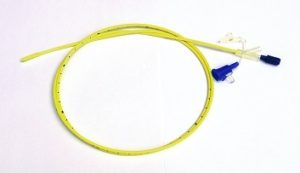
feeding tube nursing home neglect

If any of the preliminary steps work and help a resident get the daily calorie intake they need, there is no reason to put a resident on a feeding tube. But many nursing homes, for their own convenience and in order to save on staff expenses, will put residents on feeding tubes even when it’s not absolutely necessary. Remember, a nursing home cannot order the use of a feeding tube without the consent of the resident or the resident’s authorized representative unless other options have been exhausted.

Feeding tubes can be live savers, but they can cause complications which are easily avoidable for residents who can eat well through other means. If your loved one is put on a feeding tube you believe is unnecessary, this may be a form of nursing home abuse. Our Chicago nursing home abuse attorneys are here to help if you or your loved one is in harm’s way. Contact the Dinizulu Law Group, Ltd. at 1 (312) 384-1920 or 1 (800) 693-1LAW or by email.

What Distinguishes a Good Nursing Home Facility From a Bad One?


The latest innovations in technology have helped ensure our elderly loved ones can be safer in a nursing home facility today than what was the case a decade ago. But are all the nursing homes taking advantage of today’s technology? To distinguish a good nursing home facility from bad one, there are many things you can review before selecting a place.

Background Checks

The emergence of electronic records that can be shared between law enforcement across various states have made background checks more reliable and easier to complete. But it’s the hiring practices of the nursing home that can reveal whether it does background checks in a thorough manner, or if at all.

 Safety Alert Systems

While only 5% of the elderly population lives in nursing homes, 20% of elderly falls and accidents occur in them. Almost 2,000 nursing home residents die each year from these falls, and many suffer from other injuries. Good quality nursing homes have extensive training and safety systems in place to minimize the risk of injury among their residents. This includes alerting systems that can buzz and communicate to the nursing home staff when a fall-risk resident gets up unassisted. Top quality nursing homes have these systems so that the onus is not simply on the elderly resident to press a call button to get assistance. Always ask a nursing facility to demonstrate their safety alert system.

Caring For Residents Suffering From Alzheimer’s Disease

Good nursing homes invest in training staff to properly care for residents suffering from Alzheimer’s disease. Caregivers who have extensive training in how to cope with behavior linked to Alzheimer’s are less likely to verbally abuse a resident. These caregivers often understand how to best handle situations that may arise, and are more likely to respond appropriately.

Administering Medicine

Often times, one caregiver is responsible for administering medicine to many residents, and there is a risk that pills can get mixed. These dangers increase if caregivers are overwhelmed, or working in a nursing home that doesn’t hire adequate staff. Good quality facilities will have a highly organized method for administering medications.

Prescription Medicine at nursing home

Such nursing homes will put daily medication doses in sealed packets and cross-reference them to a medication list before administering them to residents. Don’t be afraid to ask a facility about its procedures for administering medications before placing your loved one there.

Infection Prevention & Control

Infections can have deadly results, especially for our elderly loved ones. Be sure that your loved one’s nursing home facility takes the threat of infections seriously. Are patients kept separately when they are contagious? Does the nursing home offer infection prevention & control training to its staff? Do you see such training enforced? For example, do you see the staff washing hands regularly, wearing gloves, and using clean medical devices?

Renovations & Floor Plans to Prevent Falls 

Good nursing homes often get renovations when they are needed and the layout of such nursing homes is designed to make it easier for the elderly to navigate. This includes slip-resistant flooring, light beams that guide along hallways and exits, unobstructed walkways, supportive furniture, (such as chairs with padding support and armrests), low-pile carpet that’s properly secured to the floor as opposed to loose rugs, shag or high-pile carpets, which are all considered a fall risk for the elderly.

While we hope these tips help you select the right facility for your elderly loved one, it’s not uncommon to see some nursing homes go back on their promises after admitting your loved one. If you notice that the care of your mom or dad is not what was promised, you may need a dedicated and experienced nursing home neglect or abuse lawyer. Our nursing home abuse and neglect lawyers in Chicago have over 50 years of combined experience with verdicts and settlements reaching millions of dollars. Contact the Dinizulu Law Group, Ltd. to fight for you and your loved one. We offer free initial consultations and can be reached by email or phone at 1 (312) 384-1920 or 1 (800) 693-1LAW.

How is Your Loved One’s Health Monitored in a Nursing Home?


When you place your elderly loved one in a nursing home, chances are they have medical conditions that need to be consistently monitored. How does a nursing home watch over your loved one? From managing medications and diet to monitoring new health challenges, how are these needs met? Watch the video to learn more.

A nursing home supports an infrastructure of medical professionals, ranging from dieticians, therapists, and nurses and doctors. Together, they manage and administer your loved one’s diet, medicine, and the needed medical tests.  Whether a patient has hypothyroidism, anemia, diabetes, Alzheimer’s or other serious medical conditions, the nursing home must facilitate the management of the medical care of your loved one. If they took your mom as their resident, they are asserting that they can manage the care appropriately for your loved one.

This only works if each member of the nursing home staff communicates with each other. For example, if the nurse does an assessment of a nursing resident, and observes a change in status, while often times she must not act alone, she must communicate this to the applicable doctor, dietician or specialized provider. The nurses are the eyes and ears of the doctors and the medical facility like a nursing home.

All this information is communicated across various levels of staff and different departments of the nursing home through verbal orders and patient charts. To effectively care for all their residents, a nursing home must have policies in place that require detailed documentation and clear channels of communication along with the appropriate guidelines for managing that care.

As a nursing home neglect attorney, I cannot tell you how many lives are lost due to these communication mistakes. If the nurse is overworked or overwhelmed like many are due to working in understaffed nursing homes, chances are he or she may forget to appropriately communicate to all of the providers. In such a case, the resident’s condition would go on untreated. For our elderly loved ones, this is a recipe for disaster. Nursing homes often make a deliberate choice to underhire staff to save expenses.

But you should know that if you or your loved one has been hurt due to a untreated condition, there are options for you. The Dinizulu Law Group, Ltd. has helped many people get justice when they are harmed in a nursing home that cuts corners. With over 50 years in combined experience and verdicts and settlements reaching millions, our nursing home neglect lawyers are here to fight for you. Call us at 1 (312) 384-1920 or 1 (800) 693-1LAW, or reach us by email.

You can also find more informational videos regarding nursing home neglect and injury matters from our nursing home abuse attorneys on our media page.

Aging Pastor Neglected by His Nursing Home Caregivers


Robert, an aging pastor, who lived a life of service and put others first, was neglected by his care providers in an Illinois nursing home.

Robert was admitted into a nursing home with severe illnesses that required 24-hour care. Robert suffered from Parkinson’s disease, dementia, and dysphasia, among other medical conditions. Dysphasia causes one to have trouble swallowing food and therefore, the person must be monitored closely to ensure proper digestion. Failure to monitor this food intake can cause the person to choke or aspirate, meaning the food gets stuck in the throat or lung.  Because of these risks, Robert should never be allowed to eat alone. What did the nursing home do to monitor these health concerns? Watch the video to learn more.

Just a few weeks after being admitted, a care giver at the nursing home noticed Robert was eating poorly and pocketing food. This is critical because since Robert was pocketing food, he could later eat that food while he wasn’t being watched and could suffocate as a result. The caregiver did absolutely nothing after noticing that Robert was pocketing food, like alerting the doctor or the head nurse.

After a few days, Robert was found to be lethargic with concealed food on him. He developed a cough and congestion, had labored breathing, and a fever. These symptoms worsened.

Finally, the nursing home sent Robert to a hospital. Only after going to the hospital was Robert diagnosed with aspiration pneumonia. You see, Robert had likely ingested the pocketed food that became lodged in his lung, causing the aspiration pneumonia. Aspiration pneumonia happens when substances, such as gastric contents, are inhaled into the lungs. This also creates a bacterial infection in the lung, leading to aspiration pneumonia.

Robert was a total-assist resident, meaning he needed to be fed, clothed, and changed. The nursing home ignored these responsibilities even though they fully understood Robert’s physical and mental limitations when they agreed to admit him into their facility.

Robert’s wife Michelle contacted the administrators at this nursing home to get them to properly care for Robert. They all made promises, yet the same pattern of unreasonable care continued.

I want all families like Michelle’s and all nursing home residents to know that nursing homes are accountable for the promises they make to you. There are remedies when nursing homes do wrong and cause you harm.

I know you may be watching this video because you probably have questions about your own loved one in a nursing home. Contact the Dinizulu Law Group, Ltd. at 1-312-384-1920 or 1-800-693-1LAW. We answer questions like yours every day.

How Serious Are Bed Sores For Nursing Home Residents?

For our aging loved ones, bed sores can be a serious and even deadly affliction. Also known as decubitus ulcers or pressure sores, bedsores can range in severity from superficial skin wounds to deep ulcers that expose bone. As though deep skin ulcers were not a severe enough issue, the Mayo Clinic describes complications that may arise from bed sores including:

  • Sepsis – a life threatening condition that may result in organ failure
  • Cellulitis – an infection of soft tissues causing pain, redness and swelling
  • Bone and Joint Infections – an infection that resides deep in the bones resulting in reduced limb function
  • Squamous Cell Carcinoma – a cancer that results from wounds that will not heal

In addition to the terrible pain and debilitating wounds, each bed sore complication described above can result in death. It is oftentimes difficult for elderly individuals to heal effectively, thus preventing bed sores can be a life or death matter.

Are Bed Sores Preventable?

As the name implies, pressure sores are caused by pressure on the skin. This pressure ultimately reduces blood flow resulting in a breakdown of the tissue. In addition to sustained pressure on the skin, friction and shear can be contributing factors as well. For example, a nursing home resident in an adjustable bed that tilts up or down may experience shear as the bed adjust against their body weight. If a nursing home caretaker handles an individual too roughly, the friction may be enough to damage skin that is already frail.

Nursing home resident & staff

Data provided by the Centers for Disease Control and Prevention indicate that 11% of residents in nursing homes may have bed sores. Sometimes bedsores occur in nursing home residents despite good efforts, but there are still measures a nursing home care taker should follow to prevent bed sores. For example, encouraging the proper movement in residents with limited mobility is crucial to preventing bed sores. If an individual is bedridden or wheelchair bound, the patient must be repositioned every couple of hours.

What To Do If Your Loved One Develops Bedsores While in a Nursing Home?

While we hope that our aging or disabled loved ones would be treated properly in a nursing home, we know that oftentimes this is not the case. Unfortunately, many nursing homes fail their residents and let them fall victim to neglect or abuse, resulting in bedsores or far worse outcomes. As skilled nursing home neglect attorneys in Chicago, the Dinizulu Law Group, Ltd. knows what the standard of care is for Illinois nursing homes. With over 50 years of combined experience, our nursing home abuse lawyers hold caregivers accountable for the injuries they have caused their residents.

Contact us by email or call us at 1-312-384-1920 or 1-800-693-1LAW to schedule a free consultation. Our nursing home abuse attorneys can build a case that brings justice and compensation for your injured loved ones.

Client’s Moving Testimonial About Her Mom’s Death in a Nursing Home


Sylvia’s mom had died suddenly and she and her family didn’t know what to do.  The nursing home caring for Sylvia’s mom wasn’t giving Sylvia’s family any answers.  The doctors treating Sylvia’s mom in her final days said that her mom had the highest levels of dehydration.  Sylvia’s family didn’t know who to believe or who to turn to for answers.

A trusted friend recommended Sylvia The Dinizulu Law Group, Ltd. for the help she and her family needed in the aftermath of this devastating incident. The nursing home abuse attorneys of the Dinizulu Law Group, Ltd. proved in the court of law that the nursing home acted negligently and they should be held accountable for the harm they have caused.

While no amount of compensation will bring Sylvia’s mom back, Sylvia and her family were happy with the recovery results. They felt they had finally gotten justice for their mom and were able to move past this incident that had haunted them for so long.

The Dinizulu Law Group, Ltd. guided Sylvia and her family through the lengthy course of their case. Sylvia and her family always felt informed about the progress of their case. From the nursing home abuse attorneys to the legal assistants, the DLG team took the time and care to explain to Sylvia and her family what would happen. Now Sylvia says the findings of the case have brought their family closer together and given them all a peace of mind.

Contact the Dinizulu Law Group, Ltd. by email or call us at 1-312-384-1920 or 1-800-693-1LAW if you believe you or a loved one is a victim to nursing home abuse. No one should have to go through this alone. We offer the help and expertise you may need.

Translate »