Archive for category: Video

What Rights Do Truck Drivers Have When They Are Injured?


Working as a truck driver may put you at risk for certain injuries. Do truck companies remedy for their wrongs? Watch the video to learn more.

First, truck drivers, like every other worker, have rights guaranteed by their state that their employer must abide by. This includes workers’ compensation. When an employee is injured on the job, regardless of fault, the employer is required to pay workers’ compensation to the truck driver. This may include the time the driver is off work, his or her medical bills, and for what’s called total temporary disability. This may be the case even if your employer calls you an independent contractor.

Second, not all truck accidents happen while a driver is on the road. Many injuries happen when a driver is loading or unloading a shipment. It’s not uncommon to hear about injuries that happen when loading and unloading equipment, such as lift-gates, chassis pins, winch bars, pallet jacks, chains, etc.—when they don’t function as expected and injure the truck driver.

Third, truck drivers often take their breaks away from home and eat and sleep at truck stops, which face a lot of incoming and outgoing traffic. These premises should be kept clean and clear to prevent slips and falls, whether the truck driver is walking or bringing his vehicle in or out of the truck stop.

Like truck stops, loading and unloading premises must also be safe and clear so the trucker can work properly. There are often cases when truck drivers fall from elevations while loading and unloading. Cases include falling while making upper-level deliveries, falling into openings or on unclear stairs, or stepping into holes. Remember, truckers aren’t familiar and can’t control the terrain where they may be making their deliveries. It is the shipper’s or receiver’s responsibility to keep their premises clean and the traffic throughout their yards safe.

Remember, if you are injured in a truck accident, you may be able to collect compensation from both your employer and one or more third-parties, such as an equipment manufacturer, a truck stop, or a loading or unloading site. It takes a skilled truck accident injury attorney to review your case and find all the parties responsible for causing you harm.

If you have questions or have a loved one who’s a truck driver who’s out of work due to an injury, contact the Dinizulu Law Group, Ltd. at 1 (312) 384-1920 or 1 (800) 693-1LAW, or by email. We are here to answer all your questions and help you navigate through this difficult time.

What is the Number One Cause of Truck Accidents?


Driver fatigue is an extremely common problem in the trucking industry. A study done by the Federal Motor Carrier Safety Administration found fatigued drivers are the #1 cause of truck collisions.

When these tired and overworked truck drivers cause accidents, as you may know, these are not minor accidents. Car drivers and passengers who are in a collision with a truck are very likely to suffer serious life-long injuries or even death.

There are rules in place to prevent these deadly accidents. The Federal Motor Carrier Safety Administration regulates the hours truck drivers can spend on the road per day and per week. Watch the video to learn more.

The law is that truck drivers can work:

  • A maximum of 70 hrs. in 8 days if their employer operates every single day of the week.  If the employer is closed any day of the week, then truck drivers can work up to 60 hrs. in 7 days.
  • Within these 60 or 70 hrs in about a week, truck drivers must only work a maximum of 14 hrs. per day. Only 11 of these 14 hrs. can be behind the wheel. After a truck driver has driven the maximum of 11 hrs., they must rest for 10 hrs. straight before starting work again.
  • After working for 8 days or 7 days as per the limit of days that applies to them, truck drivers can only restart work after resting for 34 hrs.

These safety rules were created based on many studies that examined the needs of truck drivers so that they can be alert on the road. They are safety rules that every trucking company should live by to protect us all from danger and mayhem. But many companies force their drivers to skirt these safety rules. Truck companies oftentimes push their drivers to work past the set driving limits in an effort to take shortcuts. This undermines the safety of us all. It creates an environment of fatigued and stressed drivers who are high risks on the road. These exhausted drivers end up injuring not just themselves, but our community members who will suffer more severe and oftentimes irreversible injuries or death.

Truck driver fatigue continues to harm individuals and their families. If you are watching this video because you have your own questions or have a loved one injured due to a fatigued truck driver, you shouldn’t feel alone. Contact the Dinizulu Law Group, Ltd. at 1-312-384-1920 or 1-800-693-1LAW. We are here to answer all your questions and help you navigate through this difficult time.

Nursing Home Resident Dies From An Improper Diet


Nursing homes can be a big help when you have elderly loved ones who need help caring for themselves.  When you admit your loved one, you trust that they will be properly taken care of.  Part of that care includes receiving adequate nutrition.  So, what happens when your loved is not receiving adequate nutrition? Watch the video to learn more.

I had a former client who lost her mother due to improper nutrition while staying at a nursing facility.  When her mother was admitted to the facility, she was 77 and in overall good health.  She had a diagnosis of dementia and dsyphagia, or difficulty eating.  The specific nursing home that the client’s mother was staying in was severely understaffed, which lead to the woman falling six times, with the final fall resulting in a fatality.

The fall in and of itself did not cause the patient’s death, but what happened as a result of the final fall did.  Because the physician was never contacted to check on the patient after the final fall, they were not able to see the depressed state of her nutrition.  She was not being properly monitored by the nursing home staff to make sure that she was eating and drinking enough to meet her daily caloric and liquid intake.  Within three days, the patient began to show effects of starvation, and she became non-responsive.  With that, she was rushed to the emergency room and diagnosed with severe dehydration.

Due to the severe dehydration, the patient fell into a coma and died within several days.  The emergency room physician gave a testimony that was favorable, and the case was settled shortly after.  You need to know how important it is that your loved one receives proper nutrition during their stay in a nursing home.  Watch the video to learn more.

Dealing with nursing home neglect can be difficult. The compassionate and experienced Chicago nursing home neglect attorneys at the Dinizulu Law Group, Ltd. are on your side. If you have questions, please email or call us at 312-384-1920 or 1-800-693-1LAW.  Our Chicago nursing home abuse lawyers are here for you. You may also learn more about nursing home abuse through our media page where you will find more videos and content on this important subject.

How to Identify Sexual Harassment in the Workplace


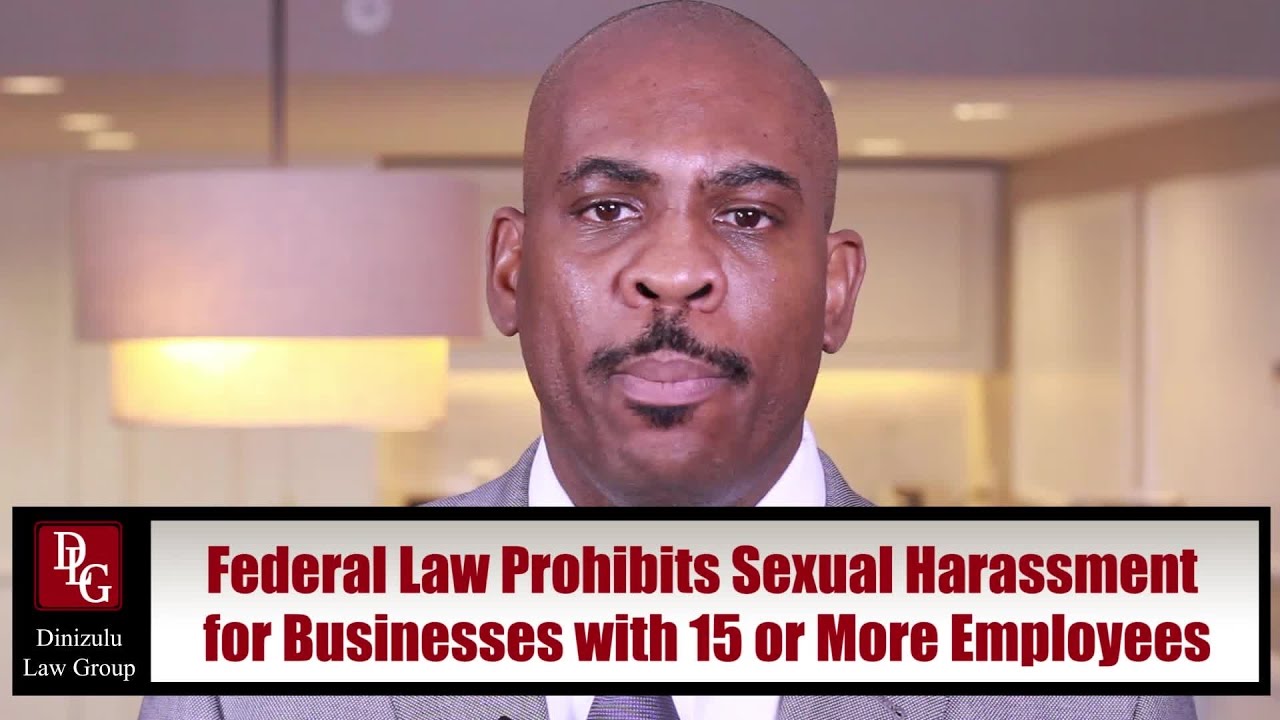
Sexual harassment is a form of discrimination.  In the workplace, it is illegal under Title VII law.  So, how do you define it and what does it look like? Watch the video to learn more.

There are both federal and state laws the protect individuals from workplace sexual harassment. Title VII is the federal law that protects employees in businesses with 15 or more employees. Sexual harassment is defined as unwelcome sexual advances or conduct that interferes with an employee’s ability to work or that creates an offensive or a hostile workplace environment.  It happens across genders.

There are two forms of harassment to know about.  The first is quid pro quo.  This is when a person in charge demands that employees tolerate sexual conduct in order to keep their jobs or retain their access to things such as promotions.  One claim is usually enough to establish a quid pro quo case.

The second type of harassment is hostile work environment harassment. The conduct has to be repeated and deemed offensive enough to create a hostile work environment to have a legal backing. The court will take into account what type of conduct it was, the frequency of the conduct, whether or not he conduct was offensive, whether the harasser is a coworker or supervisor, who else joined in, and whether the harassment included others. Watch the video to learn more.

Navigating sexual abuse cases can be confusing, and it helps immensely to have experienced sexual harassment lawyers on your side. If you have questions about sexual harassment, please email or call us at 312-384-1920 or 1-800-693-1LAW.  Our experienced Chicago-based sexual abuse and job discrimination attorneys are here for you. You may also find more videos and media content from the Dinizulu Law Group, Ltd. on our media page.

A Doctor’s Insecurity Led to a Patient’s Death and a Seven-Figure Medical Malpractice Settlement

If your loved one died as a result of mistakes made by medical practitioners, you may be outraged.  You trusted the medical staff to take care of your loved one, and instead they failed.  You may have a potential medical malpractice case. Please call us at 1-800-693-1LAW or 1-312-384-1920 with your questions. I am a medical malpractice attorney that is here for you. You may also contact us by email. Visit our firm’s media page, where you can view more videos and learn more about your rights.

Here we discuss the case of a 50-year-old woman who died as a result of mistakes that could have been avoided by her ER doctor.  The patient was admitted due to a collapsed airway. Upon her arrival, emergency procedures were enacted, and they called all available staff to the scene.  The staff that showed up included ER doctors, nurses, and respiratory therapists.

The patient’s attendant ER physician was able to manually deliver oxygen to the patient, resulting in 100 percent oxygenation during transportation.  At that moment, the ER physician was the only one in control, and as such did not feel that he needed assistance.  In this case, he could have benefited from assistance provided by someone with more specialization in intubation.  The doctor later admitted that he did not possess the skills needed for the surgery required if his intubation failed, but he still proceeded.  The doctor decided to use a paralytic drug that relaxes the muscles but prevents the patient from trying to breathe on her own.  The use of paralytic drugs in such a case is not recommended.

Upon further investigation, the doctor also admitted under oath that he does not like to ask for assistance because he thinks it makes him look stupid.  It appears he was more concerned about his self-esteem and respect from his coworkers than the survival of his patient, and this contributed to the patient’s death.  Our client received a 7-figure settlement.  Watch the video to learn more.


What To Do If You Suspect Nursing Home Abuse

Listen as Attorney Yao Dinizulu explains what to do when you suspect nursing home abuse.

Nursing home abuse is a common occurrence. If you suspect nursing home abuse, there are immediate steps you need to take.

The first step that you need to take is seek immediate medical attention. Depending on the severity of the abuse, this can mean calling 911 or demanding that your loved one see a doctor immediately. You can’t waste time. The second step that you need to take is to gather evidence. This includes pictures of any injuries or sores, copies of medical records, and statements from witnesses. You’ll need this evidence to support your case.

You can also contact the Illinois Department of Public Health. Once you file a claim of nursing home abuse, the Department of Public Health will send someone out to inspect the nursing home. During their inspection, they will review medical records, interview staff and residents, and assess the nursing home’s policies. As a result of their investigation, the Department can make the nursing home pay fines for negligence as well as order the nursing home to implement a plan of care that targets the specific issues stated in your claim. Watch the video to learn more.

If you have questions about nursing home abuse and what to do if you suspect it, I want you to call me at 1-800-693-1LAW. I am a nursing home abuse attorney that is here for you. You may also contact me by email. Visit our firm’s media page, where you can view more videos and learn more about the signs of nursing home abuse.

Translate »