Archive for category: Medical malpractice

Doctors Must Treat Bacterial Illnesses Differently From Viral Illnesses


The medical community has agreed upon standards that doctors must abide by when they treat a patient for a bacterial infection vs. treating them for a viral one.

While most viral infections are allowed to run their course, bacterial infections are treated with prescribed antibiotics. When you go to the doctor with certain symptoms, a good doctor will take all the necessary precautions while evaluating your illness. He or she must first rule out the worst possible illnesses that you may have contracted. Diseases like sepsis and meningitis are life-threatening conditions that are easily preventable if a doctor does his or her due diligence.

There are various ways to do this. The doctor might ask you further questions about your symptoms, examine your nose, throat, temperature, or may even order additional testing or lab work.

The doctor must take all the necessary steps to get to the root cause of your illness. Only after following all the necessary precautions is a doctor able to properly diagnose you. Through years of medical school and training, medical doctors are properly trained to thoroughly follow this process when examining their patients. What happens if a doctor fails to follow the steps and misdiagnoses a patient?

The results can be disastrous, especially for young children and our elderly loved ones, who may need antibiotics right away before a minor bacterial infection can turn into something life-threatening, like sepsis or meningitis. Meningitis can cause irreversible brain damage that a young child who may have their whole life ahead of them would be unable to recover from.

A good doctor understands the responsibility they have to their patient and their family members. As a Medical Malpractice Trial Attorney, it’s unfortunate how many cases I see where a doctor has caused irreparable harm simply because he or she simply didn’t follow the needed precautions.

When we go to the doctor we expect we will be treated with diligence and respect. If you believe a doctor has misdiagnosed you or your loved one and caused harm, there’s help. Contact the Dinizulu Law Group, Ltd. at 1-800-693-1LAW or 1-312-384-1920 or by email. With over 50 years of combined experience and millions recovered in verdicts and settlements we are here for you.

Who Has The Power To Enforce Laws?


When the United States established our institution of government through the Constitution the jury system was enshrined in that document. The 6th and 7th amendment were later added to the Constitution and protected the right to juries in criminal and civil cases.

But still more was needed to enforce this cherished right. African-Americans under federal law were given the right to serve on juries in 1875, but in practice many were openly and routinely removed from juries based on race until a US Supreme Court case in 1986 declared that conduct was prohibited by the constitution. Watch the video to learn more.

As late as 1942, only 28 states had laws that allowed women to serve as jurors, but these states also gave them the right to claim exemption based on their sex. The Civil Rights Act of 1957 gave women the right to serve on federal juries, but not until 1973 could women serve on juries in all fifty states.

The right to serve on jury is something people fought for and died for because this right is so important to the fabric of our laws. The primary purposes of civil tort law in America and here in Illinois as described by the Illinois Supreme Court is when someone has been wrongly injured by the acts of another the law is to:

  • to compensate the victims;
  • to reduce future wrong acts; and
  • to encourage careful conduct in the future to protect all of our citizens.

The jury enforces these laws through their collective verdict. By serving on juries, you are able to voice your opinion and influence the collective verdict. If you do not show up, you are allowing someone else to decide how the laws should be enforced. Therefore, someone else will have the power to determine the type of community you will live in. So remember, the juries’ verdict is how you enforce the laws of your community. That is why it’s so important to serve.

If you have questions about trial or your own serious injury, contact the Dinizulu Law Group, Ltd. at 312-384-1920 or by email. Our Chicago personal injury attorneys are known for their expertise and tough litigation. Schedule a free consultation with one of our personal injury trial lawyers practicing throughout Illinois.

What is a Day In The Life Video?


In personal injury lawsuits for severely injured victims, a Day-in-the-Life Video is shown to the jury during trial to offer a visual account of the injured victim’s day-to-day challenges. It captures footage from  the moment the injured person wakes up to the time they go to bed. It crunches what an entire day is for an injured person to a 15-30 min time frame that can be shown in court.

The Day-in-the-Life Video may show how the injured person gets out of bed. Is he or she able to do it alone? Does an assisted living professional need to be present? Can the person go to the bathroom or shower self-sufficiently? From the Day-in-the-Life Video the jury will be able to see the full extent of the victim’s injuries. They will see the injured person’s face, read their facial expressions, and hear their voice. This lets the jury know firsthand the emotional and physical challenges the victim is facing. Watch the video to learn more.

The Day-in-the-Life Video also captures footage of the injured person in their home, in what used to be a comfortable setting. In the aftermath of an injury, the setting of the home may have become extremely difficult to maneuver around in. A video can show how challenging it is to get to the kitchen. How long does it take to climb a set of stairs?

A Day-in-the-Life Video can also show the injured victim’s interactions with loved one. Has the quality of family life changed? Is the injured victim able to spend time with his kids or spouse. Answers to these questions can also be captured on tape and shown to the jury.

Remember, the jurors are everyday people from our community that are selected to uphold our justice system. A Day-in-the-Life Video is able to grab their attention and move them in ways that expert testimony or documents alone aren’t able to.

It requires a skilled and well-experienced personal injury lawyer to create a Day-in-the-Life video that’s accepted as admissible evidence in the courtroom.  Without being admissible in court, the jury isn’t able to see the client’s Day in the Life Video. This can be a significant blow to the recovery amount the jury decides.

At the Dinizulu Law Group, Ltd., we have created many Day-in-the-Life Videos for severely injured clients and taken them to trial for successful verdicts. If you or your loved one is suffering from the fault of others, count on us to help. With over 60 years of combined experience, our Chicago personal injury attorneys are known for their expertise and tough litigation. Contact us by email or call us at 312-384-1920 to schedule a consultation with one of our personal injury trial attorneys practicing law throughout Illinois.


What Is A Life Care Plan?


For the severely injured, a Life Care Plan is a detailed assessment of the severely injured victim’s needs. It should take into account:

Current and future medical needs: Things like cost of medication, specialized furniture, assisted living professionals, rehabilitation expenses should be included in the life care plan.

Transportation needs: Would the injured victim need to have special equipment for traveling? Recreational opportunities also need to be factored into a life care plan.

Construction modifications to the home: Specialized medical equipment may require changes to the layout of the home. Perhaps an elevator lift is needed. These very large expenses need to be looked at very thoroughly to create a proper life care plan.

In an injury lawsuit for a severely injured victim, the Life Care Plan is instrumental in building your case. It can show to the jury the extent of a victim’s injuries, and the long-term cost of living with such life-changing injuries.  When a Life Care Plan is led by a personal injury lawyer who is well-experienced in litigation and trial, the recovery results could ensure that the injured victim is able to live with dignity and financially independence. Watch the video to learn more.

At the Dinizulu Law Group, Ltd., when our Chicago personal injury lawyers consult with a Life Care Planner, we collaborate with an entire team of medical and financial experts and ensure assessments by doctors, psychologists, counselors, and economists are all taken into account and factored into the Life Care Plan. We do this to ensure all of the injured victim’s needs are considered. This means including present and anticipated future needs into the life care plan. Is future medication included in the plan? Will the medication be supported across providers? The Life Care Plan needs to be a complete and comprehensive document.

Once created, the Life Care Plan is given to the jury so that the jury can fully understand you or your loved one’s needs and recognize your compensation claim as genuine. A skilled and well-experienced personal injury lawyer will help the life care planner get the testimony and documentation from the entire team of medical and financial experts that’s admissible in the court so that the jury may hear all parts of the life care plan.

Many personal injury lawyers don’t understand how important it is to be fully involved in the creation of the Life Care Plan, and as a result, your recovery suffers.

At the Dinizulu Law Group, Ltd., we pay close attention to the life care plan and present our clients’ complete needs in court. We have been thoroughly involved in many very complex life care plans and have advocated for our clients’ complete needs successfully. With over 60 years of combined experience, our Chicago personal injury attorneys are known for their expertise and tough litigation. Contact us by email or call us at 312-384-1920 to schedule a consultation with one of our personal injury trial attorneys practicing law throughout Illinois.

Patient Intubation & Medical Malpractice

Mistakes, such as improper intubation, when made by medical care providers can mean serious, long term harm, even death for patients. If you or a loved one has been injured by a medical care provider, you or your loved one could be entitled to recover monetary compensation for your expenses, injuries, and suffering. The experienced and compassionate Chicago-based medical malpractice lawyers at the Dinizulu Law Group, Ltd.  will work with you to determine the best way to handle your medical malpractice claim. Contact us for a free consultation with one of our experienced medical negligence attorneys in Chicago, Illinois.

Intubation Procedure

If you have spent any time watching medical dramas on television you have probably seen a dramatization of a patient being intubated. Endotracheal intubation (ETI) is a medical procedure that places a tube in a patient’s throat to create an unobstructed pathway to allow breathing. This can be done to help a patient’s respiration during surgical procedures, or sometimes at the scene of a medical emergency when someone’s throat has been injured due to some form of trauma.

The process of performing an endotracheal intubation is relatively straightforward for properly trained and equipped medical personnel. First, the patient is placed with the neck flexed so that the throat is as straight as possible. Then the doctor or EMT uses a tool called a laryngoscope to hold open the mouth and move the tongue out of the way so that they have unobstructed access to the airway. They then raise the handle portion of the laryngoscope so that the patient’s vocal cords become visible.

Once the vocal cords are visible, the doctor or EMT inserts an endotracheal tube, a plastic tube with an inflatable cuff circling one end, down the throat until the inflatable cuff is just below the vocal cords. After the tube has been situated, the laryngoscope is removed and the cuff is inflated, preventing the tube from accidentally being dislodged from the patient.

In order to determine that the endotracheal tube has been placed correctly, the doctor or EMT will check to see that there appears to be movement of the chest, and that breathing sounds are detected from both lungs.

When Injuries Happen

While inserting an endotracheal tube would seem to be a fairly technically straightforward procedure, there are some potential issues that can arise, such as perforation of the vocal chords, larynx, or esophagus, and potential damage to the teeth and soft tissue of the mouth. The most serious complication, however, is if the endotracheal tube is accidentally inserted into the esophagus, which can result in the attending medical staff thinking the patient is getting sufficient air when they actually are not. This can lead to oxygen deprivation and brain damage if it is not caught quickly and corrected.

Because of this and other possible complications such as potential infections and delays in transporting patients to a hospital, there is a discussion in the medical community about whether or not endotracheal intubation should be performed by paramedics outside of a hospital setting. It should be pointed out, however, that no generally-accepted consensus has been reached on this matter, and endotracheal intubation remains a valid practice by emergency medical technicians in the field, particularly in patients who have had a heart attack or suffered burns to the airway.

Take Action

The Dinizulu Law Group,Ltd. is a personal injury firm  in Chicago with a reputation for tough litigation and winning substantial compensation for clients. With over 60 years of combined experience, our medical malpractice and negligence attorneys have a strong record of getting medical care providers held accountable. We fight for the maximum compensation and get the injured the relief they need. Contact us for a free consultation.

By taking action, not only might you be able to recover compensation for yours or your loved one’s needs, but you will prevent bad medical care from harming other patients.

Mom Unexpectedly Dies From Allergic Reaction & Medical Malpractice

Doctors can make mistakes, and these mistakes can cost the lives of your loved ones. If you have suspect medical malpractice occurred when your loved one needed care, I want you to call us at 1-800-693-1LAW or 1-312-384-1920 with your questions. I am a medical malpractice attorney that is here for you. You may also contact us by email. Visit our firm’s media page, where you can view more videos and learn more about your rights.

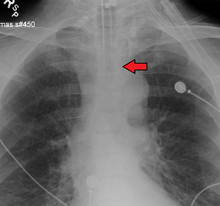
In this case, the patient was rushed to the ER because she had an allergic reaction to seafood. The hospital staff enacted the ABC’s of medicine, which stands for airways, breathing, and circulation. The first step was to make sure that her airway was not blocked. They did this by inserting an endotracheal tube down her throat to establish her airway.  They made a mistake and inserted the tube too far down her right bronchial tube. This in and of itself is not negligence, but not fixing the tube into the proper position is negligence. Because the tube was improperly inserted, air was only going to the right lung, which resulted in the collapse of the left lung.

At this point the ER doctor had several steps that he could have taken to prevent the patient’s death. Instead of ordering a CT scan, which required transport that could jostle the tube, the doctor could have ordered an x-ray to ensure that the tube was properly placed.

Because the doctor ordered a CT scan instead of an x-ray, the patient was transported to the CT room, which resulted in the jostling of the E.T. tube.  During the CT, the patient was required to be unrestrained.  Because the doctor did not adequately sedate the patient and insisted on a contrast scan, the patient woke up, vomiting. In the process, she pulled the tube out of her throat because she was not restrained, and this permanently collapsed her airway.  The scene was described as chaotic by medical staff, and she did not survive.  Had her medical staff ordered an x-ray instead of CT scan, she may have survived.  This case was settled confidentially and resulted in the client being awarded 7 figures.  Watch the video to learn more.

A Doctor’s Insecurity Led to a Patient’s Death and a Seven-Figure Medical Malpractice Settlement

If your loved one died as a result of mistakes made by medical practitioners, you may be outraged.  You trusted the medical staff to take care of your loved one, and instead they failed.  You may have a potential medical malpractice case. Please call us at 1-800-693-1LAW or 1-312-384-1920 with your questions. I am a medical malpractice attorney that is here for you. You may also contact us by email. Visit our firm’s media page, where you can view more videos and learn more about your rights.

Here we discuss the case of a 50-year-old woman who died as a result of mistakes that could have been avoided by her ER doctor.  The patient was admitted due to a collapsed airway. Upon her arrival, emergency procedures were enacted, and they called all available staff to the scene.  The staff that showed up included ER doctors, nurses, and respiratory therapists.

The patient’s attendant ER physician was able to manually deliver oxygen to the patient, resulting in 100 percent oxygenation during transportation.  At that moment, the ER physician was the only one in control, and as such did not feel that he needed assistance.  In this case, he could have benefited from assistance provided by someone with more specialization in intubation.  The doctor later admitted that he did not possess the skills needed for the surgery required if his intubation failed, but he still proceeded.  The doctor decided to use a paralytic drug that relaxes the muscles but prevents the patient from trying to breathe on her own.  The use of paralytic drugs in such a case is not recommended.

Upon further investigation, the doctor also admitted under oath that he does not like to ask for assistance because he thinks it makes him look stupid.  It appears he was more concerned about his self-esteem and respect from his coworkers than the survival of his patient, and this contributed to the patient’s death.  Our client received a 7-figure settlement.  Watch the video to learn more.


Translate »