Archive for category: Uncategorized

What Happens if YOU Get Sued by a Nursing Home?

When most people hear about nursing home lawsuits, they assume that the nursing home is being sued. But the roles may be reversed in many situations. Believe it or not, nursing homes are suing their own residents and the family members of seniors. This may occur for a number of reasons, and it goes to show that these organizations are primarily motivated by profit. Their moral responsibility to care for seniors is a peripheral concern. Of course, a lawsuit is the last thing most seniors need – especially if they are already suffering from cognitive and physical decline. These seniors may also be suffering from serious abuse at the hands of nursing homes.

If you find yourself dealing with any legal issues related to nursing homes, your best bet is to get in touch with a qualified, experienced nursing home abuse attorney at your earliest convenience. These legal professionals can guide you towards a positive outcome in a confident, efficient manner. With their help, you can defend against nursing home lawsuits while simultaneously pushing back and suing them for elder abuse. These situations are quite common in the modern era, and many seniors have received multi-million-dollar settlements for everything they have been forced to endure. It’s always a good idea to get in touch with an attorney as soon as possible. Wait too long, and the statute of limitations may prevent you from suing.

New Report Highlights Common Legal Issue Faced by Families

On July 28th of 2022, NPR published an article highlighting the prevalence of lawsuits filed against families of seniors in nursing homes. The lawsuits were targeted towards families who were behind on their bills. Nursing homes say that they have been left with few options, as they cannot continue to house and feed seniors who are not paying their bills. The only option is to sue the family members to forcibly obtain the payment they are owed. Of course, this is only one side of the argument.

Family members tell a different story. They claim that they are being contacted out of the blue and asked to pay sums that are completely unreasonable. Not only that, but distant family members are being contacted with these demands – despite not being responsible for the payments in the past. In some cases, family members who have no control over their senior loved one’s money are being asked to pay thousands of dollars. These family members may also have no legal authority to make decisions on a senior’s behalf.

According to the latest statistics, only five percent of Americans with medical debt have been sued. But for those in this minority, the consequences can be shattering. Nursing homes are perhaps some of the most likely medical organizations to pursue legal action in order to recover debt. Many experts are describing this behavior as “aggressive” or “pernicious.”

Sometimes, nursing homes accuse relatives and friends of stealing money from senior residents – completely without any evidence, of course. In other situations, nursing homes have contacted the wrong family members – accusing cousins of being mothers and making similar mistakes.

The situation becomes even more problematic when you consider the fact that a number of nursing home companies have been investigated for “deceptive billing practices.” In some cases, wages of sons and daughters have been garnished in order to pay for these debts. Sometimes, relatives are told they should have used assets from seniors’ accounts to pay for their stay at nursing homes. But how are these relatives supposed to access bank accounts owned by other people?

The truth is that few individuals hire lawyers when faced with these demands for money. This is because lawyers are expensive – especially when you’re defending yourself. However, it is possible to have these lawsuits dropped with the right legal strategies.

Where Can I Find an Attorney Near Me?

If you’ve been searching for a qualified, experienced nursing home abuse attorney in Illinois, look no further than Dinizulu Law Group, Ltd. Over the years, we have helped numerous families struggling with legal issues related to nursing homes. We know that these situations can seem incredibly daunting – especially if your nursing home is using underhanded tactics to take money from you. With our help, you can protect your financial well-being and push back against nursing homes for any misconduct or abuse your senior might have suffered while in their care. Book your consultation today to explore your legal options and get started with an effective action plan.

Sources

  1. https://www.npr.org/sections/health-shots/2022/07/28/1113134049/nursing-homes-are-suing-friends-and-family-to-collect-on-patients-bills
  2. https://truthout.org/articles/nursing-homes-are-suing-the-friends-and-family-of-residents-to-collect-debts/

Dinizulu Law Group, Ltd.
(312) 384-1920
221 North LaSalle, Suite 1100
Chicago, IL 60601
info@dinizululawgroup.com
Toll Free: +1-800-693-1LAW

If you have further questions about this article or legal concerns call 800-672-3103

Types of Negligence in a Chicago Semi-Truck Accident

Negligent truckers and trucking companies can cause injuries in a number of different ways. If you’ve been injured in a Chicago semi-truck accident, the type of negligence may seem somewhat irrelevant. After all, you need to focus on the healing process as best as possible while dealing with missed wages and psychological trauma. But in terms of your personal injury lawsuit, the exact cause of the accident is important. Illinois is an “at-fault” state, which means that you must prove negligence if you want to receive a settlement. So what are the different types of trucking negligence in Chicago, and how might this affect your own lawsuit?

Drunk Driving

Perhaps the most obvious form of trucking negligence is drunk driving. Despite the fact that truckers are supposed to be professional drivers, this type of negligence is more common than you might think. Not only do many truckers drink before getting behind the wheel, but some also consume illicit substances. Truckers often try to justify consuming these drugs by claiming that their stimulating properties help them stay awake for longer. But many stimulants also have adverse effects that can impede a trucker’s ability to think clearly.

Fortunately, drunk driving can be easily detected by police officers using techniques such as field sobriety tests and technology like breathalyzer tests. This evidence is recorded by police on their reports, and you can use these reports as evidence when you file your personal injury lawsuit.

Unsecured Loads

Truckers often carry dangerous cargo. Sometimes, the cargo is inherently dangerous because it is radioactive, explosive, corrosive, toxic, or highly flammable. Crashes can cause this cargo to spill out or permeate through the air, causing additional injuries for individuals stuck in wreckage. In the case of explosive or flammable material, these secondary accidents can be fatal.

In other situations, cargo is dangerous because of the way it has been packed or loaded. This cargo can fall off the back of a truck on a highway or during a crash, causing serious hazards for nearby motorists. On December 14th, it was reported that multiple cars had been struck by unspecified debris after a semi-truck crash near Chicago. The debris flew across Kennedy Expressway after a semi-truck smashed into a wall, causing serious damage and a number of flat tires. If the chunks of debris had been larger, injuries could have easily occurred.

Rushing to Meet Schedules

The trucking industry incentivices truckers to drive as quickly as possible. This is because most are paid based on how many journeys they can complete within a given amount of time. When truckers start to rush to meet difficult schedules, the chances of crashes goes through the roof. They may stay up for over 12 hours without sleeping. They may also start to drive recklessly, ignoring speed limits and other rules of the road. If you can prove that a trucker failed to take regular breaks and was rushing unreasonably, you can hold them accountable for negligence.

Demanding schedules may also cause truckers to drive through adverse conditions when they should get off the road and wait for the weather to clear up. On December 22nd, it was reported that a semi-truck had struck a man walking on a road during an intense winter storm in Gurnee, Illinois. This pedestrian was out on the road because he had just crashed his car due to the slippery conditions. Fortunately, the man survived.

Road Rage

Road rage is common among truckers. This is another result of their busy, demanding schedules. In some cases, truckers may drive aggressively. Sometimes, this can even lead to violent situations. On December 29th of 2022, it was reported that a semi-truck crash had resulted in shots being fired. A collision between a Dodge Challenger and a semi-truck caused a dispute in Chicago. The occupants of the Challenger then got out and began firing at people nearby – including a bystander who was approaching the crash to offer help.

Where Can I Find a Reliable Semi-Truck Accident Lawyer in Chicago?

If you’ve been searching the Chicago area for a reliable semi-truck accident attorney, look no further than Dinizulu Law Group, Ltd. We know that semi-trucks can cause injuries in a number of different ways, and we’re ready to hold these negligent parties accountable regardless of your unique circumstances. Book a consultation today, and we can assess your situation before recommending the best course of action. From there, you can pursue compensation for medical expenses, missed wages, emotional distress, and any other damage you might have incurred. Get in touch today and get started.

Sources

  1. https://abc7chicago.com/chicago-shooting-crash-south-loop-semi-truck/12627146/
  2. https://www.cbsnews.com/chicago/news/truck-crash-tri-state-tollway-gurnee/
  3. https://www.cbsnews.com/chicago/news/semi-truck-crash-kennedy-expressway/

Dinizulu Law Group, Ltd.

(312) 384-1920

221 North LaSalle, Suite 1100

Chicago, IL 60601

If you have further questions about this article or legal concerns, call 800-672-3103

5 Things To Do Before Your Loved One Goes To a Nursing Home

CHICAGO, IL – Making the decision to place your loved one in a nursing home is difficult. However, there are things you can do that will make the transition a little easier. Taking care of these seven things before placing your loved one in a nursing home will save you time, money and headaches.

  1. Choose the right facility.
    While this step may be overwhelming, it’s important to sit down and discuss what your parent needs out of a long-term facility. Furthermore, extensive research on what facilities offer the type of care you’re looking for will be required.
  2. See if your loved one qualifies for financial benefits.
    Check to see if your loved one qualified for benefits to help pay for their care. The average cost of a nursing home in Illinois is roughly $7,000/per month. It’s important to consult an elder law attorney before giving up on the prospect of financial benefits.
  3. Know exactly what you’re signing before you sign it.
    Before moving your loved one in to their nursing home, you’ll be handed a large administrative packet of information to sign. Some nursing homes have arbitration agreements written in this documents. By signing this document, you waive your right to hold the nursing home accountable in court, for any and all potential wrongdoings. Be aware of what you’re signing before you sign it.
  4. Don’t bring any valuable into the facility.
    If your loved one has a sentimental item they’d like to bring to their nursing home, you may want to rethink this. Being in a communal living space, it can be easy for things to disappear or someone to steal your personal belongings.
  5. Know who can make important decisions.
    Before going into a long-term living facility, you should discuss with your loved one who they would like designated as their legal “helper” for when the time comes that they can’t make a decision for themselves. Establishing a power of attorney is an important legal document that authorizes someone to represent or act on your behalf. You will need two separate power of attorney documents: one of medical decisions and one for financial decisions.

    Along with having a power of attorney, it’s important to have a Last Will & Testament in place, in addition to any other helpful estate planning documents. This may include end-of-life documents or trusts.


CMS to Investigate Nursing Home Abuse of Antipsychotics

CHICAGO, IL – The federal government is cracking down and will begin targeting nursing homes’ abuse of antipsychotic drugs and misdiagnosis of schizophrenia in patients.

The Centers for Medicare and Medicaid Services (CMS) is launching an investigation this month into select nursing homes in hopes to verify whether patients have been properly diagnosed with the psychiatric disorder.

Mountains of evidence over the course of decades show some facilities wrongly diagnose residents with schizophrenia or administer antipsychotic drugs to sedate them, despite dangerous side effects that could include death.

Health and Human Services Secretary Xavier Becerra said, “no nursing home resident should be improperly diagnosed with schizophrenia or given an inappropriate antipsychotic.”

Some facilities may be coding residents as having schizophrenia, even if they don’t show signs of the extremely rare disorder. In fact, schizophrenia is so rare that less than 1% of the population has the disorder.

In 2012, the federal government began tracking when nursing homes use antipsychotics on residents — doing so can impact the facility’s quality rating in a public databased — but only for those who have not been diagnosed with schizophrenia. Antipsychotics for those nursing home residents has dropped to under 20% in recent years.

CMS will start targeted audits to ask nursing homes for documentation of the diagnoses in the coming days. The rating scores for nursing homes that have a pattern of inaccurately coding residents as having schizophrenia will be negatively impacted stopping short of threatening to levy fines against facilities.

Can You Sue a Hospital for Failure to Diagnose a Medical Condition?

CHICAGO, IL – A hospital stay can be stressful financially and worry whether you’ll receive the proper treatment. Unfortunately, 21% of American patients report errors in their medical treatment. According to a Johns Hopkins study, medical errors account for the third leading cause of death in the U.S.

If a doctor fails to diagnose or misdiagnoses an existing medical condition, illness or injury that worsens after the failure or misdiagnosis, you may have the right to assert a claim of medical malpractice.

Statistics on medical malpractice claims based on failure to diagnose

In an article in Claims Journal, a recent study found that “inaccurate or delayed diagnoses were cited in 34% of medical malpractice claims where the patient died or was seriously disabled.” Claims involving diagnostic errors also accounted for 28% of all payouts during the study period.

Reasons to sue a hospital

Medical malpractice is the leading reason to sue a hospital. You, the plaintiff, have to prove the health care worker did not act as any reasonably skilled provider with the same level of experience would have in that situation, causing harm. The most common reasons are:

  • Failure to diagnose a medical condition: Doctors must follow professional protocol when making a diagnosis; however, doctors sometimes fail to order tests or imaging.
  • Failure to treat: Just as missing an important diagnosis, doctors can also overlook treatment possibilities.
  • Injury during treatment: Surgical errors, for example, could rupture blood vessels or cause significant bruising resulting in permanent disability or death.
  • Failure to document: Documentation errors that lead to over medicating a patient or a wrong diagnosis.
  • Medication errors: The Food and Drug Administration (FDA) receives more than 100,000 reports of medication errors annually. Many of these errors occur in bustling hospitals where communication breakdown is frequent.

Who should you sue?

Each case varies; however, depending on your case, you can pursue damages against the hospital, medical professional or both. Under Illinois law, patients and families can sue doctors for failure to diagnose if they can prove:

  • The doctor breached his or her duty of care by failing to diagnose the patient’s condition;
  • The existence of a duty of care (i.e., a doctor-patient relationship);
  • The failure to diagnose cause physical harm (or death) to the patient; and,
  • The patient (or patient’s family) suffered financial and non-financial losses as a result of the failure to diagnose.

Proving medical negligence can be extremely complicated. If you or someone you love suffered at the hands of a medical professional, it’s in your best interest to speak with a Chicago medical malpractice lawyer as soon as possible. The knowledgeable attorneys at the Dinizulu Law Group has a proven history of success, even in the most complex claims.

Two Illinois EMTs Charged with Murder After Wrongful Death of 35-Year-Old Man

CHICAGO, IL – An Illinois prosecutor filed first-degree murder charges against two EMTs providers over the death of a patient they were called to assist on Dec. 18, 2022. The Lifestar employees are accused of Earl L. Moore Jr., 35, dying in their care of asphyxia.

The patient, who may have been experiencing hallucinations, was placed face down on a stretch and restrained across his upper torso. The coroner’s report said the cause of death was compression and positional asphyxia.

Both defendants are being placed in Sangamon County Jail on a $1 million bond.

This case holds an important lesson for EMS professionals across the country.

EMS Murder Charge

Law enforcement responded to a man in apparent medical distress at approximately 2:02 a.m. Recent body camera footage shows police were met at the door by an adult female who told officers Moore was “hallucinating and having alcohol withdrawals.”

The woman, appearing exasperated, when telling police, “every time I take him to the hospital, they release him, that’s all they do.” Police noted he was in obvious distress and called for an ambulance.

Twelve minutes later, EMT Peggy Finely was seen entering the bedroom with no medical equipment. Finley demanded Moore “sit up” and again more sternly.

“You’re going to have to walk, because we ain’t carrying you. Because I am seriously not in the mood for this dumb shit,” Finley’s heard saying. Finley appeared to make no attempt to physically assess Moore. As he continued to moan in pain, she yelled at him to “get up!”

Once Moore reached the outside of the house, he knelt on the ground with his arms, upper torso and head resting on the stretcher.

“Get up on there Earl,” a voice is heard saying.

EMT Peter Cadigan appeared to be waiting in the front yard with a cot. Cadigan, along with another officer, grasped the patient by his arms and dragged him onto the stretcher, placing him face-down on the cot. Cadigan slightly lifted Moore’s upper torso and – somewhat forcefully – slammed him into position on the stretcher. Cadigan then appears to tighten the cot straps around the patient. Moore became quiet at this point.

Eight minutes after EMT arrival, Moore was loaded into an ambulance and transported to HSHS St. John’s Hospital, nearly 1 mile from the residence. While it’s unclear if the patient went into cardiac arrest during the ambulance transport, the autopsy report indicates “resuscitation intervention upon emergency department assessment.”

After attempting to resuscitate Moore, he was pronounced dead at 3:14 a.m., a little more than an hour after police initially arrived at his residence.

Wrongful death from medical malpractice or negligence

Death caused by the negligence of another person is called “wrongful death.” In most states, surviving family members have the right to financial compensation for the wrongful death of a relative. At the Dinizulu Law Group, we strive to obtain the highest possible compensation for those who have lost a loved one.

Call the skilled wrongful death attorneys of the Dinizulu Law Group if a friend or family member has become a victim of wrongful death. We offer free consultations and work on a contingency fee basis, meaning we only get paid for our services if we recover money for you. Call our office now to learn more at (312) 384-1920.

Two New Laws for Illinois Nursing Homes Go Into Effect

CHICAGO, IL – Two new laws went into effect at the start of the year requiring nursing homes to provide more oversight in order to prevent abuse and neglect.

One law guarantees older adults more rights if they reside in a nursing home including clarifying that it’s illegal for nursing home residents to perform labor or services unless stated otherwise in the resident’s medical records that it’s therapeutic and the nursing home has a grievance procedure in place.

The other law establishes the Illinois Department of Public Health (IDPH) guidelines requiring staff to spend a minimum of 10 hours annually and includes the IDPH’s yearly summaries of nursing homes in the state.

Experts predict these laws will help end the plague of nursing home abuse.

According to the National Center for Elder Abuse, one out of 10 elder adults are abused or neglected, but only one in five instances of abuse are reported.

Illinois nursing home abuse

Illinois ranks last in terms of nursing home staffing levels resulting in employees being overworked, stressed and burnt out (nursinghomeabuse.org). It should be no surprise that many Illinois nursing home abuse cases have been in the news recently.

To illustrate a disturbing trend, the Dinizulu Law Group team has compiled various account of recent Illinois nursing home abuse cases:

  • In December 2022, IDPH fined 25 nursing homes in central Illinois for violating the Nursing Home Care Act. Of these facilities, fourteen were fined $25,000 for Type A violations, the second-most serious type of violation. Under the Nursing Home Care Act, these are violations in which there is a substantial probability that death or serious mental or physical harm will result or has occurred. Those facilities are:
    • Alvin Eaders Center (Jacksonville)
    • Arcadia Care of Danville
    • Avenues at Springfield
    • Brother James Court (Springfield)
    • Champaign Urbana Nursing and Rehab (Savoy)
    • Colonial Manor (Danville)
    • Fair Havens Senior Living (Decatur)
    • Heritage Health Hoopeston
    • Illini Heritage Rehab & Healthcare (Champaign)
    • Loft Rehab of Rock Springs (Decatur)(two Type-A violations)
    • Shelbyville Manor
    • Taylor House (Springfield)
    • Taylorville Care Center
    • Twin Lakes Rehab & Health Care (Paris)
  • In September 2022, 11 residents filed a lawsuit against Alden Village North located in Chicago’s northside Rogers Park neighborhood claiming the lack of staffing has led to numerous injuries and illnesses.
  • In August 2022, a family filed a lawsuit against Gurnee Place Memory Care after an 82-year-old man with dementia went missing from the facility and drowned.
  • In 2019, the family of an Illinois woman with dementia sued Abington of Glenview Nursing & Rehab Center, its parent company and two certified nurse assistants (CNAs) after taunting Margaret Collins on Snapchat – violating the Nursing Home Care Act.
  • In 2011, Dolores Trendel’s family sued Assisi at Clare Oaks Senior Living in Bartlett, Illinois for stopping a medication that caused Trendel to have a stroke and ultimately ended her life.

View IDPH’s quarterly reports of nursing home violators here.

Contact a nursing home abuse lawyer

Have you or your loved one experienced neglect or abuse at their nursing home facility? It’s crucial to contact a skilled nursing home abuse attorney immediately as the statue of limitations in Illinois requires you to file a lawsuit within 2 years of the abuse or neglect. Our team of experience attorneys can help you! Call our office now at (312) 384-1920 to receive a complimentary consultation.

Illinois Supreme Court halts Pre-Trial Fairness Act preventing no cash bail from taking effect

CHICAGO, IL – The Illinois Supreme Court has halted the Pre-Trial Fairness Act, a provision of the Safe-T Act, hours before it was set to go into effect on January 1, 2023.

Until further notice, every county in the state must maintain a cash bail system. The Illinois Supreme Court issued the order Saturday evening, keeping the cash bail system in place until the state appeals a judge’s ruling on the matter.

Last week, a Kankakee County judge ruled a portion of the Safe-T Act is unconstitutional after states attorneys in 65 counties challenged the new law. Judge Thomas Cunnington ruled cashless bail unconstitutional and stated when the legislature tweaked the judiciary’s ability to set bail, it violated the separation of powers clause in the Illinois Constitution.

“Frankly, it would’ve been chaos because you have two different systems that were in place for people who were arrested. It’s not fair,” Kane County State’s Attorney Jamie Mosser told ABC7 Chicago.

The DuPage and Kane County States Attorneys Office issued a joint statement applauding the high court’s move. “We are very pleased with the Illinois Supreme Court’s decision. The equal administration of justice is paramount to the successful and fair administration of our criminal justice system.”

The Illinois Supreme Court has not announced when it will hear arguments in the appeal.

Background on cashless bail

Illinois Governor J.B. Pritzker signed the House Bill 3653 in February 2021 making Illinois the first state in the country to abolish cash bail payments for jail release for people who have been arrested and are waiting for their case to be heard.

The polarizing bill shocked the Chicago community where four in five Chicago-area residents see public safety as a public health concern effecting the city. Even Chicago’s historically low-crime North Side neighborhoods have experienced a spree of shootings, armed robberies, theft and muggings in recent years. In 2021, Chicago recorded more than 800 homicides – more than 90% of these deaths were the result of gun violence.

How to Avoid Drunk Driving on New Years

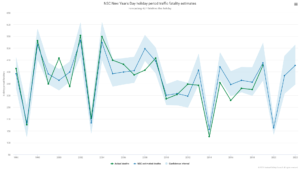
CHICAGO, IL – The National Safety Council (NSC) estimates that more than 425 people may die on U.S. roadways this New Year’s Day holiday period. Holidays are traditionally a time of high travel for families across the country with many choosing to travel via car which has the highest fatality rate of any major form of transportation. While holidays are a time to celebrate, many include alcohol consumption which is a major contributing factor to motor-vehicle crashes and fatalities.

The National Institute of Alcohol Abuse and Alcoholism reports 40% of deadly crashes between Christmas and New Year’s involve drunk drivers. The organization, which is part of the National Institute of Health, stated on average there were 54 fatalities occur due to alcohol-related car crashes on New Year’s Eve alone.

Drunk driving avoidance tips for New Years

Drunk driving is responsible for 10,000 deaths each year and about one third of all traffic-related deaths, according to the National Highway Traffic Safety Administration (NHTSA). View tips on how to avoid drunk driving this New Years:

The easiest way to know your guests won’t drive under the influence is to limit their access to alcohol. Serve non-alcoholic drinks to designated drivers and for those who don’t wish to drink.

While it may seem nosey, ask about guests plans for a designated driver to help you decide if you need to confiscate keys or let someone pass out of your couch. Ensure that your guests know that you’re looking out for their safety. If you’re able to, offer them a place to stay until they’ve sobered up.

Alternative modes of transportation are at the palm of your hand. Uber and Lyft offer services to safely bring you from one place to another.

If you’re heading out for a party, it’s important to be responsible and avoid drinking and driving for your own safety and others on the road. You may think you can drive after a few drinks as alcohol effects your depth perception and information-processing skills. Since alcohol is a depressant, your central nervous system will slow down which delays your brain’s ability to access and respond.

Every state has a different legal limit, but driving with a BAC (Blood Alcohol Content) above .08% is extremely dangerous. The legal limit in Illinois is .08%. If you’re under 21 years old, there is a zero tolerance policy.

How much is too much?

Frequent drinks believe they can handle their liquor. The hard truth? Most metabolisms need a full hour to properly digest a glass of alcohol. A standard “glass” is classified as 12 ounces of beer, 5 ounces of wine or 1.5 ounces of distilled spirits. If you drink more than this in an hour, you should wait and find an alternative way home. Do not get behind the wheel.

The Dinizulu Law Group wishes you a happy and safe New Years.

Transgender Worker Denied Coverage in New Hampshire Alleges Discrimination

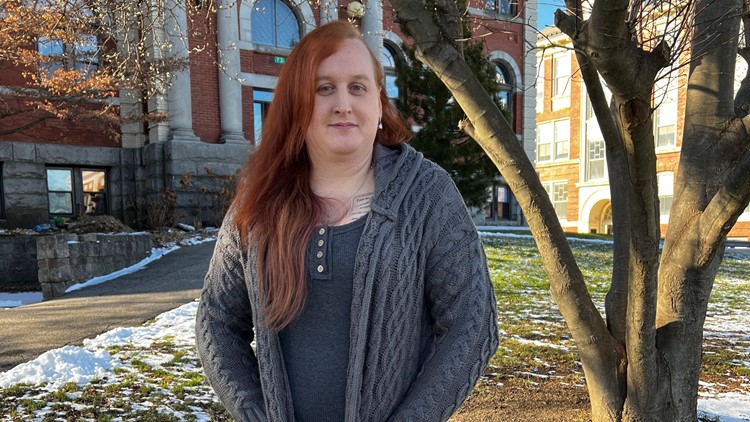
CHICAGO, IL – A transgender woman in New Hampshire has filed a discrimination lawsuit Friday against Turbocam, a manufacturing company where she works as a machinist, challenging its exclusion of gender-transition health coverage.

(Credit: AP)

The complain against Turbocam, who produces parts for the HVAC, automotive, aviation and space explorations industries, asked the New Hampshire Human Rights Commission to investigate and cross-file it with the U.S. Equal Employment Opportunity Commission. Lillian Bernier is represented by GLBTQ Legal Advocates & Defenders, a Boston advocacy group.

The complaint alleges that Turbocam and Health Plans Inc., administrator of Turbocam’s self-funded health coverage program, of violating employment non-discrimination provisions of the New Hampshire Human Rights Act, Title VII of the Civil Rights Act and the American Disabilities Act.

Bernier began transitioning in 2020. “Like everyone else, I rely on the pay and healthcare coverage from my job to support myself and my family. I’m just asking for fair coverage and to be treated the same as my co-workers.

Bernier’s attorney, Chris Erchull, said while business owners have a right to their beliefs, “a company like Turbocam cannot ignore or sidestep the law and deny equal employment benefits because she is transgender.”

Health Plans, Inc. issued a statement empathizing with Bernier’s issues, but noted Bernier is not insured by Health Plans, Inc. The complaint states Bernier has gender dysphoria, the sense of unease that a person might not have because of their biological sex doesn’t match their identity.

The complaint further mentions Bernier has needed and continues to need hormone replacement therapy, counseling and medically recommended surgeries to treat her gender dysphoria; however, the health plan has no benefits for “gender dysphoria treatment, including but not limited to, counseling, gender reassignment surgery or hormone therapy, and related preoperative and postoperative procedures, which, as their objective, change the person’s sex and any related complications.”

The New Hampshire commission has the power to receive, investigate and make findings of illegal discrimination and to hold public hearings. Depending on how the investigation goes, the complain could evolve into a lawsuit in state or federal court.

Federal protections against national origin discrimination

Per the United States Department of Justice, federal law prohibits discrimination based on a person’s national origin race, color, religion, disability, sex and familial status. People cannot be denied equal opportunity because “they have a name or accent associated with a national origin group, because they participate in certain customs associated with a national origin group, or because they are married to or associate with people of a certain national origin.”

Contact a civil rights attorney

Every person is entitled to equal treatment. Your employer, the state or any governmental agency may not treat you differently because of your age, race, religion, sex or sexual orientation. If you think you have been discriminated, take action immediately and call our law firm today. You only have 180 days to file your lawsuit from the last date of discrimination. The skilled attorneys at the Dinizulu Law Group offer free, confidential consultations and case evaluations. Contact us now at (312) 384-1920.

Translate »