Archive for category: Uncategorized

What is considered medical malpractice and when can medical providers be held liable in Illinois?

CHICAGO, IL – If a patient is harmed as a result of negligent medical treatment in Illinois, the doctor, hospital or other medical providers may be held liable for medical malpractice. Physician’s in Illinois are expected to provide care according to a certain care, also known as the standard of care. When they stray away from that standard and cause injury to a patient, further illness, or death, it is considered medical malpractice.

What Constitutes Medical Malpractice in Illinois?

Medical malpractice involves any deviation in the standard of care that medical providers owe to their patient. The most common types of medical malpractice claims include:

  • Diagnostic Errors
  • Medication Errors
  • Surgical Errors
  • Anesthesia Errors
  • Hospital Malpractice
  • Emergency Room Malpractice
  • Birth Injuries or Obstetrical Negligence
  • Unauthorized Treatment
  • Breach of Doctor-Patient Confidentiality
  • Unnecessary medical treatment or procedures

Illinois Statute of Limitations for Medical Malpractice Lawsuits

A “statute of limitations” refers to the law that sets a time limit on the right to file a lawsuit. Statute of limitations vary, meaning there are different deadlines for different types of cases.

In Illinois, the statute of limitations to file a medical malpractice lawsuit in Illinois is generally two years from the date the claimant knew or reasonably should have known of the injury. If a patient is under the age of 18 when the alleged medical malpractice occurred, the statute of limitations extends to eight years from the alleged act or omission; however, an act cannot be filed after the minor claimant’s 22nd birthday. If the claimant is mentally incompetent, the statute does not begin to run until the disability is removed.

If medical malpractice results in death, the wrongful death two-year statute of limitations period begins to run on the date of the decedent’s death.

Damages for Medical Malpractice Claims in Illinois

The plaintiff must prove the defendant is liable for medical malpractice for it to be ruled in their favor. In this case, he or she may be able to collect money damages for: medical expenses, pain and suffering, lost wages, household services, and permanent disability and disfigurement.

Some states place damage caps on noneconomic damages (such as pain and suffering), but Illinois does not have any damage caps on medical malpractice damage awards.

Liability Issues Involved in Illinois Medical Malpractice Claims

Illinois follows a form of modified comparative negligence, where a medical malpractice action is barred only if the claimant’s contributory fault is more than 50% of the proximate cause of the injury or damage for which recovery is sought. If the claimant is less than 50% at fault for the injuries, he or she may still pursue a medical malpractice claim, but the financial recovery is reduced in proportion to the claimant’s percentage of fault.

Defendants in an Illinois medical malpractice lawsuit are jointly and severally liable for all damages. In other words, if there is more than one negligent party (such as a doctor and hospital), the plaintiff may file a malpractice claim seeking full recovery from any defendant.

There are legal issues involved with Illinois malpractice claims which makes them complex and involves a comprehensive factual investigation. It’s important to consult with a skilled Illinois medical malpractice attorney as soon as possible to review your case. If you or someone you loved has been injured due to a medical providers negligence, please contact the experienced medical malpractice attorney’s at Dinizulu Law Group, Ltd. We understand the process can be difficult and stressful which is why we offer medical malpractice consultations for free. Please visit our website for more information.

Is it safe to drive after taking an over-the-counter (OTC) or prescription medication?

CHICAGO, IL – Everyone knows how dangerous it is to consume alcohol or drugs before getting behind the wheel; however, a drug that’s often overlooked is over-the-counter (OTC) or prescription medications. Some medications you may not think twice about have side effects that can put you and others at risk on the roadway.

Common Medication Side Effects

If you have recently taken medication, it’s important to check if you feel any side effects before getting behind the wheel. Some common side effects include:

  • Dizziness
  • Sleepiness/drowsiness
  • Fatigue
  • Inability to focus or pay attention
  • Delayed reaction time
  • Blurred vision
  • Fainting

Some people may experience side effects while others may not feel any at all. Side effects can last for short periods of time or they may last for several hours. Stronger medications or ones that have an extended-release property can affect someone throughout the following day. Some medicines have a warning to not operate heavy machinery, including driving a car.

Medications That Can Affect Driving

The U.S. Food and Drug Administration (FDA) lists drugs that could make it dangerous to drive, including:

  • Opioid pain relivers such as oxycodone, codeine, and morphine or any product containing codeine
  • Prescription drugs for anxiety: for example, benzodiazepines or Valium
  • Anti-seizure drugs (antiepileptic drugs) like lorazepam
  • Antipsychotic drugs, such as risperidone
  • Some antidepressants like Zoloft or Lexapro
  • Cold remedies and allergy products (both prescription and OTC), such as Nyquil and Benadryl
  • Muscle relaxers like cyclobenzaprine
  • Medicines that treat or control symptoms of diarrhea, such as Imodium
  • Medicines that treat or prevent symptoms of motion sickness like Bonine
  • Diet pills, “stay awake” drugs, and other medications with stimulants (e.g., caffeine, ephedrine, pseudoephedrine)
  • CBD products

Effects of Sleep Medicine

For people who struggle with insomnia and falling asleep, they may take medication to help them sleep. A widely used ingredient in prescribed sleep medication is zolpidem, which belongs to a class of medications called sedative-hypnotics. The FDA has found that medication that contains zolpidem, especially extended-release medications, can impair a person’s driving ability and daily activities the next morning.

People who take sleep medicine should talk to their doctor about ways to take the lowest effective dose.

How Allergy Medicines Can Affect Your Ability to Drive

Many people who have allergies, and for those who take medications containing antihistamines, these medicines can interfere with driving and operating heavy machinery, including driving a vehicle. Antihistamines slow a person’s reaction time, can make it hard to focus or think clearly, and make cause confusion or drowsiness.

It’s important to read the OTC Drug Facts label of medicine to understand warnings before consuming it. Avoid drinking alcohol or consuming other medications that contain antihistamines as it can increase the side effects.

It’s important to inform your health care provider of the products you are taking, including prescription, OTC, and herbal products. If you notice any side effects, let your doctor know about these. Always follow directions for use and read warnings on medication packaging and handouts from the pharmacy.

Involved in an Accident?

If you were involved in an accident by someone who was experiencing side effects from medication, please call our office today to learn your legal rights. The skilled attorneys at Dinizulu Law Group, Ltd. have been fighting to protect the rights of accident and injury victims for more than 20 years throughout the Chicagoland area. Contact us today to learn more information.

Who Owns A Nursing Home Can be the Difference Between Life and Death

CHICAGO, IL – During the COVID-19 pandemic, nursing homes have been hit hard with the most vulnerable population and has resulted in death rates spiking. Mathematica Policy Research researched COVID-19 cases and deaths concentrated in certain long-term care facilities including nursing homes and assisted living communities. Findings proved for-profit nursing homes had more than 60 percent more cases and deaths than nonprofit nursing homes.

In Illinois counties that have been hit hardest by the virus, for-profit nursing homes have nearly double the deaths per bed compared to nonprofit facilities.

Last January, Elizabeth Stout was trying to find a place for her brother, John Krok.

Krok, 62, had been struggling with a brain tumor for nearly two years after suffering from a seizure at Jewel supermarket where he worked as a cashier. Krok has undergone numerous medical procedures, hospital trips, and rehab-center stays but ultimately ended up back in the hospital.

Stout recalled only having a few days to get her brother out of the hospital and into a nursing home.

She printed out federal ratings of nursing homes near her brother’s house on Chicago’s Northwest Side. She saw two facilities with high ratings for a sufficient amount of staff to care for residents – both of which were owned by nonprofit organizations. After touring the facilities, she tried to get her brother admitted.

He was rejected from both because Krok was reliant on Medicaid, a government funding program that pays for long-term care for those who cannot afford it.

Stout looked at Fairmont Care, a facility with lower staffing ratings but welcomed Medicaid recipients.

Stout had no knowledge and no way of knowing that Fairmont’s main proprietor was among the state’s least effective nursing home owners at protecting residents from COVID-19.

Krok was transferred from a hospital to Fairmont Care on January 27. He was placed with a roommate who had a hacking cough that later tested positive for COVID-19.

Soon after, Krok developed pneumonia in both lungs. Fairmont sent him to the hospital where he tested positive for the virus.

When Krok caught COVID-19, the virus had just begun to take hold of the Chicago area and other parts of Illinois spreading rapidly in nursing homes. Nearly a year later, and the virus is continuing to spread at high speeds. Nursing home residents now account for 8,297 deaths in Illinois.

The coronavirus spread through long-term care facilities in Illinois has not been even: nursing homes that operate for profit have had more infections and deaths per bed than nonprofit facilities. For profit nursing homes have had nearly double the death rates as nonprofit facilities.

Advocates for nursing home residents and staff members say Illinois should focus more on holding owners accountable for packing elderly and frail people into poorly staffed facilities where the virus can quickly spread.

Staff Shortage and Overworked

Fairmont Care, the facility that took in John Krok, has some of the worst COVID-19 numbers among nursing homes in Illinois. In January 2020, it average 152 occupied beds. By November, state public-health regulators had recorded 155 infections and 32 deaths tied to the facility. Fairmont had more COVID-19 deaths per occupied bed than 95 percent of the state’s 758 long-term care facilities.

Elizabeth Stout, Krok’s sister, was not concerned about the care her brother was received at Fairmont. She praised a social worker, physical therapist, and nurse practitioner for going above and beyond to facilitate a Zoom call for Krok’s birthday with family members.

What concerned Stout was the staffing levels for day-to-day care that residents required.

“I don’t believe during his entire stay that he was walked to the bathroom,” she said. “It was either a bedpan or bedside commode.”

When COVID-19 swept through Illinois nursing homes, many Fairmont staff members got sick. The facility’s management said it directed others to work double shifts and brought in temporary nurses from staffing agencies.

Stout said eventually staff members stopped moving her brother from the bed – even for meals. She also had a hard time reaching any Fairmont managers.

The federal government rated Fairmont’s staffing levels as average or below average compared to nursing homes nationwide during the four quarters prior to the pandemic.

Fairmont staff members admitted to Stout that they were overstretched, mentioning they would arrive in her brothers room to take vitals or put a meal tray down before they had to rush to care for the next resident.

When Fairmont sent Krok back to the hospital with pneumonia, he arrived without medical charts. She found this out when the hospital called her to see whether his symptoms were from a stroke. Without his charts from Fairmont, the hospital lacked the most basic information about his condition, including that he had a brain tumor.

Krok begged the hospital not to be returned to Fairmont, but he eventually was.

The Centers for Disease Control and Prevention (CDC) and the National Healthcare Safety Network (NHSN) has a module on their website that provides healthcare facilities, such as long-term care facilities, with a customized system to track infections and prevention process measures in a systematic way.

It’s important to research nursing homes before deciding which is the best to place your loved one in. Medicare offers a tool that allows you to compare nursing home quality by the following criteria:

  • Five-Star Quality Rating
  • Health inspections
  • Nursing home staffing
  • Quality measures
  • Fire safety inspections

If you believe your loved one is being abused or neglected by their nursing home facility, please contact an experienced attorney at the Dinizulu Law Group for a free consultation today at (312) 384-1920. You can visit our website for additional information.

Reflections in 2020

2020 is certainly a Year of Reflections. While all of us have had to make sacrifices this year, it’s always important to reflect on the past its meaning and the future. First and foremost, I pray that your families are healthy and well and have not been harmed during this pandemic. Personally, knowing many of you, I know that some of you have lost family members and loved ones. We must collectively reflect on life’s highs and lows and look forward to better days – living out our purpose. In reflecting on life’s promise and living out my purpose, I conclude I have much to be thankful for. I owe it all to you who have supported me throughout the decades and especially this last year.

I began 2020 trying a medical malpractice case against a local hospital for a beautiful little girl who was not timely diagnosed with meningitis. After a nearly 5-week trial, we were able to get justice for baby Ahlanie and her family on March 6, 2020. I can’t thank enough the parents of our client who entrusted their case with us so we could fight for the justice she deserved. I’m also thankful to my internal staff and trial team who put in countless hours, and are pictured here:


(As seen left to right: Gregg Luther, Edward Washington II, Yao O. Dinizulu, Don Keenan & Craig Sandberg)

Within 7-days of our trial completing, Illinois was shut down and placed on a stay-at-home order. With the state shut down to only essential workers, much of our office was influx as we learned to navigate this new world that we currently find ourselves in. When speaking to several of my colleagues, I learned many firms shut down because they were no longer receiving the business they once were. However, we persevered because we continued to receive your unwavering support as your Advocates for Justice. Not only did we maintain our stability, but we added to the foundation of our firm and have been able to continue to provide our community the results your loved ones deserve.

During this year, our attorneys were asked to speak at several seminars and conducted numerous presentations. Our Associate Brian Orozco was asked to speak as a panelist at his alma matter DePaul University for the 17th Annual Latino Forum. Brian had the opportunity to speak to current law students about his experience in law and offer his advice based on his experience as a practicing attorney.

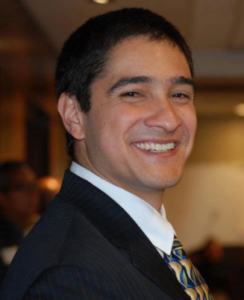
(Pictured: Associate Attorney Brian Orozco)

In July, Attorney Dinizulu was asked to present to a national audience on trying a medical malpractice case and the sophisticated techniques used to receive a favorable resolution.

In October, Mr. Dinizulu moderated a panel on Race and the Law. He was joined by esteemed panelists Plaintiff’s Attorney/Registered Nurse (RN) Vivian Tarver-Varnado, General Counsel and soon-to-be Deputy Mayor of Gary Indiana Trent McCain, and Clinical Assistant Professor at the University of Chicago Dr. Sonya Dinizulu. The participants discussed how race has affected the practice of law. The discussion ranged from appellate practice, to jury selection, trial teams, expert witnesses, and the treatment of people of color by medical experts.

(As seen from left to right: Vivian Tarver-Varnado, Trent McCain, and Sonya Dinizulu)

Major protests were sparked at the end of May following the death of George Floyd.

Black Lives Matter and supporters went on to organize protests around the world including an estimated 15 to 26 million people in the United States participating in demonstrations over the death of George Floyd, Breonna Taylor, Rayshard Brooks, Botham Jean, and countless others in the following weeks and months. The fight is not over.

These efforts for equality and civil rights for people of color would make recent protests the largest movement in U.S. history. Mr. Dinizulu participated in a protest with his family arranged by Jack & Jill in solidarity to end police brutality and systemic racism.

(Pictured below: Attorney Yao O. Dinizulu marching with his family in a Jack & Jill protest in June)

With 2020 coming to a close, the Dinizulu Law Group, Ltd. would like to thank you for all of your unwavering support. We hope you and your family have a safe and healthy New Year.

Remember to VOTE Georgia Blue for Raphael Warnock and Jon Ossoff in the upcoming senatorial elections on January 5.

Columbus, Ohio officer who killed Andre Hill has been fired

CHICAGO, IL – Adam Coy, the Columbus, Ohio, police officer who shot and killed Andre Hill was fired on Monday.

A disciplinary hearing was held earlier in the day following Coy’s termination. The local chapter of the Fraternal Order of Police represented Coy at the hearing.

Last Tuesday, Coy fatally shot Hill, who was Black, within seconds of their encounter. Hill walked toward Coy with an illuminated cell phone in his hand, body camera footage shows. Hill was unarmed.

“The information, evidence, and representations made by Chief (Thomas) Quinlan as the investigator are, in my opinion, indisputable. His disciplinary recommendation is well-supported and appropriated,” Pettus said. “The actions of Adam Coy do not live up to the oath of a Columbus Police officer, or the standards we, and the community, demand of our officers.”

Quinlan said in a statement Monday the evidence against Coy provided “solid rationale” for termination.

Quinlan sought termination because he said Coy shot Hill and failed to activate his body-worn camera when he responded to the call or render aid after shooting Hill. Coy turned his camera on after the shooting.

Mayor Andrew Ginther appalled Quinlan’s decision to fire Coy. Ohio’s Bureau of Criminal Investigation is also reviewing the case for potential criminal charges.

The actions of Coy and other investigators who were at the scene will continue to be investigated. Hill’s family and attorney Ben Crump said in a statement it was “the correct decision” to fire Coy.

Ceiling fans sold at Home Depot recalled because blades may spin off

CHICAGO, IL – More than 190,000 ceiling fans have been recalled because of the fans’ blades may detach and fly off while in use.

King of Fans, a Fort Lauderdale-based company that makes the 54-inch Mara ceiling fans, announced the recall on Wednesday after receiving 47 reports of blades detaching, with at least two consumers hit by a blade and four instances of property damage.

The fans were sold in Home Depot nationwide from April to October of this year costing nearly $150. About 182,000 were sold in the U.S. and another 8,800 were sold in Canada.

The recall came in three finishes according to U.S. Consumer Product Safety Commission:

  • Matte white (UPC No. 082392519186)
  • Matte black (UPC No. 082392519193)
  • Black (UPC No. 082392599195)
  • Polished nickel (UPC No. 082392599188)

Consumers have been urged to stop using the fans immediately and to check for signs of defects. For those who notice “blade movement or uneven gaps between the blades and fan body,” should contact King of Fans for a free replacement.

King of Fans can be contacted at (866) 433-1291, Monday through Friday from 9 a.m. to 5 p.m. EST, or by emailing MaraRecall@KingofFans.com.

Hygienic Practices Nursing Homes in Chicago Should be Implementing to Reduce the Spread of Bacteria and Infections

The key to minimizing and controlling the spread of bacteria and infections in nursing homes starts with implementing effective hygienic practices. So, what are some examples of effective hygienic practices families should be seeing when visiting their loved ones who are living in a nursing home? According to the Agency for Healthcare Research and Quality, the following are just a few ways nursing homes can prevent the spread of infections.

  • Good Hand Hygiene

Good hand hygiene starts with staff members cleaning and sanitizing their hands frequently. To do this, they should:

  1. Wash hands frequently. Staff members should be washing their hands with soap and water for at least 20 seconds when they know they will be handling food, after using the restroom or after assisting a resident with using the restroom, when their hands have become soiled, and if their hands have come in contact with blood or bodily fluids. If a health care worker is wearing a ring, they should keep it on when washing hands as it can “trap germs and get caught on clothing and equipment.”
  1. Avoid touching sink handles with clean hands. Once a staff member has washed their hands, they should turn off the faucet using a paper towel to prevent them from getting their hands dirty.
  1. Wear gloves. Staff members should be wearing gloves when handling residents and should change them each time they assist someone else.
  1. Use hand sanitizer. Although hand washing is more effective, hand sanitizer can also be used in any situation other than those described in the first tip.
  1. Stock medication and treatment carts with alcohol-based hand rub or alcohol hand wipes.

If you noticed that one or more health care workers in your loved one’s nursing home are not practicing good hand hygiene, you should bring it toa staff member’s attention as this is one factor that largely contributes to the spread of bacteria, infections, and infectious diseases.

  • Environmental Cleaning and Disinfection

In addition to nursing home staff members keeping their hands clean, staff members should also ensure the environment their residents are living in is clean and is being disinfected regularly. Some of the things the Agency for Healthcare Research and Quality recommend facilities do to help prevent the spread of infections include:

  1. Clean with hospital-approved cleaners and disinfectants.
  2. Staff members should be properly trained on how to use cleaners and disinfects around nursing home residents. 
  3. Clean and disinfect at the same time. Although are often interpreted to mean the same thing, cleaning refers to wiping away dirt and debris while disinfecting refers to removing and killing germs so they aren’t able to spread. It is important for nursing home staff members to clean and disinfect their facilities regularly.
  4. Wipe down surfaces and areas that are touched regularly such as:
      • Doorknobs
      • Faucets
      • Countertops
      • Medical carts
      • Tables
      • Bed rails
      • Phones
      • Call lights
      • Personal care wipe packages
  1. Gloves should be worn when areas are being cleaned and disinfected and discarded immediately after.
  2. Gloves should also be changed when going in and out of rooms or when moving from a contaminated surface to a clean one.

Because bacteria and infections do spread easily in these facilities which are occupied by vulnerable individuals who more than likely have weakened immune systems, nursing homes should be taking all the precautionary measures they can to help reduce the spread of bacteria, infections, and infectious diseases.

What are some common types of infections and infectious diseases that can spread in nursing homes?

Some of the common types of infections and infectious diseases that can be spread in nursing homes include:


  • Influenza (flu) virus
  • COVID-19 virus
  • Pneumonia
  • Clostridium difficile colitis, better known as C. diff.

What if a facility’s lack of cleanliness or its failure to implement an infection control and prevention plan led to my loved one suffering?

If a nursing home has failed to implement the proper safety measures to help prevent the spread of an infectious disease or an infection and your loved one has suffered as a result, you may have a case against the facility. Nursing homes are required to meet certain state and federal standards and when those are violated and a resident suffers as a result, the home and even certain health care workers can be held liable for their negligence.

To learn more about holding a nursing home in Chicago liable for its negligence, contact the Chicago, IL nursing home neglect attorneys at Dinizulu Law Group, Ltd. Our attorneys can help you understand what your loved one’s legal rights are and how they can be properly exercised.

You can contact Dinizulu Law Group, Ltd. at:

221 North La Salle Drive, Suite 1100

Chicago, IL 60601

Phone: 1-312-384-1920

Website: www.dinizululawgroup.com

National Safety Council Estimates More Than 720 Fatalities in Roadway Crashes over Christmas, New Year’s Holiday

CHICAGO, IL – While the holiday season may look a bit different this year, there’s one thing that remains stagnant: holiday traffic fatalities. While the CDC urges Americans against traveling, many will still be on the go.

The National Safety Council (NSC), located in Itasca, Ill.) estimates more than 720 people will be killed on the roadway during Christmas weekend across the nation, and an additional 384 over New Year’s weekend.

As many as 287 lives could be saved over both holiday periods if all vehicle occupants wore their seatbelts, according to NSC. Parents and guardians should be advised to check a child’s car seat is properly installed.

Please do not get behind the wheel if you have been drinking. By drinking intoxicated, you run the risk of harming yourself and other innocent bystanders. Alcohol is involved in nearly 39% of traffic fatalities over Christmas and New Year’s holiday periods. Technology has made everything so accessible now – choose alternative methods of transportation such as a ride-share like Uber or Lyft, cab, Metra, CTA, or el.

Other recommendations by NSC include:

  • Avoid distracted driving, including hands-free cellphone usage.
  • Get plenty of sleep and take regular breaks to avoid fatigue.
  • Be aware of how others are driving on the road and maintain a safe distance.
  • Sign a “New Driver Deal” with teen drivers at DriveItHOME.org.
  • Learn about your vehicle’s safety systems and how to use them at MyCarDoesWhat.org.
  • Check your vehicle for any recalls before getting on the road at ChecktoProtect.org.

“A safe travel season could instill much-needed hope as we start a new year and close an unrelenting one,” NSC President and CEO Lorraine M. Martin stated in a press release. “We can all do our part by buckling up, driving sober, slowing down, and avoiding distractions to look out for each other.”

Body Camera Footage Shows Moments Police Handcuff Innocent Woman During Wrong Raid

CHICAGO, IL – Police body camera footage was released on Tuesday and shows what happened to an innocent woman nearly two years ago when police officers wrongly entered her home with guns drawn and handcuffed her naked while she watched the horrific scene unfold.

Anjanette Young filed a Freedom of Information Act (FOIA) request last year and recently obtained the footage after a court ordered the Chicago Police Department to turn it over as part of her lawsuit against police, according to CBS Chicago.

The video shows on Feb. 21, 2019, nine body cameras caught a group of male officers entering Young’s home at 7 p.m. Young had just finished her shift as a licensed social worker at a hospital and was undressing in her bedroom when she heard a loud, pounding noise.

Officers repeatedly struck her door with a battering ram. From various angles of the footage, the video captured the moment officers broke her door down.

Young remembers officers yelling, “Police! Search warrant,” and “Hands up.” Moments later, Young is seen naked in the living room with her hands up. An officer can be seen eventually handcuffing her.

“What is going on?” Young yells in the video. “There’s nobody else here, I live alone. You’ve got the wrong house.”

An officer found a blanket and wrapped it around Young as she cried asking officers who they were looking for. The blanket began to slide off and expose her body in which no officer made an attempt to cover her.

Young can be heard telling police at least 43 times they were in the wrong home. She asked police to allow her to get dressed and informed them they had the wrong information.

“Oh my god, this cannot be right. How is this legal?” Young said during the raid.

According to CPD’s complaint for a search warrant, a confidential informant told the lead officer of the raid that he recently saw a 23-year-old man who was a known felon with a gun and ammunition.

The officer found a photo of the suspect in a police database and showed it to the informant, who then confirmed that was him. The officer drove the informant to the address where the informant claimed the suspect lived.

Despite police making no effort to independently verify the informant’s tip, such as conducting surveillance or any other policy checks, the search warrant was approved by an assistant state’s attorney and judge.

The informant gave police the wrong address; the suspect police were looking for lived in the unit next door to Young’s and had no connection to her.

Body camera footage also raises questions about the approval of the warrant. In one clip, officers can be heard talking saying the warrant was not initially approved.

“What does that mean?” the second officer asked.

“I have no idea,” the first officer said. “They said it was approved, then I guess that person messed up on their end.”

This is not the first time police have failed to do basic routine checks regarding bad information given by an informant.

Young said the way officers treated and spoke to her during the raid caused her experience to be more traumatic. You can see in the footage she’s visibly upset pleading with officers to tell her what was going on.

The sergeant asked Young if there were any firearms in her home.

“There’s no guns in here,” she said. “I’ve been a social worker for 20 years. I follow the lwa. I don’t get in trouble for anything. I don’t do illegal stuff. I’m not that person. You have the wrong information.”

The sergeant told the affiant officer – the officer who received the warrant – to step outside.

“I want to have a conversation with you,” the sergeant said.

Moments later, the officer’s body camera turned off.

After nearly 20 minutes, police remove the handcuffs. Towards the end of the raid, the sergeant apologized to Young.

“I apologize for bothering you tonight,” the sergeant tells Young. “I assure you the city will be in contact with you tomorrow. I apologize for meeting you this way. I will do everything I can to get the door fixed.”

Young said it was “surreal” to watch the footage back two years later. She continues to live with trauma and leans on church and her faith for support. She believes she has a responsibility to use her voice to protect others from being in the same situation.

Nursing home workers reach tentative deal to end strike against Infinity

CHICAGO, IL – A tentative agreement between Infinity Healthcare Management and its nursing home workers was reached on Friday after nearly 700 employees went on strike nearly two weeks ago.

Hundreds of workers at 11 Illinois locations of Infinity Health Care Management nursing homes went on strike on Nov. 23. Nine of those nursing homes are in the Chicago area.

Nursing home workers include cooks, housekeepers, and certified nursing assistants. Employees have been negotiating a new contact since June, immediately following when their last contract was expired.

SEIU Healthcare Illinois previously said the company discontinued pandemic pay – higher wages for essential workers during the coronavirus pandemic – at the end of July, despite receiving $12.7 million in funding from the federal CARES Act.

Under a new three-year contract, all workers would receive a minimum $1 an hour raise, with the average staff member receiving a $2 an hour wage increase. Workers would also earn annual raises in year two and three of the contract, according to SEIU Healthcare Illinois union leaders.

Nursing home workers in facilities with verified coronavirus cases or facilities being monitored due to COVID-19 cases, will also receive an increase in pandemic pay, from $2 an hour to $2.50 an hour. Employees will also gain five days of COVID-19 related sick time and be guaranteed adequate personal protective equipment.

Chicago Sun Times reported union leaders said under the new proposed contract, the average hourly wage will jump from $13.65 to $15.58. The union states the agreement will raise standards for Certified Nursing Assistant pay, which in turn, will help improve staffing levels and the level of resident care.

Translate »